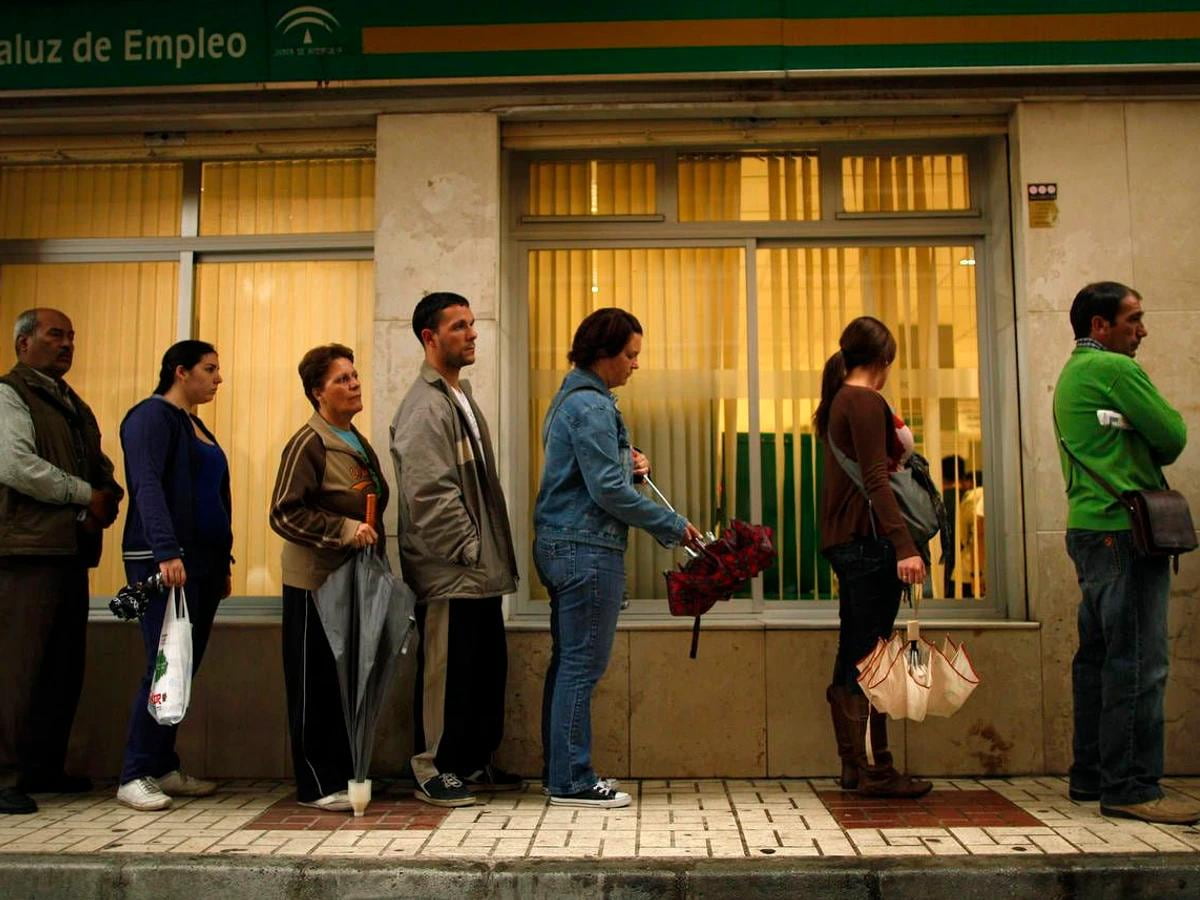
Málaga: The eurozone unemployment rate stayed at 6.4 percent in August 2026, according to Eurostat figures released on 1 October, matching the level recorded every month since February. A year earlier the rate was 6.3 percent, so the labour market has edged slightly weaker over twelve months even as it has held steady in recent ones.
The number of unemployed people in the euro area stood at about 11.36 million, an increase of roughly 26,000 from July. Across the whole European Union, the rate was 6.1 percent, unchanged for a seventh straight month. Those readings point to a labour market that is resilient but no longer improving.
Differences behind the eurozone unemployment rate remain wide. Germany and the Netherlands posted the lowest rates, both at 4 percent. Italy recorded 6.2 percent and France 8.2 percent. Spain remained the highest among the large economies at 10 percent, which keeps cities such as Málaga at the centre of the debate about regional job creation and seasonal work.
Youth unemployment also deserves attention. Roughly 2.39 million people under 25 were unemployed in the euro area in August, and the youth rate was about 15 percent, marginally lower than the previous month. Figures for young people swing more than the headline rate, and Eurostat revises them regularly, so analysts treat monthly moves of a tenth of a point with caution.
The stability of the eurozone unemployment rate comes against an uncomfortable backdrop. Higher energy prices and interest rates linked to the Middle East conflict have squeezed households and businesses. Eurostat’s flash estimate, published on 2 October, put euro area annual inflation at 3.8 percent in September, up from 3.2 percent in August. Employers have so far kept staff on, but rising costs could test that behaviour.
Other data released in early October paint a mixed picture. Euro area services production rose 0.4 percent in July compared with June, while retail trade volume rose 0.1 percent in August. Producer prices increased 1.9 percent in August. None of these readings signals a sharp downturn, yet none suggests a strong rebound.
The European Central Bank meets on 29 October, and policymakers will weigh inflation against signs of labour market strain. A steady eurozone unemployment rate gives them some room, because it suggests that wage pressures are not being driven by a sudden jump in hiring. A rise in joblessness, by contrast, would complicate any decision to keep rates high.
Governments face their own choices as the eurozone unemployment rate stays flat. Countries with high unemployment, such as Spain, rely on EU funds and national programmes for training and employment support. Those with very low rates, such as Germany and the Netherlands, face labour shortages in key sectors and compete for workers across borders.
The next Eurostat release, covering September, will show whether the pause continues. Until then, the eurozone unemployment rate offers a simple message: jobs have held up, but the margin for further gains looks thin.