August 10, 2026
LATEST
Europe’s Air Quality Improves but WHO Limits LoomTwelve New EU Medicines Win a Green Light from EMAFIFA Agent Rules Must Answer to Europe’s CourtsTachograph Rules Now Reach Vans Crossing Europe’s BordersNature Restoration Plans Come Due as a Hard Deadline NearsBrussels Opens a State Aid Probe Into Spain’s Renewables PayoutBrussels Extends Its Tariff Suspension on US Goods IndefinitelyFarmers Win Stronger Contract Rights Across the EU Supply ChainEurope Finally Locks In Its 348-Satellite Answer to StarlinkPlatform Work Rules Face a National Scramble Before DecemberDuty-Free Parcels Reach the End of the Line for EU ShoppersAfter Nine Years, Europe and Australia Seal a Trade PactBeijing Answers Europe’s Russia Sanctions in KindOne Year On, the EU-Japan Alliance Faces Its First TestEurope’s Chip Ambitions Still Run Through Taiwan’s FabsWhy South Korea Bet Its Research Future on Europe’s ProgrammeEurope and Japan Deepen Their Economic Alliance as Rivals CircleFive Joint Defence Projects Launch Europe’s Military ShieldElectrification Plan Aims to Make Europe First Electro ContinentHorizon Europe Budget Fight Heats Up as Ministers Push BackEurope’s Air Quality Improves but WHO Limits LoomTwelve New EU Medicines Win a Green Light from EMAFIFA Agent Rules Must Answer to Europe’s CourtsTachograph Rules Now Reach Vans Crossing Europe’s BordersNature Restoration Plans Come Due as a Hard Deadline NearsBrussels Opens a State Aid Probe Into Spain’s Renewables PayoutBrussels Extends Its Tariff Suspension on US Goods IndefinitelyFarmers Win Stronger Contract Rights Across the EU Supply ChainEurope Finally Locks In Its 348-Satellite Answer to StarlinkPlatform Work Rules Face a National Scramble Before DecemberDuty-Free Parcels Reach the End of the Line for EU ShoppersAfter Nine Years, Europe and Australia Seal a Trade PactBeijing Answers Europe’s Russia Sanctions in KindOne Year On, the EU-Japan Alliance Faces Its First TestEurope’s Chip Ambitions Still Run Through Taiwan’s FabsWhy South Korea Bet Its Research Future on Europe’s ProgrammeEurope and Japan Deepen Their Economic Alliance as Rivals CircleFive Joint Defence Projects Launch Europe’s Military ShieldElectrification Plan Aims to Make Europe First Electro ContinentHorizon Europe Budget Fight Heats Up as Ministers Push Back
August 10, 2026
LATEST
Europe’s Air Quality Improves but WHO Limits LoomTwelve New EU Medicines Win a Green Light from EMAFIFA Agent Rules Must Answer to Europe’s CourtsTachograph Rules Now Reach Vans Crossing Europe’s BordersNature Restoration Plans Come Due as a Hard Deadline NearsBrussels Opens a State Aid Probe Into Spain’s Renewables PayoutBrussels Extends Its Tariff Suspension on US Goods IndefinitelyFarmers Win Stronger Contract Rights Across the EU Supply ChainEurope Finally Locks In Its 348-Satellite Answer to StarlinkPlatform Work Rules Face a National Scramble Before DecemberDuty-Free Parcels Reach the End of the Line for EU ShoppersAfter Nine Years, Europe and Australia Seal a Trade PactBeijing Answers Europe’s Russia Sanctions in KindOne Year On, the EU-Japan Alliance Faces Its First TestEurope’s Chip Ambitions Still Run Through Taiwan’s FabsWhy South Korea Bet Its Research Future on Europe’s ProgrammeEurope and Japan Deepen Their Economic Alliance as Rivals CircleFive Joint Defence Projects Launch Europe’s Military ShieldElectrification Plan Aims to Make Europe First Electro ContinentHorizon Europe Budget Fight Heats Up as Ministers Push BackEurope’s Air Quality Improves but WHO Limits LoomTwelve New EU Medicines Win a Green Light from EMAFIFA Agent Rules Must Answer to Europe’s CourtsTachograph Rules Now Reach Vans Crossing Europe’s BordersNature Restoration Plans Come Due as a Hard Deadline NearsBrussels Opens a State Aid Probe Into Spain’s Renewables PayoutBrussels Extends Its Tariff Suspension on US Goods IndefinitelyFarmers Win Stronger Contract Rights Across the EU Supply ChainEurope Finally Locks In Its 348-Satellite Answer to StarlinkPlatform Work Rules Face a National Scramble Before DecemberDuty-Free Parcels Reach the End of the Line for EU ShoppersAfter Nine Years, Europe and Australia Seal a Trade PactBeijing Answers Europe’s Russia Sanctions in KindOne Year On, the EU-Japan Alliance Faces Its First TestEurope’s Chip Ambitions Still Run Through Taiwan’s FabsWhy South Korea Bet Its Research Future on Europe’s ProgrammeEurope and Japan Deepen Their Economic Alliance as Rivals CircleFive Joint Defence Projects Launch Europe’s Military ShieldElectrification Plan Aims to Make Europe First Electro ContinentHorizon Europe Budget Fight Heats Up as Ministers Push Back

Ministers Press For Faster Cash As Fertiliser Plan Reaches The Table

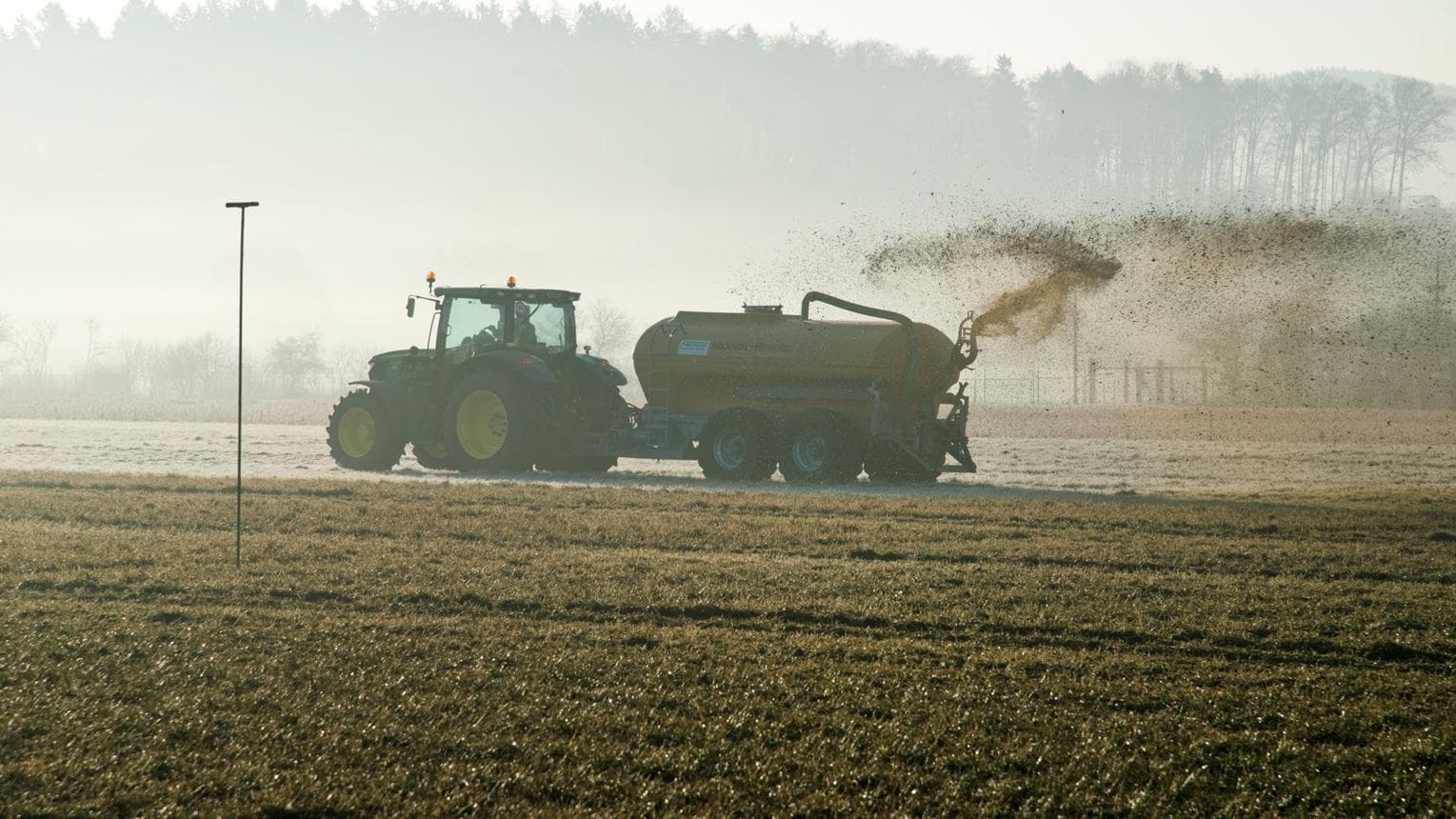
Cordoba: EU agriculture ministers have welcomed the Commission’s fertiliser action plan and the roughly 400 million euros in targeted support that comes with it, but pressed at their 26 May council meeting for faster disbursement, tighter market monitoring and a clearer strategic line on cutting EU dependence on imported synthetic fertilisers. The plan was on every minister’s reading list as the cycle of fertiliser price spikes that began in late 2024 has started to feed into spring 2026 input costs, particularly for cereal and oilseed producers in Southern Europe.

The 400 million euro envelope is the headline number. It sits on top of an existing CAP flexibility package and provides direct complementary support for farms most exposed to nitrogenous fertiliser cost swings. Around it is a mix of liquidity measures — advance payments of CAP direct support and access to EIB-backed facilities — plus longer-run elements aimed at building up European capacity in green ammonia, recovered nitrogen from manure streams and precision-application technology. The Commission has deliberately framed the plan as a bridge package rather than a new regulation, which avoids a fresh legislative file but limits how deep the structural changes will go.

Spanish, Italian and Greek ministers led the push for faster cash. Andalusia’s olive and cereal sectors are running on tight margins as drought-curtailed yields collide with elevated input bills, and Cordoba, which sits at the centre of the region’s cereal belt, has been one of the loudest voices for emergency disbursement. Their preferred timeline would see the support flow before the autumn sowing window. Several Northern member states pushed back on the speed of disbursement but supported the strategic-autonomy element, particularly the proposal for joint European production of nitrogen fertilisers using renewable hydrogen.

Market-monitoring proposals took up most of the morning. The plan would expand the Commission’s price-tracking dashboard to cover real-time wholesale prices for urea, ammonium nitrate and potassium-based fertilisers, with daily and weekly readouts shared with national administrations. Ministers asked the Commission to extend the dashboard’s reach to retail farm-gate prices, where the gap between wholesale moves and what farmers actually pay has widened in several countries. There was less agreement on whether to publish that data openly or share it only within the Council monitoring channel.

Behind the price discussion is a longer fight over Russia and Belarus. Fertiliser imports from both countries have continued to enter the EU market under the current sanctions architecture, and some member states want the action plan to lay out a phased reduction. The Commission has been cautious about hard-coding that into the plan, citing the risk of immediate price spikes that would blow back on the same farms the package is designed to help. The result has been a softer text that points to diversification objectives without setting calendar dates for import reductions.

On soil and sustainability the plan picks up threads from the agricultural outlook published last year. New language on carbon sequestration, soil-health metrics and the resilience of rural landscapes will feed a voluntary benchmarking system that lets farms measure their performance against EU-level baselines. The outline is gentle, in line with the Commission’s broader move away from prescriptive environmental rules for the farming sector after last year’s protests, but the benchmarking framework will be the data layer that any future regime sits on, and ministers signalled that they want the work done in close consultation with farm organisations rather than imposed from above.