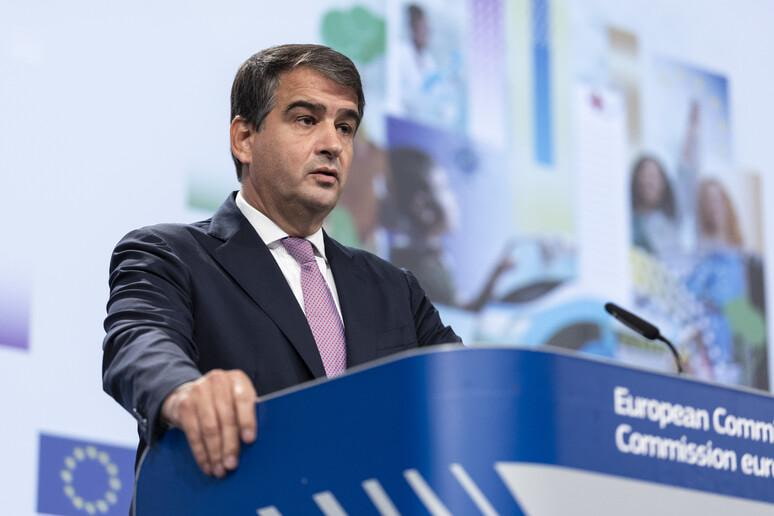
Lublin: National and Regional Partnership Plans are the centrepiece of the Commission’s proposal for cohesion money after 2027, and Executive Vice-President Raffaele Fitto used the opening of the 24th European Week of Regions and Cities on 12 October 2026 to defend them. He said that 27 plans, one for each member state, would replace 14 funds and more than 500 programmes in the 2028-2034 budget.
The summary of his speech, published in a machine-generated English rendering of a Danish text, sets out three ideas. The first is simplification, since regions and cities now juggle dozens of programmes with different rules. The second is an integrated approach that links policy areas to create synergies. The third is a performance-based approach that ties investment to reforms. The National and Regional Partnership Plans would therefore pay out against agreed results, not against spending alone.
The core cohesion architecture stays in place. The three categories of region, which are less developed, transition and more developed, remain, as do shared management and the partnership principle. Fitto stressed that partners must take part in designing, preparing and carrying out the plans, chapter by chapter. According to the Commission’s budget page cited in the summary, each member state keeps the same amounts as today, and a mandatory minimum applies to less developed regions.
The proposal itself dates from 16 July 2025 and totals almost €2 trillion, or 1.26% of EU gross national income on average. It needs unanimity in the Council and the consent of the European Parliament, so the National and Regional Partnership Plans cannot take effect until governments settle the wider budget fight. Fitto also pointed to the mid-term review, in which €35 billion was voluntarily reallocated, with more than €15 billion going to competitiveness and almost €12 billion to defence and security.
Regional authorities remain wary. The Assembly of European Regions criticised the design in a briefing from September 2025, arguing that member states decide whether regional chapters appear at all, that regions sit on the same level as academia and civil society in consultation, and that governments could amend plans in a crisis without asking regions. Those objections go to the heart of whether the National and Regional Partnership Plans would centralise power in capitals.
Fitto added that a dedicated Right to Stay strategy, meant to help people thrive in the places where they live, will arrive early in 2027, after more than 700 contributions to a call for evidence.
The next steps are political. Parliament and the Council must take positions on the cohesion regulation, and regions will keep pressing for guarantees. Until then, the National and Regional Partnership Plans remain a proposal whose success depends on how much say local authorities keep.