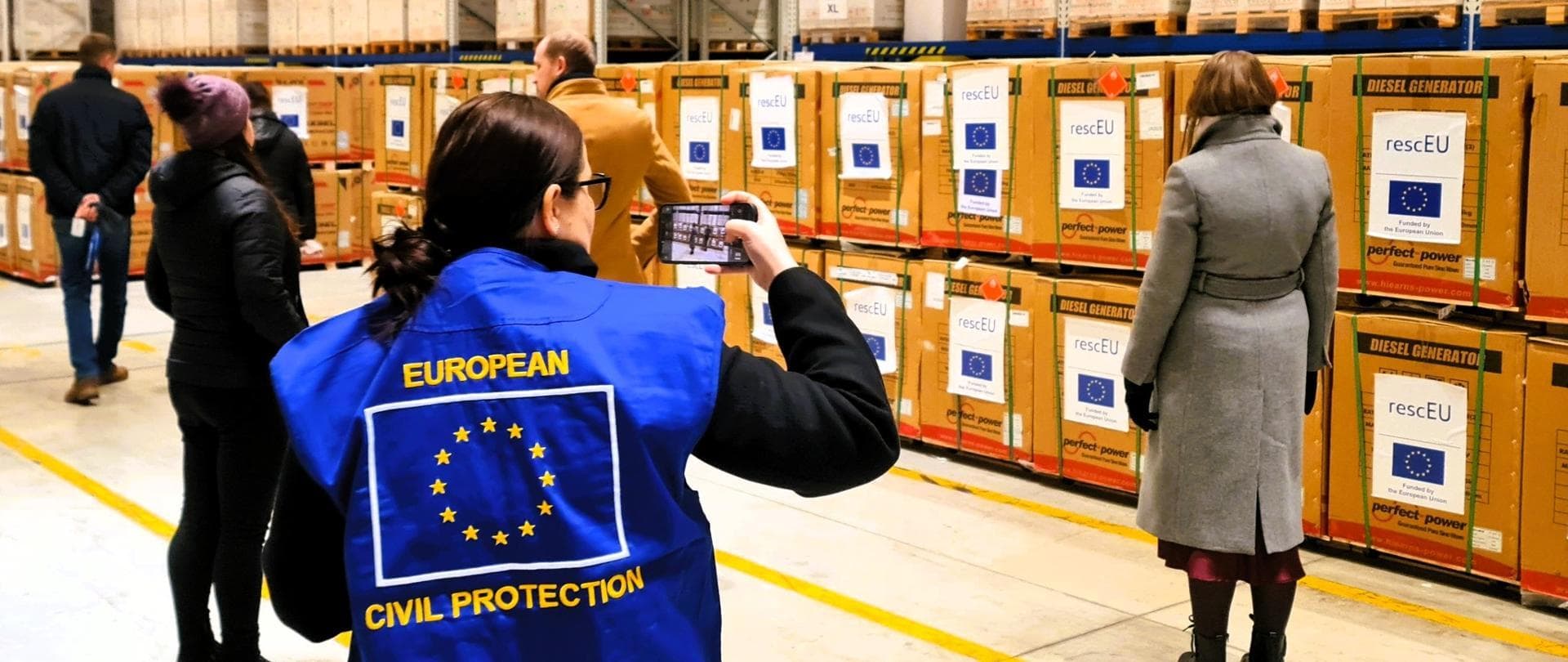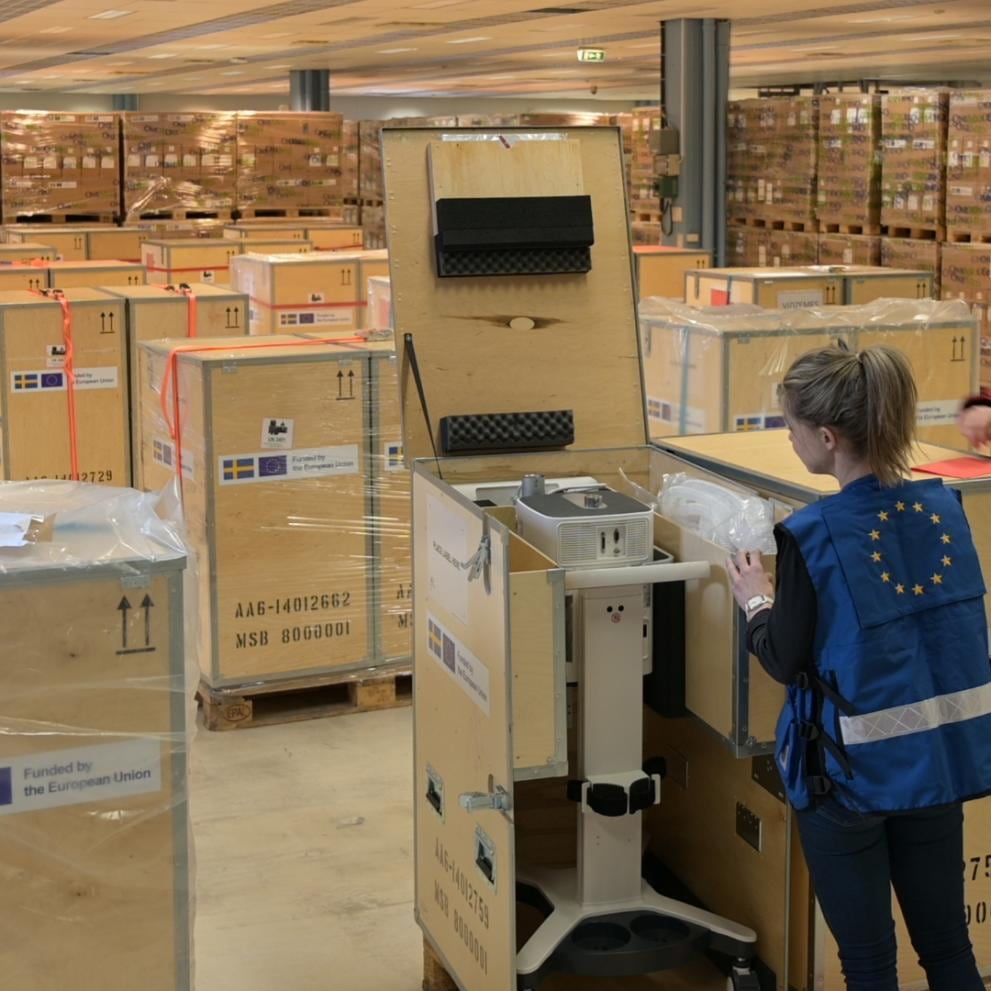
Zaragoza: The Union keeps a physical insurance policy scattered across warehouses in sixteen member states. It holds field hospitals, ventilators, generators, shelter kits, decontamination equipment and antidotes for chemical and radiological emergencies, and it exists because the early weeks of the pandemic proved that twenty-seven governments bidding against each other for the same masks is not a strategy.
Twenty-two rescEU stockpiles are now under development across sixteen countries, and seventeen have reached full operation. The Union funds them entirely, including the acquisition and storage costs, while a host state manages the warehouse and dispatches supplies when the Emergency Response Coordination Centre calls.
The reserves have grown quietly into a substantial commitment. Finland’s stockpiling project runs to 63 million euro. Sweden hosts a medical stockpile financed with over 38 million. The Union Civil Protection Mechanism carries a budget of roughly 1.26 billion euro for the current seven-year period, topped up by recovery instrument money that has funded much of the recent expansion and that does not repeat.
That last point shapes the next budget argument. Much of what built the stockpiles came from a one-off instrument created to answer the pandemic. Maintaining them, rotating expiring stock and replacing equipment consumed in real emergencies costs money every year, and the mechanism’s core budget was never sized for it. Civil protection officials have spent the year making that case to finance ministries with limited enthusiasm for the answer.
The stockpiling strategy sits inside the broader preparedness agenda the Commission adopted last year, which identifies gaps the market will not fill on its own. Nobody keeps commercial inventories of CBRN antidotes, because in normal times nobody buys them. The same logic covers mobile hospitals and large-scale water purification. Governments either pay to hold capacity idle or discover during a crisis that it does not exist.
Deployment records show the reserves working. Stockpiles have supplied earthquake responses, flooding emergencies and conflict-driven displacement, and the medical reserves moved repeatedly during the pandemic years. The system is quick when the warehouse holds what the emergency needs. It cannot help with what nobody thought to store.
Gaps remain visible. Energy equipment, particularly large generators and transformers, has proved hard to stockpile at meaningful scale because the items are expensive, bulky and in permanent short supply worldwide. Shelter capacity struggles for a different reason. A displacement emergency involving hundreds of thousands of people exceeds anything a warehouse network can absorb.
Five more stockpiles will come online as construction and procurement finish. Whether the network survives the next budget in its present form is a separate question, and one that will be answered by people counting euro rather than by anyone counting ventilators.