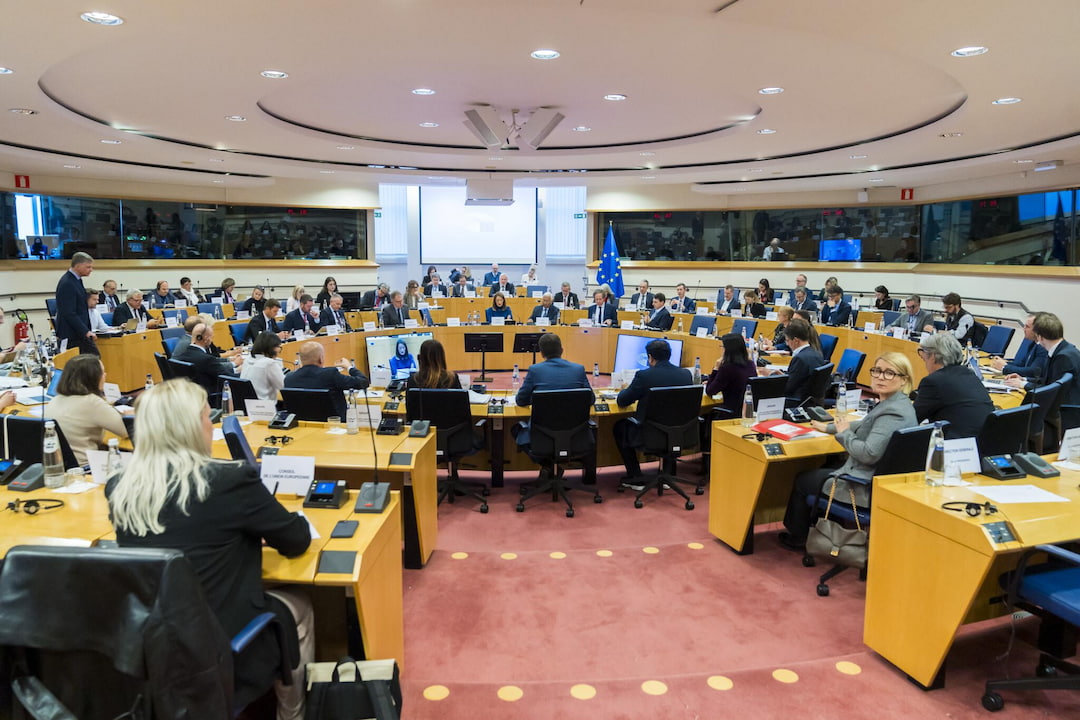
Strasbourg: The 2035 car CO2 target moved a step closer to a weaker form on 4 November 2026, when Parliament’s Environment Committee voted 48 to 30, with two abstentions, to cut the requirement for new cars from 100 percent to 87.5 percent. The Commission had proposed 90 percent in December 2025, so MEPs went further than the executive itself. Rapporteur Massimiliano Salini of the European People’s Party backed the text.
The vote reopens the most visible climate rule in European industrial policy, and it matters for carmakers, battery suppliers and drivers alike.
What the committee actually changed
The headline figure is only part of the package. The committee also set a cap of 7.5 percent on credits for low-carbon steel made in the EU, which means the effective cut for cars comes to about 95 percent. For vans, the text sets a 35 percent reduction in 2030, compared with 40 percent in the Commission proposal and 50 percent in current law, and 80 percent in 2035.
Two further provisions deserve attention. Vehicles running on renewable fuels would count as zero-emission, and small, efficient electric cars built in the EU would earn multiplier credits. Together these rules widen the routes by which a manufacturer can meet the 2035 car CO2 target without selling only battery-electric models.
Why the 2035 car CO2 target is contested
Supporters argue that industry needs flexibility. European carmakers face Chinese competition in electric vehicles, high energy prices and uneven charging infrastructure, and the 100 percent rule left little room for hybrids or alternative fuels. A lower threshold, they say, protects jobs in the combustion supply chain while the electric market matures.
Critics reply that regulatory uncertainty is itself a cost. Manufacturers that have already committed billions to electric platforms may lose their first-mover advantage if rivals can keep selling combustion models for longer. Environmental groups add that every additional year of combustion sales locks in emissions from vehicles that stay on the road for fifteen years or more.
The credit design and its trade-offs
The steel credit is the least obvious element, yet it shows the logic of the compromise. By rewarding EU-made low-carbon steel, lawmakers tie the 2035 car CO2 target to the Union’s industrial base, which gives steelmakers a reason to invest in decarbonised production. The 7.5 percent ceiling limits the risk that the credits hollow out the tailpipe requirement.
Accounting rules of this kind are harder to monitor than a plain tailpipe limit. They require reliable certification of steel, fuels and vehicle origin, and a weak verification regime could turn flexibility into a loophole.
What happens next
The committee vote is not final. Parliament’s plenary is expected to adopt its negotiating mandate in December 2026, after which MEPs enter talks with the Council. Member states are divided, and the final figure could land above or below 87.5 percent.
For investors and manufacturers, the signal is that the 2035 car CO2 target is now a negotiating variable instead of a fixed point. Planning for 2035 will have to assume several scenarios until the Council and Parliament agree on the text, and the debate over renewable fuels and steel credits will probably decide how much of the original ambition survives.