September 16, 2026
LATEST
Auditors Question the rescEU Budget Before the Fleet ArrivesDuty-Free Access for Armenian Exports Comes With a Conditions ListA Mirror Measure Closed Europe to Brazilian Meat in One DayEurope’s Creative Sectors Wait on an AI Strategy DraftSoftware Makers Face Europe’s Product Liability Deadline in DecemberMetro 3 Overran by 477 Percent and the Line Sits FrozenCage-Free Promises Land Before the Transport File Is FinishedTwo New Calls Will Test How Flexible Horizon Europe Really IsEurope’s Innovation Act Counts 10 Billion It Has Not Found YetProcurement Is the Chapter That Could Stall the Thailand DealMobility Week Returns With a Test of Intergenerational FairnessMinisters Debate the Chips Act Next Week With No Money AttachedTaiwan Wants Tax Treaties That Brussels Has No Power to SignNorth Korea Now Earns From Europe Without Shipping AnythingPalm Oil Is the Last Hard Question Before the Indonesia SigningCan One Year Deliver Both a Trade Deal and a Sea CodeVietnam Reached Europe’s Top Partnership Tier With Little DetailLeaked Draft Puts Europe’s Social Media Age Limit at FifteenFP10 Clears Committee and the Budget Gap Stays Wide OpenA Ceuta Debate Whose Title Has Already Reached a VerdictAuditors Question the rescEU Budget Before the Fleet ArrivesDuty-Free Access for Armenian Exports Comes With a Conditions ListA Mirror Measure Closed Europe to Brazilian Meat in One DayEurope’s Creative Sectors Wait on an AI Strategy DraftSoftware Makers Face Europe’s Product Liability Deadline in DecemberMetro 3 Overran by 477 Percent and the Line Sits FrozenCage-Free Promises Land Before the Transport File Is FinishedTwo New Calls Will Test How Flexible Horizon Europe Really IsEurope’s Innovation Act Counts 10 Billion It Has Not Found YetProcurement Is the Chapter That Could Stall the Thailand DealMobility Week Returns With a Test of Intergenerational FairnessMinisters Debate the Chips Act Next Week With No Money AttachedTaiwan Wants Tax Treaties That Brussels Has No Power to SignNorth Korea Now Earns From Europe Without Shipping AnythingPalm Oil Is the Last Hard Question Before the Indonesia SigningCan One Year Deliver Both a Trade Deal and a Sea CodeVietnam Reached Europe’s Top Partnership Tier With Little DetailLeaked Draft Puts Europe’s Social Media Age Limit at FifteenFP10 Clears Committee and the Budget Gap Stays Wide OpenA Ceuta Debate Whose Title Has Already Reached a Verdict
September 16, 2026
LATEST
Auditors Question the rescEU Budget Before the Fleet ArrivesDuty-Free Access for Armenian Exports Comes With a Conditions ListA Mirror Measure Closed Europe to Brazilian Meat in One DayEurope’s Creative Sectors Wait on an AI Strategy DraftSoftware Makers Face Europe’s Product Liability Deadline in DecemberMetro 3 Overran by 477 Percent and the Line Sits FrozenCage-Free Promises Land Before the Transport File Is FinishedTwo New Calls Will Test How Flexible Horizon Europe Really IsEurope’s Innovation Act Counts 10 Billion It Has Not Found YetProcurement Is the Chapter That Could Stall the Thailand DealMobility Week Returns With a Test of Intergenerational FairnessMinisters Debate the Chips Act Next Week With No Money AttachedTaiwan Wants Tax Treaties That Brussels Has No Power to SignNorth Korea Now Earns From Europe Without Shipping AnythingPalm Oil Is the Last Hard Question Before the Indonesia SigningCan One Year Deliver Both a Trade Deal and a Sea CodeVietnam Reached Europe’s Top Partnership Tier With Little DetailLeaked Draft Puts Europe’s Social Media Age Limit at FifteenFP10 Clears Committee and the Budget Gap Stays Wide OpenA Ceuta Debate Whose Title Has Already Reached a VerdictAuditors Question the rescEU Budget Before the Fleet ArrivesDuty-Free Access for Armenian Exports Comes With a Conditions ListA Mirror Measure Closed Europe to Brazilian Meat in One DayEurope’s Creative Sectors Wait on an AI Strategy DraftSoftware Makers Face Europe’s Product Liability Deadline in DecemberMetro 3 Overran by 477 Percent and the Line Sits FrozenCage-Free Promises Land Before the Transport File Is FinishedTwo New Calls Will Test How Flexible Horizon Europe Really IsEurope’s Innovation Act Counts 10 Billion It Has Not Found YetProcurement Is the Chapter That Could Stall the Thailand DealMobility Week Returns With a Test of Intergenerational FairnessMinisters Debate the Chips Act Next Week With No Money AttachedTaiwan Wants Tax Treaties That Brussels Has No Power to SignNorth Korea Now Earns From Europe Without Shipping AnythingPalm Oil Is the Last Hard Question Before the Indonesia SigningCan One Year Deliver Both a Trade Deal and a Sea CodeVietnam Reached Europe’s Top Partnership Tier With Little DetailLeaked Draft Puts Europe’s Social Media Age Limit at FifteenFP10 Clears Committee and the Budget Gap Stays Wide OpenA Ceuta Debate Whose Title Has Already Reached a Verdict

Antibiotics Made in Europe Still Need a Buyer Willing to Pay

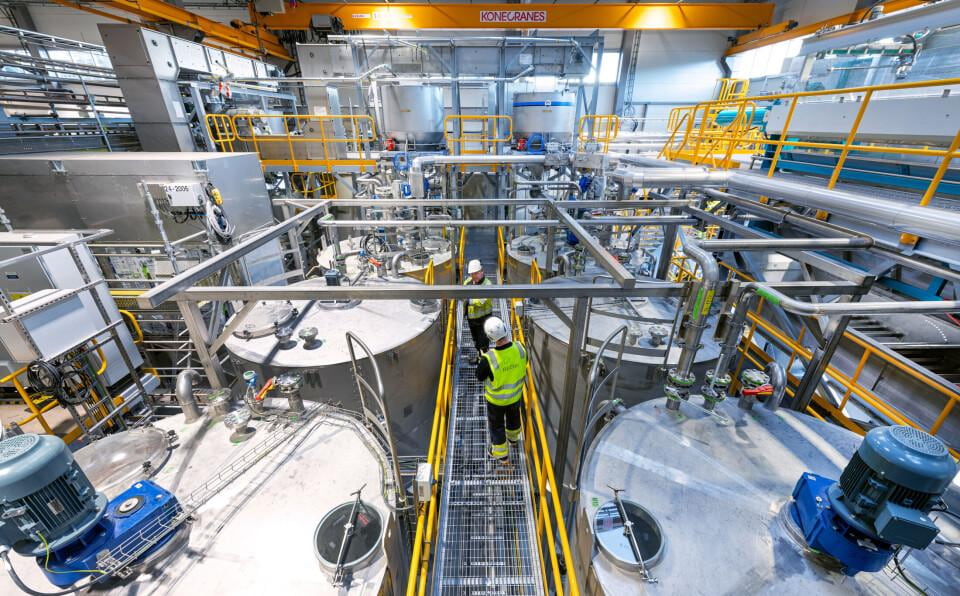
Kundl: This Tyrolean valley town holds one of the last integrated penicillin production chains left in Europe, from fermentation through to finished active ingredient, and its precarious economics explain why the Union spent a year writing a law about purchasing rather than about medicine. Parliament and the Council settled the Critical Medicines Act in the early hours of 12 May. The text now waits on formal votes before publication in the Official Journal, expected towards the end of this year.

The Act targets a specific failure. Antibiotics, insulin, painkillers and other off-patent essentials earn thin margins, so manufacturing migrated to a small number of plants, mostly in Asia, and any interruption at one of them empties pharmacy shelves across a continent. Nobody planned that concentration. Health systems bought at the lowest price for two decades, suppliers exited when they could not match it, and the survivors consolidated onto single lines.

Procurement carries the whole load

The legislators picked the one lever that reaches every hospital in the Union: how public buyers award contracts. The Act requires supply chain resilience conditions in the procurement of critical medicines, so tenders must weigh stock obligations, diversification of supply sources and supply chain monitoring rather than compare unit prices alone. It also smooths joint purchasing for countries that want to combine their volumes, and supports manufacturing capacity for critical medicines and their active ingredients inside the Union.

Read that carefully and the mechanism becomes obvious. Brussels cannot order a company to build a fermentation plant in Austria or Portugal. It can change what a buyer must value, and a buyer who must value two supply sources will pay for two supply sources. The Council’s own account of the deal puts security of supply ahead of price in exactly this way.

Skeptics note that the tool already existed. The 2014 public procurement directive has permitted non-price award criteria since it was written, and health authorities across the Union largely declined to use them. Making resilience mandatory rather than optional answers that objection only partly, because the weight a buyer assigns to it still sits with national and regional authorities working under national budgets. A ministry facing a deficit procedure will find the cheapest compliant bid remarkably attractive.

The premium nobody has priced

Every element of this law costs money that the law does not provide. Holding six months of stock ties up capital. Qualifying a second supplier duplicates regulatory work. Producing an active ingredient in Europe rather than importing it raises the unit price of a medicine that a health system currently buys for cents per dose. The Act distributes an obligation across twenty-seven health budgets and trusts that each one absorbs it.

That trust may hold. Shortages have become politically expensive enough that ministers now answer for empty shelves in national parliaments, and the difference between a cheap antibiotic and an unavailable one has stopped being abstract for voters. Industry has argued the opposite case with some force, warning that resilience criteria written vaguely will produce twenty-seven different interpretations and a compliance burden that pushes marginal producers out rather than pulling new ones in. Both predictions cannot be right, and the implementing detail will decide which is.

Two things are worth watching once the text lands in the Official Journal. The first is the application date, which the final publication confirms and which determines whether tenders written in 2027 already carry the new criteria. The second is how the Act meshes with the wider pharmaceutical package still moving through the institutions, since the two files share definitions and could easily contradict each other on what counts as critical.

Kundl survived because a large group chose to keep it running and governments eventually helped. The Critical Medicines Act attempts to turn that improvised rescue into a standing rule. Whether it works depends less on the words agreed in May than on what a procurement officer in a regional hospital does with them in three years.