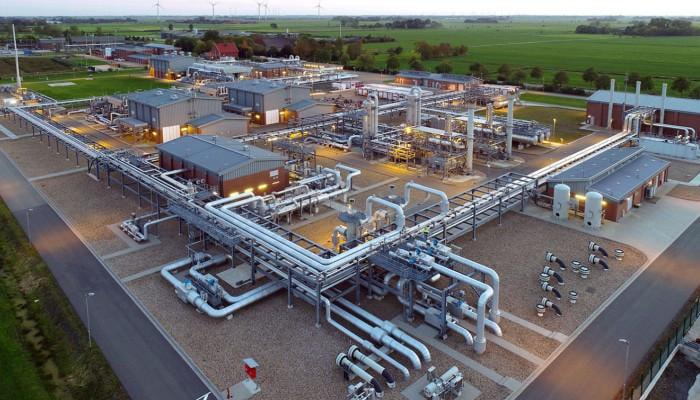
Rehden: Europe’s largest underground gas cavern fills more slowly this summer than the calendar requires, and the same is true across the continent. Storage sites stood around sixty per cent full in the middle of August, well behind the pace of recent years, and the winter that follows will be the first the Union enters with Russian supply legally closing rather than politically discouraged.
Two clocks run at once. The first governs storage. The amended filling regulation dropped the rigid deadline that once forced operators to hit ninety per cent on a single date and replaced it with a window running from 1 October to 1 December, plus deviations of up to four percentage points and a further four if difficult market conditions persist. Parliament argued for that flexibility on the grounds that a hard target hands traders a predictable buying signal and raises the price Europe pays for its own insurance. The effective floor now sits closer to the mid seventies than to ninety.
The second clock governs supply. Under Regulation 2026/261, short-term Russian LNG contracts ended on 25 April this year and short-term pipeline deliveries on 17 June. Long-term LNG contracts stop on 1 January 2027. Long-term pipeline volumes run until 30 September 2027. Nothing in that sequence depends on how full the caverns are.
Storage buys time, not molecules
The distinction gets lost in most commentary about fill levels. Storage smooths a seasonal shape. It moves gas from summer, when demand falls, into January, when it spikes. It does not create supply. A continent that enters winter at seventy per cent rather than ninety has fewer days of buffer against a cold snap or an outage, and it must buy the difference during the months when everyone else buys too.
This year the injection season fought two headwinds. Liquefied gas arrivals thinned, with June volumes down more than a fifth against the previous year as American cargoes chased better prices in Asia. Repeated heatwaves then raised power-sector gas burn at exactly the point in the calendar when operators expect to be filling rather than drawing. The result is an arithmetic problem rather than a policy failure, and it explains why projections for 1 November now spread across a range from roughly seventy to eighty per cent depending on which injection rate holds.
The price signal cuts against the mandate
Traders inject gas when winter contracts trade above summer ones by enough to cover storage costs. When that spread narrows or inverts, filling a cavern loses money, and only a legal obligation moves the gas. European rules have oscillated between the two logics for four years, and the current text splits the difference by keeping an obligation while softening its edges.
That compromise is defensible and incomplete. The flexibility genuinely reduces the premium sellers can charge a buyer with a statutory deadline. It also transfers risk onto the winter itself. A mild season vindicates the softer target, and a cold one exposes it. Nobody knows in August which winter arrives, which is why the argument between the Commission, member states with large storage and member states with none tends to repeat every spring.
What deserves closer scrutiny is the interaction the phase-out timetable creates. The Union removes a supplier on fixed dates while relaxing the buffer that protects against removing it too fast. Both decisions are reasonable in isolation. Together they concentrate risk in the winter of 2027 and early 2028, when the last long-term pipeline contracts expire and storage rules will already have been loosened for two seasons. Governments preparing for this winter should be looking one further ahead.