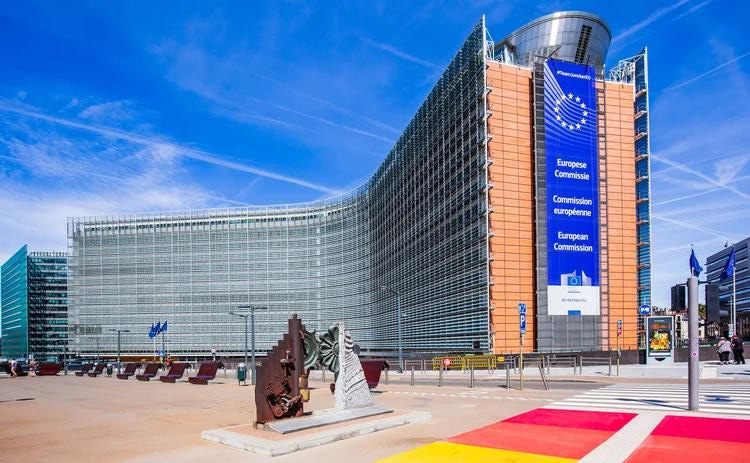
Brussels: The Kingspan merger fine of €40 million, announced on 8 October 2026, shows that the European Commission will penalise companies that give misleading information during a takeover review, even when the deal never closes. The decision punishes four incorrect or misleading statements made while the Commission examined Kingspan’s planned acquisition of Trimo.
Each of the four infringements carries a €10 million fine. The Kingspan merger fine arrives more than four years after Kingspan abandoned the deal, which makes it a reminder that merger control has a long memory.
How the Kingspan merger fine was built
The legal basis is Article 14(1) of the EU Merger Regulation. It lets the Commission fine companies up to 1% of their turnover for supplying incorrect or misleading information. The Commission found infringements on four topics: penetration rates, bidding data, research and development activities, and the involvement of board members.
Kingspan notified the Trimo deal in March 2021. The Commission opened an in-depth Phase II investigation in April 2021, and the company abandoned the transaction in April 2022. A separate investigation into the quality of its information opened in November 2022.
From objections to decision
In March 2024 the Commission sent a Statement of Objections that alleged six infringements. Two were dropped before the final decision, leaving four. That outcome suggests the Kingspan merger fine reflects a narrowed case, and it suggests the company’s defence achieved partial success, although the fine still totals €40 million.
Kingspan has said it intends to appeal the Kingspan merger fine. The full decision is not yet public, so the reasoning on each statement remains hard to assess. Lawyers will study it closely once the text is published, because the Commission’s findings on what counts as misleading may shape future filings.
Where it sits among precedents
Information fines in merger cases are rare, and the amounts have varied. The Commission fined Facebook €110 million in 2017 over WhatsApp, General Electric €52 million in 2019, and Sigma-Aldrich €7.5 million in 2021. Against that backdrop, the Kingspan merger fine ranks third among those four cases, well above the Sigma-Aldrich penalty but below the General Electric and Facebook fines.
The Commission also has a separate information probe into KKR and NetCo that remains open. Together, these cases show a steady enforcement line: the review process depends on candour, and the Commission treats accuracy as a core obligation rather than a formality.
Lessons for deal teams
Merger notifications involve large volumes of data prepared under time pressure, often by several advisers. The decision is a warning that each number and each statement about market position can later become the basis for a fine. Deal teams should keep a clear audit trail for every figure they submit, and they should correct any error as soon as they notice it.
The case also shows that abandoning a transaction does not end the exposure. The Commission can still investigate the information supplied during the review, even years later. Companies planning cross-border acquisitions in 2026 should treat that risk as part of their compliance planning.
What happens next
The appeal to the EU General Court will test how strictly judges read the duty of accuracy. Until then, the Kingspan merger fine stands as a clear message from Brussels: filing accurate information is a legal duty, and the price of getting it wrong is real money, even for a deal that never completes.