October 10, 2026
LATEST
Pakistan GSP+ Status Hinges on a Rights Test Before 2027Kosovo Growth Plan Funds Wait on Reforms After Von der Leyen VisitPhuket Round Pushes the Thailand-EU FTA Into Its Final StretchMontreal EU-Canada Summit Tests Brussels’ Associate Partner IdeaEuropean Schools Alliances Win Parliament Backing For PupilsSatellite Race Puts The EU Space Act Under Real PressureDigital Fairness Act Proposal Nears As McGrath Targets Dark PatternsMEP Proxy Voting Passes Legal Affairs Committee TestCEF Transport Call Draws 246 Bids Worth Almost €3 Billion In 2026Affordable Housing Act Tests EU Limits on Rental CurbsCritical Raw Materials Centre Wins Committee BackingEuro Area Inflation Hits 3.8 percent As Energy Prices Jump 18.8 percent In SeptemberClimate Finance Conclusions Test EU Ministers Before COP31 TalksSteel Melt And Pour Declarations Now Bind Every EU Steel ImporterMoldova EU Accession Hinges On Four Clusters And A Hungary RowAsylum Claims Cannot Be Frozen During Temporary ProtectionShoppers Back The EU Ecolabel As Trust Climbs To 81 PercentFlight Delay Compensation Holds After Air Traffic RulingHungary EU Funds Hinge On A Commission Verdict Before 31 DecemberCold Winter Looms As EU Gas Storage Trails Last Year By 12 PointsPakistan GSP+ Status Hinges on a Rights Test Before 2027Kosovo Growth Plan Funds Wait on Reforms After Von der Leyen VisitPhuket Round Pushes the Thailand-EU FTA Into Its Final StretchMontreal EU-Canada Summit Tests Brussels’ Associate Partner IdeaEuropean Schools Alliances Win Parliament Backing For PupilsSatellite Race Puts The EU Space Act Under Real PressureDigital Fairness Act Proposal Nears As McGrath Targets Dark PatternsMEP Proxy Voting Passes Legal Affairs Committee TestCEF Transport Call Draws 246 Bids Worth Almost €3 Billion In 2026Affordable Housing Act Tests EU Limits on Rental CurbsCritical Raw Materials Centre Wins Committee BackingEuro Area Inflation Hits 3.8 percent As Energy Prices Jump 18.8 percent In SeptemberClimate Finance Conclusions Test EU Ministers Before COP31 TalksSteel Melt And Pour Declarations Now Bind Every EU Steel ImporterMoldova EU Accession Hinges On Four Clusters And A Hungary RowAsylum Claims Cannot Be Frozen During Temporary ProtectionShoppers Back The EU Ecolabel As Trust Climbs To 81 PercentFlight Delay Compensation Holds After Air Traffic RulingHungary EU Funds Hinge On A Commission Verdict Before 31 DecemberCold Winter Looms As EU Gas Storage Trails Last Year By 12 Points
October 10, 2026
LATEST
Pakistan GSP+ Status Hinges on a Rights Test Before 2027Kosovo Growth Plan Funds Wait on Reforms After Von der Leyen VisitPhuket Round Pushes the Thailand-EU FTA Into Its Final StretchMontreal EU-Canada Summit Tests Brussels’ Associate Partner IdeaEuropean Schools Alliances Win Parliament Backing For PupilsSatellite Race Puts The EU Space Act Under Real PressureDigital Fairness Act Proposal Nears As McGrath Targets Dark PatternsMEP Proxy Voting Passes Legal Affairs Committee TestCEF Transport Call Draws 246 Bids Worth Almost €3 Billion In 2026Affordable Housing Act Tests EU Limits on Rental CurbsCritical Raw Materials Centre Wins Committee BackingEuro Area Inflation Hits 3.8 percent As Energy Prices Jump 18.8 percent In SeptemberClimate Finance Conclusions Test EU Ministers Before COP31 TalksSteel Melt And Pour Declarations Now Bind Every EU Steel ImporterMoldova EU Accession Hinges On Four Clusters And A Hungary RowAsylum Claims Cannot Be Frozen During Temporary ProtectionShoppers Back The EU Ecolabel As Trust Climbs To 81 PercentFlight Delay Compensation Holds After Air Traffic RulingHungary EU Funds Hinge On A Commission Verdict Before 31 DecemberCold Winter Looms As EU Gas Storage Trails Last Year By 12 PointsPakistan GSP+ Status Hinges on a Rights Test Before 2027Kosovo Growth Plan Funds Wait on Reforms After Von der Leyen VisitPhuket Round Pushes the Thailand-EU FTA Into Its Final StretchMontreal EU-Canada Summit Tests Brussels’ Associate Partner IdeaEuropean Schools Alliances Win Parliament Backing For PupilsSatellite Race Puts The EU Space Act Under Real PressureDigital Fairness Act Proposal Nears As McGrath Targets Dark PatternsMEP Proxy Voting Passes Legal Affairs Committee TestCEF Transport Call Draws 246 Bids Worth Almost €3 Billion In 2026Affordable Housing Act Tests EU Limits on Rental CurbsCritical Raw Materials Centre Wins Committee BackingEuro Area Inflation Hits 3.8 percent As Energy Prices Jump 18.8 percent In SeptemberClimate Finance Conclusions Test EU Ministers Before COP31 TalksSteel Melt And Pour Declarations Now Bind Every EU Steel ImporterMoldova EU Accession Hinges On Four Clusters And A Hungary RowAsylum Claims Cannot Be Frozen During Temporary ProtectionShoppers Back The EU Ecolabel As Trust Climbs To 81 PercentFlight Delay Compensation Holds After Air Traffic RulingHungary EU Funds Hinge On A Commission Verdict Before 31 DecemberCold Winter Looms As EU Gas Storage Trails Last Year By 12 Points

Pay Transparency Directive Deadline Passes With Most States Late

Brussels: The Pay Transparency Directive reached its transposition deadline on 7 June 2026, and four months later only a minority of member states have finished the job. Tracking by employment-law specialists shows full transposition in Slovakia, Italy, Lithuania and Malta, while most other capitals are still drafting. For employers operating across borders, the gap turns one EU rule into a patchwork of national start dates.

What the Pay Transparency Directive requires

The rules oblige employers to disclose pay ranges before interviews and ban questions about salary history. Workers can ask for information on individual pay levels, and employers with 100 or more workers must report their gender pay gap. Where the gap exceeds 5% and cannot be justified, a joint pay assessment becomes mandatory. The first reports from employers with 250 or more workers fall due on 7 June 2027.

Which member states are late on equal pay rules

Beyond the four front-runners, the Netherlands, Sweden, Czechia and Denmark have confirmed application from 1 January 2027. Belgium has asked for a six-month extension. Ireland, France, Finland and Poland have publicly signalled delays, and Germany and Spain had published no draft legislation at the last count. Those two matter most for the Pay Transparency Directive, because their large labour markets cover millions of employees.

Why the delays matter for pay gaps

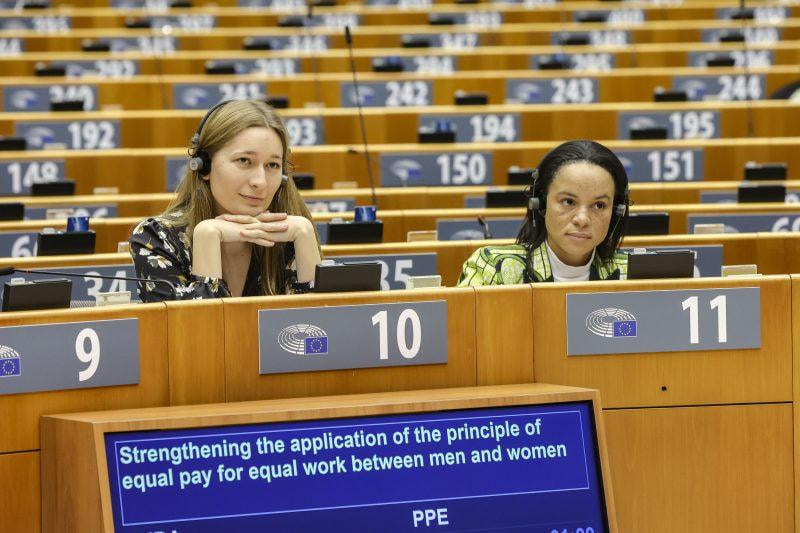
Women in the EU still earn less per hour than men, and the Commission has long argued that secrecy about pay helps that gap persist. Transparent ranges let candidates negotiate on equal terms, and individual information rights let employees spot unexplained differences between colleagues doing comparable work. Each month of delay postpones those protections for workers in countries without a law, while employers in front-running countries already carry the compliance costs.

Infringement risk for late transposition

The Commission can open infringement proceedings by sending letters of formal notice, which give a member state two months to respond. A reasoned opinion follows with a further two months, and the case can then reach the Court of Justice with financial penalties attached. Spain’s €6.83 million fine for missing the Work-Life Balance Directive deadline shows that such sanctions are not hypothetical.

What employers should do now

Multinationals should map each country’s status and build one pay-structure framework that satisfies the strictest national rule. Job-grading criteria, pay-range templates and the data pipelines needed to measure the gender pay gap take months to build, and the 2027 reporting date will not move because a national law is late. Workers in late states may also point to the Pay Transparency Directive when national courts interpret existing equal pay law.

Smaller employers should not assume they are exempt. Even firms below the reporting thresholds must disclose pay ranges and answer individual pay requests, so recruitment teams need new job-advert templates and managers need training on pay conversations. Under the Pay Transparency Directive, employers also lose the shield of vague pay secrecy clauses, which makes early preparation a competitive advantage in hiring.

What happens next

The Pay Transparency Directive will test how firmly the Commission enforces social legislation across 2026 and 2027. Watch for formal notices to the capitals without draft laws, and for the first reporting cycle in June 2027, which will show whether employers can deliver comparable pay data.