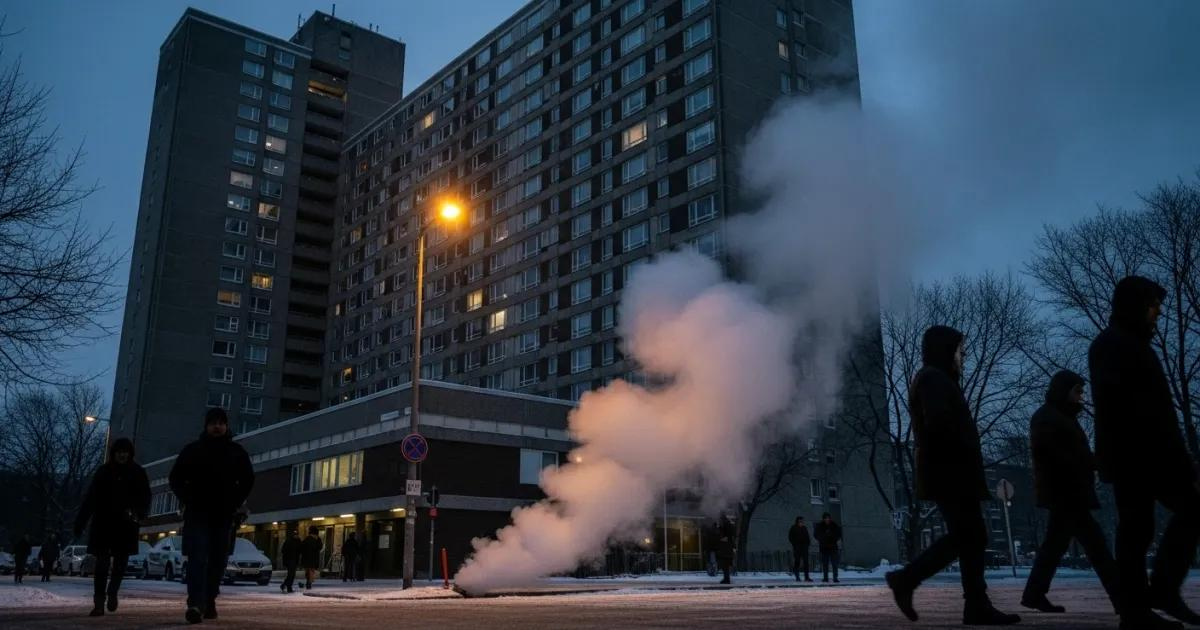
Sofia: Households in the Bulgarian capital spend a larger share of income on heating than households almost anywhere else in the Union, which makes this a useful place to ask what Europe’s climate fund can buy. The fund opened for business in 2026. The carbon price meant to pay for it now starts in 2028.
That gap is not an accident of drafting. The 2023 revision of the emissions trading system created a second, separate market, known as ETS2, covering fuels burned in buildings, road transport and small industry. Fuel suppliers, not households, surrender the allowances, and the cost travels down to the pump and the boiler. The design paired that new price with a compensation mechanism, the Social Climate Fund, worth up to 65 billion euros and financed from ETS2 revenue. Price the carbon, then hand a slice of the proceeds back to the people least able to absorb it.
The sequence broke before the price arrived
Member states worried about energy costs and about the political memory of fuel protests pushed the start date back. In the negotiations that settled the 2040 emissions target, the Council and Parliament agreed to postpone ETS2 to 2028, a year beyond even what the Commission had proposed. Monitoring and reporting duties for fuel suppliers continue on the original schedule, so the administrative machinery keeps running while the market that justifies it waits.
The postponement leaves the climate fund holding a claim on revenue that will not exist for two more years. Member states submitted Social Climate Plans, the Commission assessed them, and disbursement runs against a budget line that ETS2 allowances were supposed to fill. Until 2028, the money comes from elsewhere in the Union budget or from national co-financing, which the regulation already sets at twenty-five percent of each plan.
Capitals now face an awkward argument at home. A finance ministry can defend a heating subsidy funded by a carbon price that raises heating costs, because the transfer is visible and the logic closes. Defending the same subsidy before the price exists turns it into ordinary spending, and ordinary spending competes with defence, health and debt service in a way that earmarked revenue does not.
What two extra years change
The delay buys real preparation time. Landlords can insulate, municipalities can replace district heating plant, and installers can train. Whether anyone uses the time depends on whether governments believe 2028 will hold, and the Union has just demonstrated that start dates move when the politics turn uncomfortable. A landlord who expects a fourth postponement will not order a heat pump in 2026.
Price uncertainty compounds the problem. ETS2 carries a soft ceiling near forty-five euros a tonne, backed by measures that release extra allowances if the market breaches it. Analysts have long doubted that ceiling holds under a tight cap, and estimates well above it circulate freely. Two years of delay do not cut demand for allowances. They compress the abatement window, which pushes the plausible price up rather than down. Commission material on the second trading system still describes a mechanism designed for a smoother ramp than the one now scheduled.
The fund’s own arithmetic deserves scrutiny too. Sixty-five billion euros sounds substantial until it is divided across twenty-seven member states and seven years, and until it meets renovation costs in a housing stock where a large share of buildings predate any energy standard. The fund targets vulnerable households, transport users and micro-enterprises, and those categories overlap in exactly the regions with the weakest administrative capacity to spend the money.
Europe has therefore built the compensation before the burden. That order protects households in the short run and it may protect the policy in the long run, because a fund with a spending record in 2027 is harder to abolish than a promise. It also means the Union will spend two years paying for a transition it has not yet started charging for, and no treasury enjoys that shape of commitment.