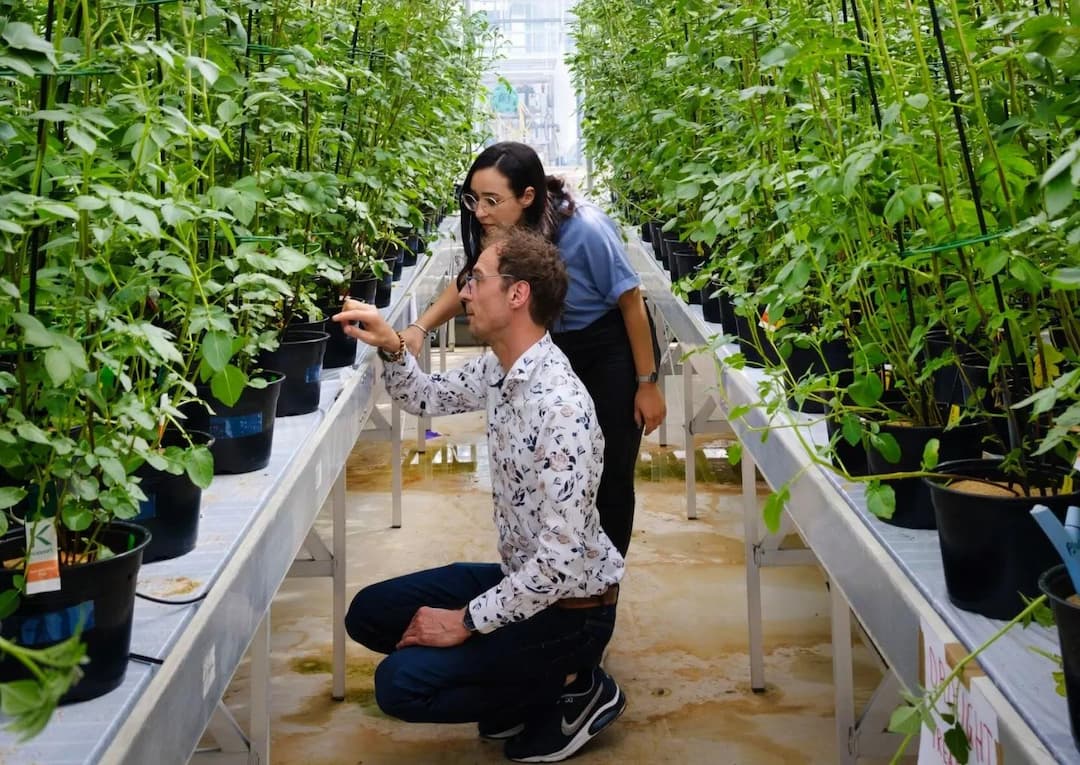
Wageningen: In the Dutch town that has become Europe’s unofficial capital of plant science, breeders have spent years waiting for the law to catch up with their laboratories. On 17 June the European Parliament gave its final approval to a regulation on plants produced through new genomic techniques, closing a legislative file that had been stuck in trench warfare since 2023 and that the Council had already endorsed in April.
The new framework draws a sharp line through a field that older European law treated as a single, suspect category. Plants altered with techniques such as CRISPR that introduce changes which could have arisen through conventional breeding or natural mutation fall into a first group, treated as equivalent to ordinary varieties. These will be exempt from the heavy machinery of the bloc’s genetically modified organism rules: no case-by-case authorisation, no traceability paperwork, and no consumer labelling beyond seeds and other reproductive material. A second group, covering plants that carry more substantial genetic alterations or foreign DNA, stays inside the existing GMO regime, with its full apparatus of risk assessment, authorisation, traceability and mandatory labelling.
Supporters frame the split as overdue legal clarity. They argue that a crop edited to resist drought or fungal disease, using genetic changes indistinguishable from those a patient breeder might achieve over decades, should not be regulated as if it were an alien organism. The Commission has pitched the reform as a contribution to both sustainability and competitiveness, promising hardier varieties that need less pesticide while letting European laboratories keep pace with rivals in the Americas and Asia who already grow such crops at scale.
The objections have been just as forceful, and they did not disappear with the final vote. Organic farming groups warn that without labelling on the first category, growers and certifiers will struggle to keep edited material out of supply chains that promise to be free of it. To soften that fear, the regulation lets member states adopt coexistence measures to prevent unintended presence in conventional and organic production, and preserves a national opt-out from cultivating the more heavily modified second-category plants. Patents remain the rawest nerve: smaller breeders fear that a handful of large firms could lock up edited traits behind intellectual property claims, and the text leans on transparency registers and a future review rather than an outright ban to address it.
For all the noise, the practical effect will arrive slowly. The rules are expected to apply from the middle of 2028, leaving national authorities, seed certifiers and the courts time to work out how a verification system with no laboratory test to distinguish edited from conventional plants will function in practice. That gap between political decision and biological reality is where the next fight is likely to unfold. What the vote settled is the principle: Europe has decided that some gene editing is breeding by another name, and will regulate it accordingly. What it left open is whether a continent that spent two decades wary of genetic modification can now persuade its shoppers, and its organic sector, to live alongside it.