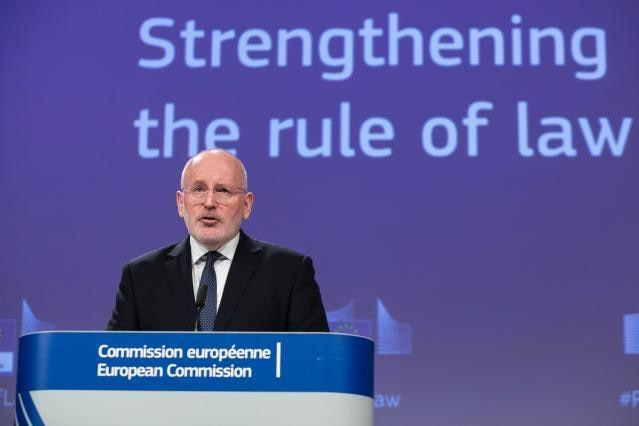
Europe’s annual health check on democracy landed in July with a cautiously upbeat verdict, yet the fine print revealed how far the rule of law still varies across the continent. The European Commission published its 2026 Rule of Law Report on 17 July, covering all twenty-seven member states and four candidate countries.
The Commission struck an optimistic tone. It pointed to reforms that strengthened councils for the judiciary, added safeguards around judicial appointments and disciplinary rules, and reinforced the independence of prosecution services. Officials argued that the yearly cycle keeps nudging governments toward change, even where progress arrives slowly.
The data behind the headlines tells a more divided story. Citizens in Denmark, Finland, Austria, Sweden, the Netherlands, Germany, Luxembourg and Ireland express strong faith in their courts, each clearing the seventy-five percent mark for trust in judicial independence. At the other end, fewer than three in ten people in Croatia and Bulgaria say they trust their judges.
That gulf matters because the single market and cross-border justice rest on mutual confidence. When a court in one country doubts the fairness of another’s judiciary, the machinery of cooperation grinds slower, from extraditions to commercial disputes. The Commission treats the trust gap as a practical problem, not merely a symbolic one.
Hungary again drew close scrutiny. The report’s country chapter catalogued persistent concerns over judicial independence, media pluralism and the space available to civil society, echoing the disputes that have frozen billions in EU funds. Warsaw, by contrast, earned notice for reforms aimed at repairing damage done under previous governments.
The candidate countries received their own assessments. Albania, Montenegro, North Macedonia and Serbia all pressed ahead with judicial changes, the Commission noted, though undue political influence continued to hamper independence in several places. Brussels ties enlargement progress ever more tightly to demonstrable rule of law gains.
Critics of the exercise question its bite. The report recommends rather than requires, and its recommendations carry no automatic penalty. Rights groups argue that reforms too often stall on paper while courts wait for changes that never fully arrive, leaving citizens to shoulder the delay.
The Commission counters that persuasion, repeated year after year and now linked to money through the budget conditionality tool, slowly shifts behaviour. It frames the report as one instrument among several, working alongside infringement cases and funding leverage to hold governments to their commitments.
The uneven picture leaves the Union with a familiar dilemma. Its institutions can measure the rule of law with growing precision, yet enforcing it still depends on the willingness of national capitals to act. Until trust in courts rises where it lags most, the gap the report documents will keep testing European unity.