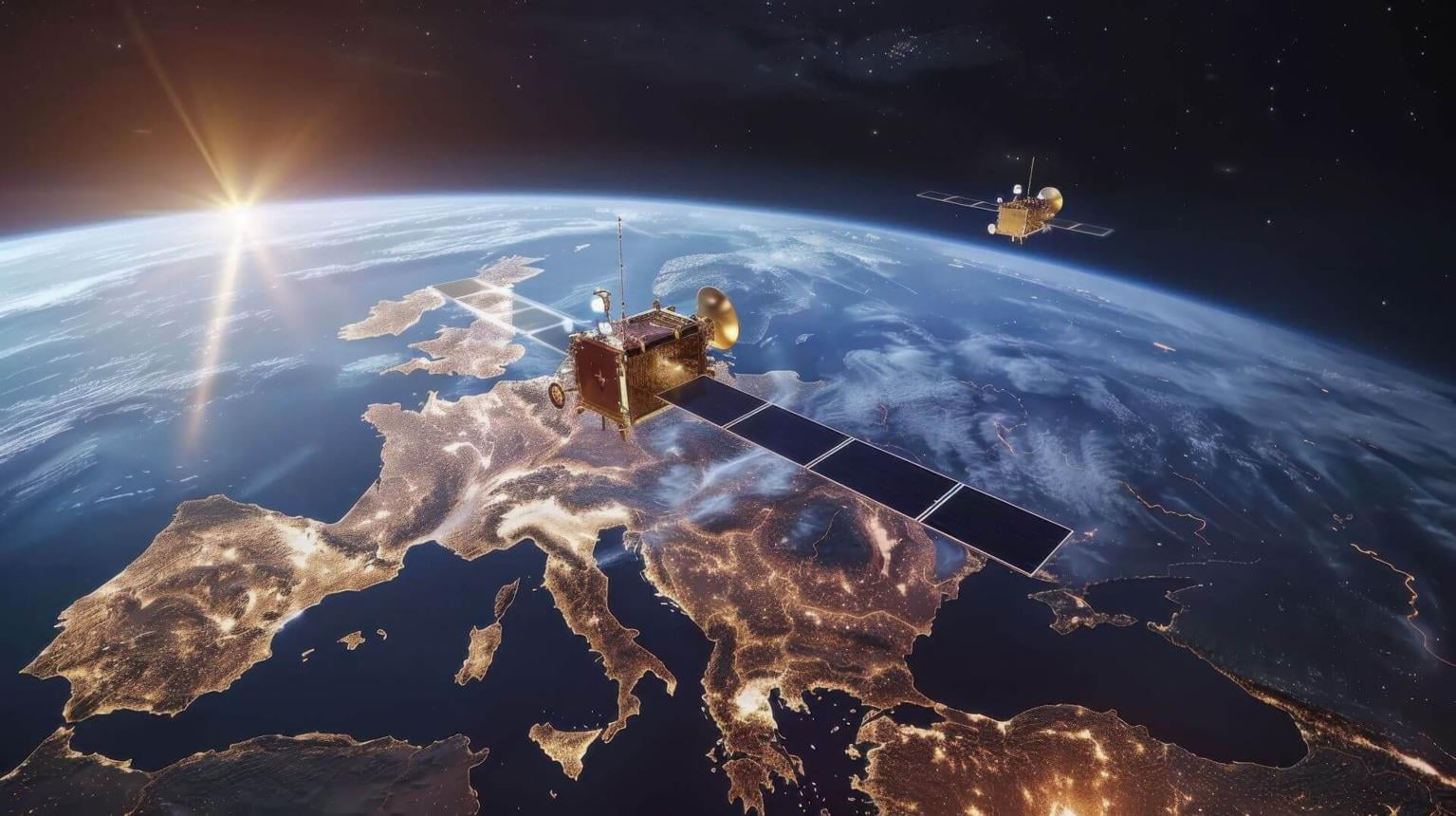
Brussels: The European Commission signed the implementation agreement for IRIS2 on 7 August, moving the bloc’s flagship secure satellite programme from planning into full-scale deployment and locking in a constellation of 348 spacecraft.
The deal ties the Commission to the SpaceRISE consortium, a grouping led by operators Eutelsat of France, HispaSat of Spain and SES of Luxembourg. Together they will build and run a network valued at more than 15.6 billion euros, one of the most expensive space projects Europe has ever backed. The consortium spent months renegotiating the terms after early cost estimates alarmed several capitals.
Negotiators added 66 satellites to the plan in the final round, lifting the main constellation to 348 spacecraft. Of those, 330 will orbit in low Earth orbit and 18 will sit in medium Earth orbit, with optional elements held in reserve for specific missions. The Commission set out the next steps in its IRIS2 secure connectivity programme.
The extra 66 satellites will fly in a higher low Earth orbit and carry capacity reserved for defence, security and emergency services. The Commission says the reinforcement will raise secure governmental communications capacity by 60 percent inside the EU and by 54 percent worldwide, giving member states a sovereign channel that does not depend on American or Chinese networks.
That sovereignty argument sits at the heart of the project. European governments have watched commercial systems such as Starlink dominate satellite broadband, and they want a public alternative they control outright. IRIS2 promises encrypted links for armies, border guards and civil protection teams, plus commercial broadband for rural areas that fibre never reached.
The programme also feeds Europe’s wider space industrial base. Prime contractors, launch providers and component makers across the continent stand to win work, and the Commission hopes the orders will keep engineering talent at home rather than drifting to rivals abroad. Ministers frame the spending as an investment in jobs as much as in security.
The programme still faces a demanding clock. The consortium must deliver first launches by 2029 and full service in the early 2030s, a tight schedule for a constellation of this size. The EU Agency for the Space Programme, which will help manage operations, laid out the citizen benefits in its deployment briefing.
Critics question whether Europe can hit those dates and hold costs, given the bloc’s mixed record on large space budgets. Supporters counter that the alternative, leaving secure connectivity to foreign firms, carries a far higher strategic price. With the ink now dry, IRIS2 becomes a test of whether Europe can turn space ambition into hardware on the launch pad.