August 9, 2026
LATEST
Pension Savings Rules Get a Reset as the EU Scraps the 1% CapMedicine Shortages Move to the Heart of Europe’s Pharma ResetJapan Becomes Europe’s Closest Security Partner in AsiaCan Europe’s New Zealand Deal Anchor It in the Pacific?Chip Research Binds Europe and South Korea CloserMinimum Prices Replace Tariffs in Europe’s China Car DealBrussels and Beijing Keep Talking While the Trade Gap WidensKorean Weapons and EU Loans Now Bankroll Europe’s RearmamentNew EU Gas Market Rules Take Effect With Consumer SafeguardsDeforestation Regulation Holds Its December Deadline Despite CutsDigital Omnibus Delays Europe’s High-Risk AI Deadline to 2027Europe’s Schools Confront a Widening Basic Skills GapRule of Law Report Finds Progress but Trust Still LagsIRIS2 Gains 66 Satellites as Brussels Signs the Rollout DealNature Restoration Plans Come Due as Member States Race a DeadlineECB Rates Hold at 2.25 Percent as Frankfurt Waits on the DataEU Budget Talks Turn to Cohesion as Ireland Takes OverWildfire Response Stretches Europe’s Emergency Fleet ThinCan Europe’s Quantum Plan Match Its Big Ambitions?Armenia Edges West as Moscow’s Grip Slips AwayPension Savings Rules Get a Reset as the EU Scraps the 1% CapMedicine Shortages Move to the Heart of Europe’s Pharma ResetJapan Becomes Europe’s Closest Security Partner in AsiaCan Europe’s New Zealand Deal Anchor It in the Pacific?Chip Research Binds Europe and South Korea CloserMinimum Prices Replace Tariffs in Europe’s China Car DealBrussels and Beijing Keep Talking While the Trade Gap WidensKorean Weapons and EU Loans Now Bankroll Europe’s RearmamentNew EU Gas Market Rules Take Effect With Consumer SafeguardsDeforestation Regulation Holds Its December Deadline Despite CutsDigital Omnibus Delays Europe’s High-Risk AI Deadline to 2027Europe’s Schools Confront a Widening Basic Skills GapRule of Law Report Finds Progress but Trust Still LagsIRIS2 Gains 66 Satellites as Brussels Signs the Rollout DealNature Restoration Plans Come Due as Member States Race a DeadlineECB Rates Hold at 2.25 Percent as Frankfurt Waits on the DataEU Budget Talks Turn to Cohesion as Ireland Takes OverWildfire Response Stretches Europe’s Emergency Fleet ThinCan Europe’s Quantum Plan Match Its Big Ambitions?Armenia Edges West as Moscow’s Grip Slips Away
August 9, 2026
LATEST
Pension Savings Rules Get a Reset as the EU Scraps the 1% CapMedicine Shortages Move to the Heart of Europe’s Pharma ResetJapan Becomes Europe’s Closest Security Partner in AsiaCan Europe’s New Zealand Deal Anchor It in the Pacific?Chip Research Binds Europe and South Korea CloserMinimum Prices Replace Tariffs in Europe’s China Car DealBrussels and Beijing Keep Talking While the Trade Gap WidensKorean Weapons and EU Loans Now Bankroll Europe’s RearmamentNew EU Gas Market Rules Take Effect With Consumer SafeguardsDeforestation Regulation Holds Its December Deadline Despite CutsDigital Omnibus Delays Europe’s High-Risk AI Deadline to 2027Europe’s Schools Confront a Widening Basic Skills GapRule of Law Report Finds Progress but Trust Still LagsIRIS2 Gains 66 Satellites as Brussels Signs the Rollout DealNature Restoration Plans Come Due as Member States Race a DeadlineECB Rates Hold at 2.25 Percent as Frankfurt Waits on the DataEU Budget Talks Turn to Cohesion as Ireland Takes OverWildfire Response Stretches Europe’s Emergency Fleet ThinCan Europe’s Quantum Plan Match Its Big Ambitions?Armenia Edges West as Moscow’s Grip Slips AwayPension Savings Rules Get a Reset as the EU Scraps the 1% CapMedicine Shortages Move to the Heart of Europe’s Pharma ResetJapan Becomes Europe’s Closest Security Partner in AsiaCan Europe’s New Zealand Deal Anchor It in the Pacific?Chip Research Binds Europe and South Korea CloserMinimum Prices Replace Tariffs in Europe’s China Car DealBrussels and Beijing Keep Talking While the Trade Gap WidensKorean Weapons and EU Loans Now Bankroll Europe’s RearmamentNew EU Gas Market Rules Take Effect With Consumer SafeguardsDeforestation Regulation Holds Its December Deadline Despite CutsDigital Omnibus Delays Europe’s High-Risk AI Deadline to 2027Europe’s Schools Confront a Widening Basic Skills GapRule of Law Report Finds Progress but Trust Still LagsIRIS2 Gains 66 Satellites as Brussels Signs the Rollout DealNature Restoration Plans Come Due as Member States Race a DeadlineECB Rates Hold at 2.25 Percent as Frankfurt Waits on the DataEU Budget Talks Turn to Cohesion as Ireland Takes OverWildfire Response Stretches Europe’s Emergency Fleet ThinCan Europe’s Quantum Plan Match Its Big Ambitions?Armenia Edges West as Moscow’s Grip Slips Away

Sudan Aid Climbs Past 276 Million as Global Donors Retreat

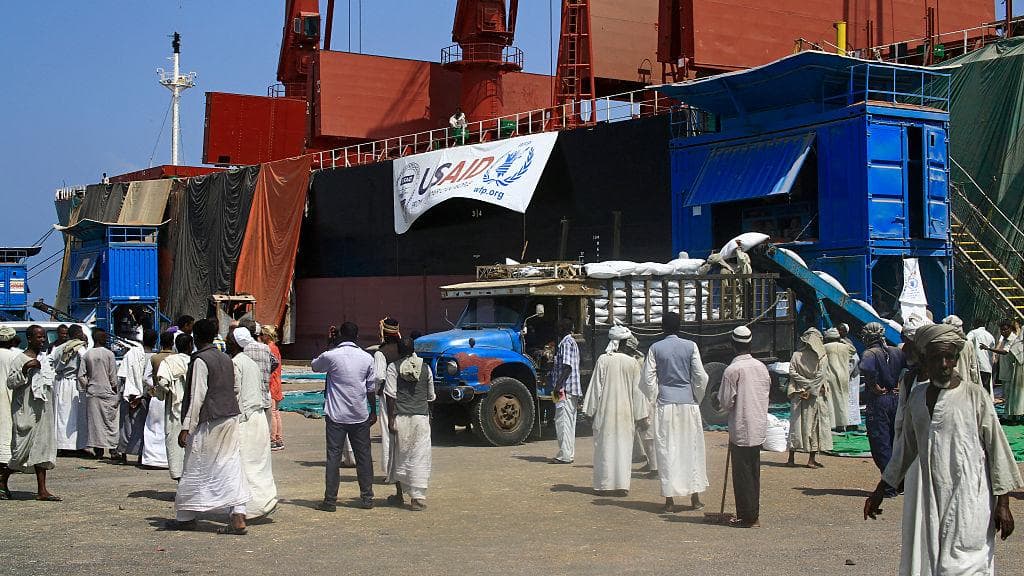
Port Sudan: As traditional donors trim their humanitarian budgets, the European Union is moving in the opposite direction on the world’s largest displacement crisis. Brussels has confirmed that its overall 2026 contribution to the Sudan emergency, covering both assistance inside the country and support for neighbouring states absorbing the outflow, has reached 276.3 million euros. Of that, 162 million euros is fresh allocation earmarked for lifesaving aid to the most vulnerable, a commitment made as the conflict grinds through its third year with no political settlement in sight.

The funding sits within a broader mobilisation. In April the EU and its member states pledged more than 812 million euros in response to the Sudan crisis at an international conference, an attempt to galvanise support at a moment when the gap between needs and resources has rarely looked wider. The money is channelled through the bloc’s humanitarian arm into health and nutritional care, food assistance, cash support, water and sanitation, shelter, protection and education, reaching internally displaced people, refugees and the host communities straining to accommodate them.

The context that makes these figures consequential is the retreat of other major donors. The Commission opened 2026 with an initial humanitarian budget of 1.9 billion euros, framing it explicitly against a backdrop of 239 million people worldwide in need and several governments cutting their contributions. More than 415 million euros of that envelope is held in reserve for sudden-onset emergencies and to maintain a strategic supply chain capable of rapid deployment. In an environment of shrinking generosity, the EU is positioning itself as a counter-cyclical donor, stepping up precisely as others step back.

Yet the arithmetic of Sudan exposes the limits of even a determined funder. The United Nations has repeatedly described the country’s needs as vastly outstripping available financing, with famine conditions confirmed in parts of the territory and aid access obstructed by the warring parties. European money buys food, water and medicine, but it cannot open besieged corridors or compel commanders to let convoys through. Humanitarian officials are candid that funding, however generous, is necessary but not sufficient when the central obstacle is the conduct of the war itself.

There is also a strategic dimension that Brussels rarely states openly. Sustained displacement from Sudan and the wider Sahel feeds onward movement toward the Mediterranean, linking humanitarian engagement to the migration pressures that dominate European politics. Investing in stabilisation and basic services close to the crisis is, in part, an effort to reduce the desperation that drives people farther afield. Critics see in this a humanitarianism increasingly bent toward border management; defenders argue that motives matter less than outcomes when lives are at stake.

For the displaced sheltering in and around Port Sudan and across the region, the European commitment is a lifeline whose value is measured in meals, clean water and a child’s place in a makeshift classroom. Whether 276 million euros proves enough depends less on the generosity of the figure than on a question no donor can answer alone: when the fighting will finally stop.