August 9, 2026
LATEST
New EU Gas Market Rules Take Effect With Consumer SafeguardsDeforestation Regulation Holds Its December Deadline Despite CutsDigital Omnibus Delays Europe’s High-Risk AI Deadline to 2027Europe’s Schools Confront a Widening Basic Skills GapRule of Law Report Finds Progress but Trust Still LagsIRIS2 Gains 66 Satellites as Brussels Signs the Rollout DealNature Restoration Plans Come Due as Member States Race a DeadlineECB Rates Hold at 2.25 Percent as Frankfurt Waits on the DataEU Budget Talks Turn to Cohesion as Ireland Takes OverWildfire Response Stretches Europe’s Emergency Fleet ThinCan Europe’s Quantum Plan Match Its Big Ambitions?Armenia Edges West as Moscow’s Grip Slips AwayEurope Inherits the World’s Aid Bill It Cannot Fully PayAir Passenger Rights Get Their First Overhaul in Two DecadesErasmus Opens a 5 Billion Euro Round for Skills and MobilityCeuta Crisis Pushes the EU Toward Faster Migrant ReturnsBulky Parcels Face a Packaging Crackdown From August 12Can Europe Build Its Drone Wall Before 2030 Arrives?Indonesia’s Trade Deal With Europe Nears Its Final SignatureEurope Leans on Beijing to Keep Climate Talks Alive Before AntalyaNew EU Gas Market Rules Take Effect With Consumer SafeguardsDeforestation Regulation Holds Its December Deadline Despite CutsDigital Omnibus Delays Europe’s High-Risk AI Deadline to 2027Europe’s Schools Confront a Widening Basic Skills GapRule of Law Report Finds Progress but Trust Still LagsIRIS2 Gains 66 Satellites as Brussels Signs the Rollout DealNature Restoration Plans Come Due as Member States Race a DeadlineECB Rates Hold at 2.25 Percent as Frankfurt Waits on the DataEU Budget Talks Turn to Cohesion as Ireland Takes OverWildfire Response Stretches Europe’s Emergency Fleet ThinCan Europe’s Quantum Plan Match Its Big Ambitions?Armenia Edges West as Moscow’s Grip Slips AwayEurope Inherits the World’s Aid Bill It Cannot Fully PayAir Passenger Rights Get Their First Overhaul in Two DecadesErasmus Opens a 5 Billion Euro Round for Skills and MobilityCeuta Crisis Pushes the EU Toward Faster Migrant ReturnsBulky Parcels Face a Packaging Crackdown From August 12Can Europe Build Its Drone Wall Before 2030 Arrives?Indonesia’s Trade Deal With Europe Nears Its Final SignatureEurope Leans on Beijing to Keep Climate Talks Alive Before Antalya
August 9, 2026
LATEST
New EU Gas Market Rules Take Effect With Consumer SafeguardsDeforestation Regulation Holds Its December Deadline Despite CutsDigital Omnibus Delays Europe’s High-Risk AI Deadline to 2027Europe’s Schools Confront a Widening Basic Skills GapRule of Law Report Finds Progress but Trust Still LagsIRIS2 Gains 66 Satellites as Brussels Signs the Rollout DealNature Restoration Plans Come Due as Member States Race a DeadlineECB Rates Hold at 2.25 Percent as Frankfurt Waits on the DataEU Budget Talks Turn to Cohesion as Ireland Takes OverWildfire Response Stretches Europe’s Emergency Fleet ThinCan Europe’s Quantum Plan Match Its Big Ambitions?Armenia Edges West as Moscow’s Grip Slips AwayEurope Inherits the World’s Aid Bill It Cannot Fully PayAir Passenger Rights Get Their First Overhaul in Two DecadesErasmus Opens a 5 Billion Euro Round for Skills and MobilityCeuta Crisis Pushes the EU Toward Faster Migrant ReturnsBulky Parcels Face a Packaging Crackdown From August 12Can Europe Build Its Drone Wall Before 2030 Arrives?Indonesia’s Trade Deal With Europe Nears Its Final SignatureEurope Leans on Beijing to Keep Climate Talks Alive Before AntalyaNew EU Gas Market Rules Take Effect With Consumer SafeguardsDeforestation Regulation Holds Its December Deadline Despite CutsDigital Omnibus Delays Europe’s High-Risk AI Deadline to 2027Europe’s Schools Confront a Widening Basic Skills GapRule of Law Report Finds Progress but Trust Still LagsIRIS2 Gains 66 Satellites as Brussels Signs the Rollout DealNature Restoration Plans Come Due as Member States Race a DeadlineECB Rates Hold at 2.25 Percent as Frankfurt Waits on the DataEU Budget Talks Turn to Cohesion as Ireland Takes OverWildfire Response Stretches Europe’s Emergency Fleet ThinCan Europe’s Quantum Plan Match Its Big Ambitions?Armenia Edges West as Moscow’s Grip Slips AwayEurope Inherits the World’s Aid Bill It Cannot Fully PayAir Passenger Rights Get Their First Overhaul in Two DecadesErasmus Opens a 5 Billion Euro Round for Skills and MobilityCeuta Crisis Pushes the EU Toward Faster Migrant ReturnsBulky Parcels Face a Packaging Crackdown From August 12Can Europe Build Its Drone Wall Before 2030 Arrives?Indonesia’s Trade Deal With Europe Nears Its Final SignatureEurope Leans on Beijing to Keep Climate Talks Alive Before Antalya

Journalists Gain New Shields as Media Freedom Law Takes Full Effect

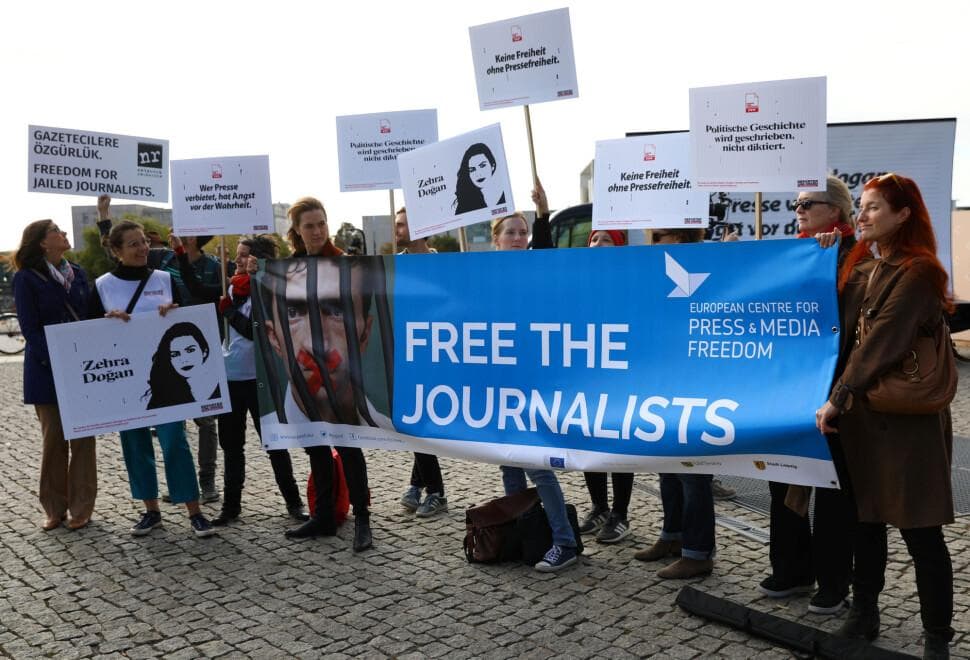
Valletta: In a country where the murder of an investigative reporter still shadows public life, the arrival of a Europe-wide law meant to protect journalists carries a weight that statistics cannot capture. The European Media Freedom Act is now fully applicable across the bloc, and with it comes a set of guarantees that, on paper, would have been unthinkable a decade ago. Whether those guarantees mean anything will be decided not in Brussels but in the newsrooms and courtrooms of each member state.

The regulation, which entered into force in the latter half of last year, sets common rules designed to insulate the press from political interference. It restricts the use of spyware against journalists, limits the pressure governments can place on editorial decisions, and strengthens the independence and accountability of the national authorities that regulate media. It also tries to bring transparency to media ownership and to the allocation of state advertising, two levers that governments have quietly used to reward friendly outlets and starve critical ones.

Because the act takes the form of a regulation rather than a directive, it applies directly without each parliament having to pass its own version. That gives it unusual force. Yet direct applicability does not guarantee uniform reality. Earlier this year the Commission issued guidelines on how to implement parts of the law, including the mechanism by which media providers declare themselves and their ownership, an attempt to turn broad principles into workable procedure.

The gap between the text and its enforcement is where the doubts gather. Member states begin from very different starting points. Some already had robust rules covering editorial independence and ownership disclosure, and for them the act is an incremental tightening. Others would need structural changes to their media authorities and their laws to comply fully, and in a handful of capitals there is open political reluctance to do so. A law that binds everyone equally still lands unequally when the ground beneath it varies so much.

There is a deeper structural problem that no regulation can easily fix. Rights are only as strong as the ability to assert them, and asserting media-freedom rights usually means going to court. Litigation is expensive, slow and risky. A large publisher with lawyers on retainer might pursue a case against an intrusive government; a freelance reporter or a small local outlet, already squeezed by collapsing advertising revenue, rarely can. Expecting the most vulnerable journalists to enforce the law through their own lawsuits, critics argue, places the burden in exactly the wrong place.

For press-freedom campaigners, the act is nonetheless a milestone, the first time the Union has written protection of journalism into binding law that reaches every member state rather than leaving it to national discretion. The risk they name is that it becomes a paper shield, impressive in the statute book and absent on the street.

The coming months will offer the first real evidence. As national authorities adjust their mandates and the first disputes test the new provisions, it will become clearer whether the law has teeth or merely a voice.