Brussels: A quiet but consequential power struggle over Europe’s electricity future tilted toward national capitals this week. After months of friction with the European Commission, energy ministers secured a larger role in planning the bloc’s future grid, forcing changes to a proposal that would have handed Brussels greater control over how the continent wires itself for a decarbonised economy. The compromise looks technical, but it goes to the heart of who decides where hundreds of billions of euros in grid investment will flow over the coming decades.
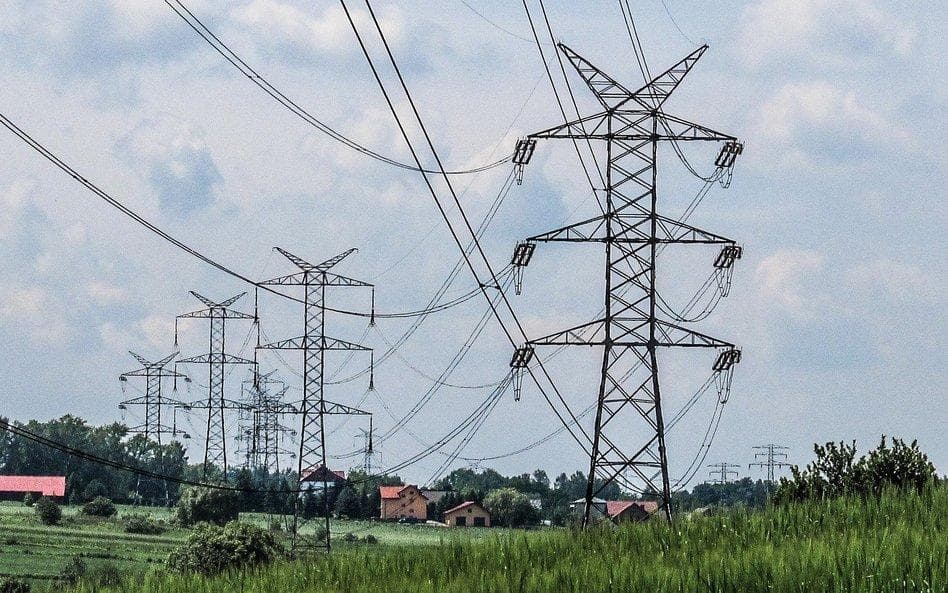
At issue were two politically sensitive elements of the wider Grids Package. The first was a new centralised planning scenario, a single modelling exercise meant to identify where transmission lines and interconnectors are most needed. The second was the acceleration of permitting for clean power projects, which today can take five to ten years to clear national approval. The Commission’s pitch was straightforward: a fragmented grid planned country by country will never deliver the interconnection that a renewables-heavy system demands, and only a common scenario can expose the missing links. Governments heard something else, namely a transfer of strategic authority over critical national infrastructure to officials in Brussels.
The settlement reached by ministers keeps the central scenario but binds it more tightly to national input. Member states won the right to verify the data and assumptions feeding the model, and planners must now account for regional circumstances and incorporate the latest national energy and climate plans. In practice that means the Commission can still draw a continental map, but it cannot draw one that contradicts what governments say about their own systems. It is a familiar European outcome, an ambition preserved on paper while the levers stay closer to home.
The stakes behind the procedural wrangling are large and growing. Wind and solar together generated more of the EU’s electricity than fossil fuels for the first time in 2025, supplying close to a third of all power. That milestone is also a warning. Variable renewables only deliver their full value if the grid can move electricity from where the wind blows and the sun shines to where demand sits, and across borders when national systems are stressed. Without far more transmission capacity and faster interconnection, surplus clean power is curtailed, prices spike in isolated markets, and the case for the energy transition weakens precisely where it should be strongest.
This is why the permitting question may matter even more than the planning scenario. The reforms on the table promise digital one-stop portals, a presumption that renewable and grid projects serve an overriding public interest, the possibility of tacit approval when authorities miss deadlines, and simplified procedures for infrastructure. These are the unglamorous mechanics that determine whether a cable is energised this decade or the next. A central plan that identifies the right lines is worthless if each one still spends a decade in administrative limbo.
The ministers’ win carries a risk that should not be ignored. Every concession to national verification is also a potential veto point, and the danger is that a planning process designed to overcome fragmentation simply reproduces it inside a longer consultation. Governments that resisted central control will now own a share of the responsibility if the grid is built too slowly. The credibility of the compromise rests on whether capitals use their restored influence to accelerate projects or to shield domestic preferences.
A final agreement on the broader Grids Package is not expected until late 2026 or early 2027, leaving ample room for the balance to shift again. For now, the lesson is clear enough. Europe has agreed, in principle, that its clean-energy ambitions require a grid planned as a single system. It has not yet agreed who gets the final word when that plan collides with national interests, and this week it edged toward the answer that the member states, not the Commission, intend to keep it.