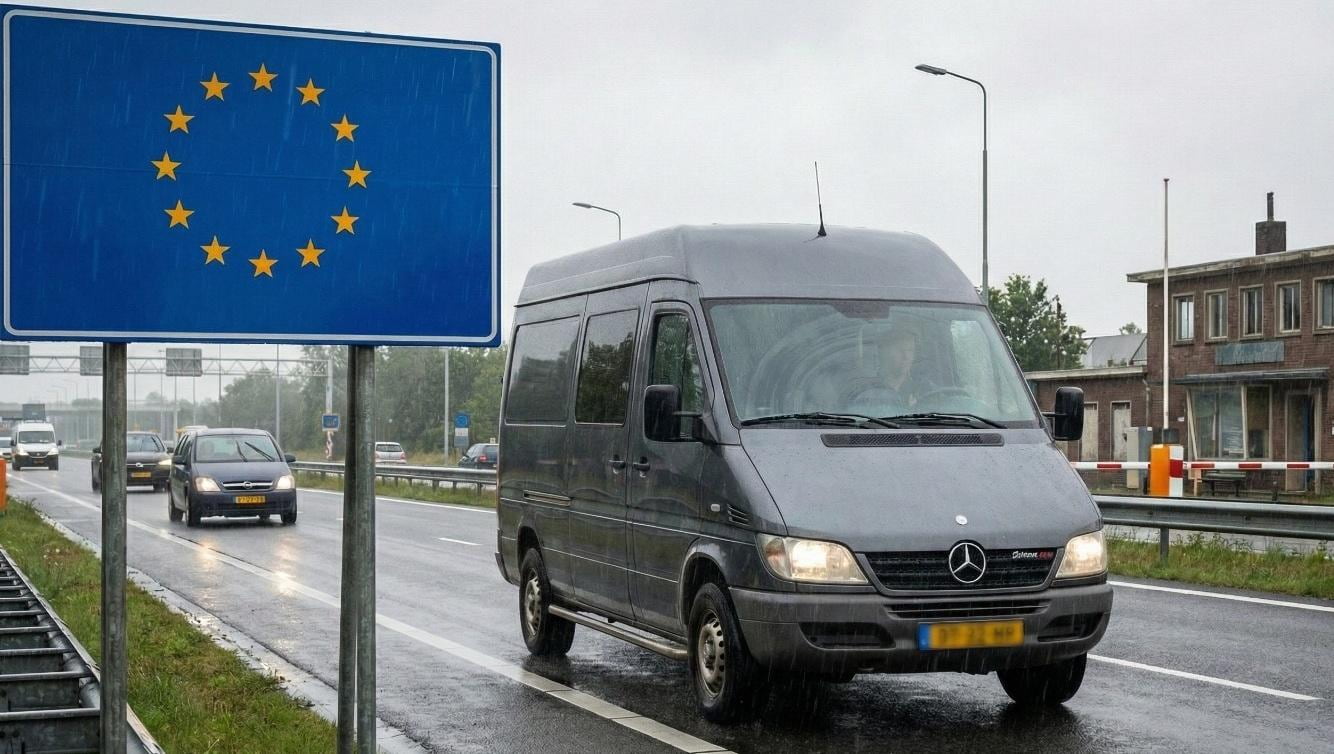
A quiet revolution in Europe’s road-freight rulebook took effect on 1 July, and it reaches deep into a corner of the industry that had long escaped the heaviest scrutiny. From that date, goods vehicles weighing between 2.5 and 3.5 tonnes engaged in international hire-and-reward transport must comply with obligations previously reserved for large trucks, including tachograph installation, driving-time limits and mandatory rest periods. For an army of small operators running light commercial vans across borders, the change rewrites the economics of a business built partly on the freedom those vehicles once enjoyed.
The shift is the latest tranche of the Mobility Package, the sprawling reform the bloc adopted to level working conditions and safety standards across a fragmented haulage market. At its centre sits a piece of hardware: the second-generation smart tachograph, known as G2V2, which lighter international vehicles must now carry. The device records driving and rest automatically and communicates with roadside inspection systems, allowing enforcement officers to flag suspected breaches remotely and target checks with far greater precision than the paper-and-guesswork era it replaces. Drivers who once treated the 3.5-tonne threshold as a line beyond which the strict rules did not apply now find that distinction largely erased for cross-border work.
Safety obligations are tightening in parallel. From 7 July, advanced emergency braking systems became mandatory on newly manufactured trucks, extending automated collision-avoidance technology that regulators credit with reducing rear-end crashes and their frequently fatal consequences. Taken together, the two measures reflect a consistent logic: that the growth of van-based international delivery, fuelled by e-commerce, had outrun a framework designed for a heavier, slower fleet.
For operators the adjustment is neither cheap nor trivial. Retrofitting or specifying G2V2 units, training drivers on stricter logging, and rescheduling routes around enforced rest all raise costs that fall hardest on the owner-drivers and micro-firms that dominate the light-vehicle segment. Trade associations have warned for months that some marginal players may exit international work altogether, or restructure to stay below the thresholds that trigger the rules. Critics argue the compliance burden risks squeezing the very small businesses that keep cross-border supply chains flexible, while larger fleets absorb the change more easily.
The counterargument, made by the reform’s supporters and by road-safety campaigners, is that the old exemptions had become a loophole. Fatigued drivers in unmonitored vans competed on price against firms that played by stricter rules, a dynamic that depressed conditions and, they contend, cost lives. Harmonised obligations, on this view, are less a burden than a belated correction that rewards operators who were already doing things properly.
Enforcement will now be the test. Rules on paper mean little without consistent checks, and member states vary widely in inspection capacity and appetite. The smart tachograph is meant to narrow that gap by making evasion harder and detection easier, but its promise depends on national authorities investing in the roadside systems that read it. For the millions of parcels and pallets that cross Europe’s internal borders in light vehicles each week, the coming months will show whether a rulebook written for trucks can be made to fit the vans that increasingly do the same job.