Hanoi: Europe has spent two years hunting for partners who can loosen China’s grip on the raw materials that power electric cars, wind turbines and grid batteries. In Vietnam it may have found its most consequential answer yet.
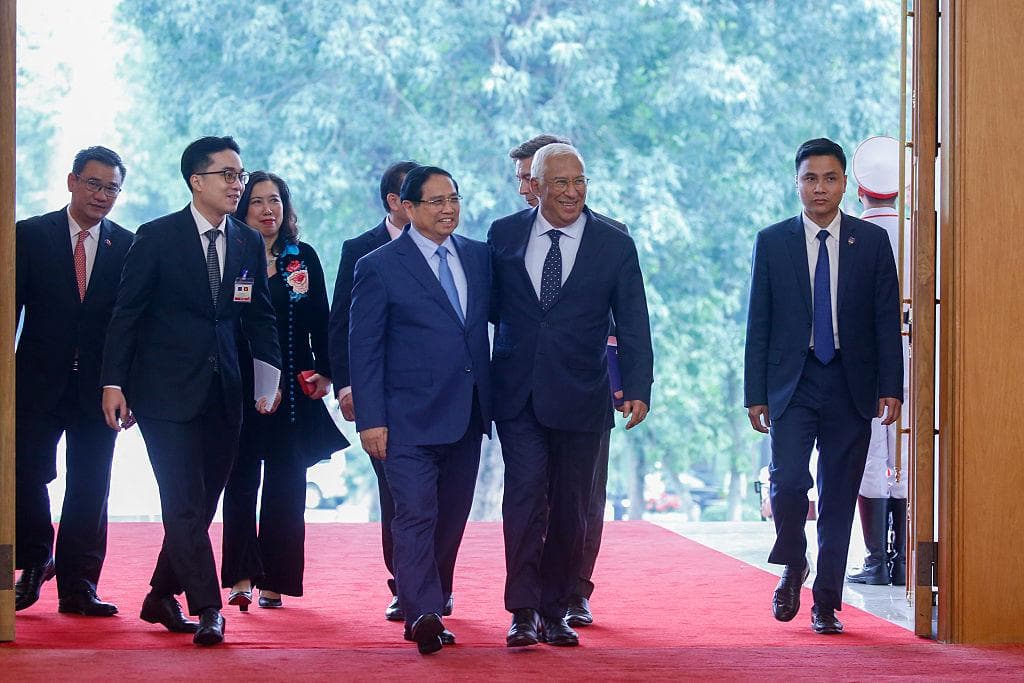
When European Council President Antonio Costa travelled to Hanoi in January, he and Vietnam’s leadership upgraded their ties to a Comprehensive Strategic Partnership, the highest rank Hanoi grants any government. The label matters less than what sits inside it. Both governments pledged to build joint supply chains for critical minerals, semiconductors and clean-energy technology, the exact inputs Brussels worries it cannot secure at home. You can read the two sides’ own account of the deal in this EEAS statement.
Vietnam brings real geology to the table. Its soil holds some of the world’s largest rare-earth reserves alongside graphite, copper and the nickel that battery makers crave. For a European industry racing to meet the Critical Raw Materials Act’s 2030 processing targets, that mix looks close to ideal.
Reserves in the ground, however, solve nothing on their own. Vietnam still ships most of its ore abroad for refining, much of it to China, and its domestic processing capacity remains thin. Brussels reads the gap clearly. European negotiators have put technology, investment and training on the table to help Hanoi build refineries and cleaner mining standards, converting a raw exporter into a finished-goods supplier that European factories can trust.
Timing sharpens the logic on both sides. Washington’s swelling tariff wall has rattled Vietnamese exporters and pushed Hanoi to spread its bets across more markets. Europe offers exactly that hedge, a large and predictable customer that does not treat trade as a lever of coercion. The joint statement frames the partnership in the warm language of shared prosperity, yet the strategic calculation underneath it is plain.
None of this guarantees success. Vietnam guards its policy independence fiercely and will resist any arrangement that reads as picking sides against Beijing, its largest trading partner and neighbour. European campaigners also warn that a rush for minerals must not paper over labour rights and environmental damage, concerns that dogged earlier resource deals across the region.
The harder test is industrial, not diplomatic. Building refineries, training engineers and certifying supply chains takes years, and China can undercut prices at almost any moment to keep rivals from scaling up. Europe has watched promising mineral partnerships stall before, from Africa to Latin America, once the headlines faded.
Still, the direction of travel is unmistakable. Brussels no longer treats critical minerals as a niche trade file but as the backbone of its green and digital ambitions, and Vietnam has become a central pillar of that plan. If the partnership delivers even part of what its architects promise, Europe will have turned a distant Southeast Asian economy into a quiet insurance policy against the next supply shock.