August 9, 2026
LATEST
New EU Gas Market Rules Take Effect With Consumer SafeguardsDeforestation Regulation Holds Its December Deadline Despite CutsDigital Omnibus Delays Europe’s High-Risk AI Deadline to 2027Europe’s Schools Confront a Widening Basic Skills GapRule of Law Report Finds Progress but Trust Still LagsIRIS2 Gains 66 Satellites as Brussels Signs the Rollout DealNature Restoration Plans Come Due as Member States Race a DeadlineECB Rates Hold at 2.25 Percent as Frankfurt Waits on the DataEU Budget Talks Turn to Cohesion as Ireland Takes OverWildfire Response Stretches Europe’s Emergency Fleet ThinCan Europe’s Quantum Plan Match Its Big Ambitions?Armenia Edges West as Moscow’s Grip Slips AwayEurope Inherits the World’s Aid Bill It Cannot Fully PayAir Passenger Rights Get Their First Overhaul in Two DecadesErasmus Opens a 5 Billion Euro Round for Skills and MobilityCeuta Crisis Pushes the EU Toward Faster Migrant ReturnsBulky Parcels Face a Packaging Crackdown From August 12Can Europe Build Its Drone Wall Before 2030 Arrives?Indonesia’s Trade Deal With Europe Nears Its Final SignatureEurope Leans on Beijing to Keep Climate Talks Alive Before AntalyaNew EU Gas Market Rules Take Effect With Consumer SafeguardsDeforestation Regulation Holds Its December Deadline Despite CutsDigital Omnibus Delays Europe’s High-Risk AI Deadline to 2027Europe’s Schools Confront a Widening Basic Skills GapRule of Law Report Finds Progress but Trust Still LagsIRIS2 Gains 66 Satellites as Brussels Signs the Rollout DealNature Restoration Plans Come Due as Member States Race a DeadlineECB Rates Hold at 2.25 Percent as Frankfurt Waits on the DataEU Budget Talks Turn to Cohesion as Ireland Takes OverWildfire Response Stretches Europe’s Emergency Fleet ThinCan Europe’s Quantum Plan Match Its Big Ambitions?Armenia Edges West as Moscow’s Grip Slips AwayEurope Inherits the World’s Aid Bill It Cannot Fully PayAir Passenger Rights Get Their First Overhaul in Two DecadesErasmus Opens a 5 Billion Euro Round for Skills and MobilityCeuta Crisis Pushes the EU Toward Faster Migrant ReturnsBulky Parcels Face a Packaging Crackdown From August 12Can Europe Build Its Drone Wall Before 2030 Arrives?Indonesia’s Trade Deal With Europe Nears Its Final SignatureEurope Leans on Beijing to Keep Climate Talks Alive Before Antalya
August 9, 2026
LATEST
New EU Gas Market Rules Take Effect With Consumer SafeguardsDeforestation Regulation Holds Its December Deadline Despite CutsDigital Omnibus Delays Europe’s High-Risk AI Deadline to 2027Europe’s Schools Confront a Widening Basic Skills GapRule of Law Report Finds Progress but Trust Still LagsIRIS2 Gains 66 Satellites as Brussels Signs the Rollout DealNature Restoration Plans Come Due as Member States Race a DeadlineECB Rates Hold at 2.25 Percent as Frankfurt Waits on the DataEU Budget Talks Turn to Cohesion as Ireland Takes OverWildfire Response Stretches Europe’s Emergency Fleet ThinCan Europe’s Quantum Plan Match Its Big Ambitions?Armenia Edges West as Moscow’s Grip Slips AwayEurope Inherits the World’s Aid Bill It Cannot Fully PayAir Passenger Rights Get Their First Overhaul in Two DecadesErasmus Opens a 5 Billion Euro Round for Skills and MobilityCeuta Crisis Pushes the EU Toward Faster Migrant ReturnsBulky Parcels Face a Packaging Crackdown From August 12Can Europe Build Its Drone Wall Before 2030 Arrives?Indonesia’s Trade Deal With Europe Nears Its Final SignatureEurope Leans on Beijing to Keep Climate Talks Alive Before AntalyaNew EU Gas Market Rules Take Effect With Consumer SafeguardsDeforestation Regulation Holds Its December Deadline Despite CutsDigital Omnibus Delays Europe’s High-Risk AI Deadline to 2027Europe’s Schools Confront a Widening Basic Skills GapRule of Law Report Finds Progress but Trust Still LagsIRIS2 Gains 66 Satellites as Brussels Signs the Rollout DealNature Restoration Plans Come Due as Member States Race a DeadlineECB Rates Hold at 2.25 Percent as Frankfurt Waits on the DataEU Budget Talks Turn to Cohesion as Ireland Takes OverWildfire Response Stretches Europe’s Emergency Fleet ThinCan Europe’s Quantum Plan Match Its Big Ambitions?Armenia Edges West as Moscow’s Grip Slips AwayEurope Inherits the World’s Aid Bill It Cannot Fully PayAir Passenger Rights Get Their First Overhaul in Two DecadesErasmus Opens a 5 Billion Euro Round for Skills and MobilityCeuta Crisis Pushes the EU Toward Faster Migrant ReturnsBulky Parcels Face a Packaging Crackdown From August 12Can Europe Build Its Drone Wall Before 2030 Arrives?Indonesia’s Trade Deal With Europe Nears Its Final SignatureEurope Leans on Beijing to Keep Climate Talks Alive Before Antalya

ERC Grants Turn Lab Discoveries Into Market-Ready Ventures

Leuven: A fresh round of ERC grants is nudging Europe’s laboratories toward the market, handing scientists money to test whether their discoveries can become products, treatments or companies.

The European Research Council awarded 27.3 million euros in its first 2026 Proof of Concept competition, splitting the funds among 182 researchers. Each winner receives 150,000 euros to explore the commercial or societal potential of work the ERC already funds.

Proof of Concept sits at a notoriously awkward stage. A breakthrough in a university lab is rarely ready for a factory or a clinic, and the money needed to bridge that gap is often too risky for private investors and too applied for basic-science budgets.

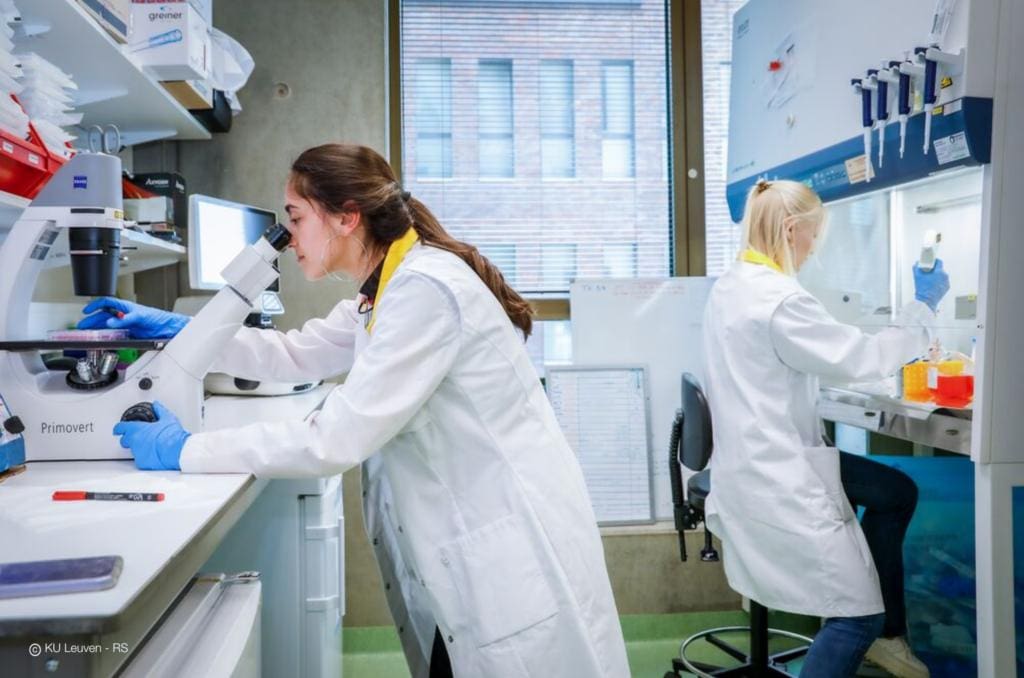
The ERC designed the scheme to fill exactly that gap. Grantees use the cash to file patents, build prototypes, run market studies or spin out start-ups, the unglamorous steps that decide whether research ever leaves the bench.

Demand keeps climbing. The Council has opened its next round, with a September deadline, and earmarked a total of 60 million euros across two 2026 competitions, part of the wider Horizon Europe programme.

Details of the winning projects appear on the ERC’s website, which tracks how basic grants feed into later commercialisation.

The awards land amid a broader European anxiety about turning science into scale. The continent publishes world-class research yet repeatedly watches the resulting companies grow up in the United States or Asia.

Small, targeted grants will not close that gap alone. But their defenders argue that cheap, early bets are precisely where public money works best, catching promising ideas before venture capital deems them investable.

The ERC also recently confirmed 838 million euros in Advanced Grants for 319 senior researchers, a reminder that Proof of Concept sits atop a much larger funding pyramid aimed at frontier science.

Universities from Leuven to Lisbon treat ERC success as a badge of prestige, and the grants shape hiring and reputations far beyond the sums involved.

Whether this cohort produces a blockbuster drug or a billion-euro firm will not be clear for years. For now, 182 laboratories have the means to find out if their science can survive contact with the real world.