August 9, 2026
LATEST
New EU Gas Market Rules Take Effect With Consumer SafeguardsDeforestation Regulation Holds Its December Deadline Despite CutsDigital Omnibus Delays Europe’s High-Risk AI Deadline to 2027Europe’s Schools Confront a Widening Basic Skills GapRule of Law Report Finds Progress but Trust Still LagsIRIS2 Gains 66 Satellites as Brussels Signs the Rollout DealNature Restoration Plans Come Due as Member States Race a DeadlineECB Rates Hold at 2.25 Percent as Frankfurt Waits on the DataEU Budget Talks Turn to Cohesion as Ireland Takes OverWildfire Response Stretches Europe’s Emergency Fleet ThinCan Europe’s Quantum Plan Match Its Big Ambitions?Armenia Edges West as Moscow’s Grip Slips AwayEurope Inherits the World’s Aid Bill It Cannot Fully PayAir Passenger Rights Get Their First Overhaul in Two DecadesErasmus Opens a 5 Billion Euro Round for Skills and MobilityCeuta Crisis Pushes the EU Toward Faster Migrant ReturnsBulky Parcels Face a Packaging Crackdown From August 12Can Europe Build Its Drone Wall Before 2030 Arrives?Indonesia’s Trade Deal With Europe Nears Its Final SignatureEurope Leans on Beijing to Keep Climate Talks Alive Before AntalyaNew EU Gas Market Rules Take Effect With Consumer SafeguardsDeforestation Regulation Holds Its December Deadline Despite CutsDigital Omnibus Delays Europe’s High-Risk AI Deadline to 2027Europe’s Schools Confront a Widening Basic Skills GapRule of Law Report Finds Progress but Trust Still LagsIRIS2 Gains 66 Satellites as Brussels Signs the Rollout DealNature Restoration Plans Come Due as Member States Race a DeadlineECB Rates Hold at 2.25 Percent as Frankfurt Waits on the DataEU Budget Talks Turn to Cohesion as Ireland Takes OverWildfire Response Stretches Europe’s Emergency Fleet ThinCan Europe’s Quantum Plan Match Its Big Ambitions?Armenia Edges West as Moscow’s Grip Slips AwayEurope Inherits the World’s Aid Bill It Cannot Fully PayAir Passenger Rights Get Their First Overhaul in Two DecadesErasmus Opens a 5 Billion Euro Round for Skills and MobilityCeuta Crisis Pushes the EU Toward Faster Migrant ReturnsBulky Parcels Face a Packaging Crackdown From August 12Can Europe Build Its Drone Wall Before 2030 Arrives?Indonesia’s Trade Deal With Europe Nears Its Final SignatureEurope Leans on Beijing to Keep Climate Talks Alive Before Antalya
August 9, 2026
LATEST
New EU Gas Market Rules Take Effect With Consumer SafeguardsDeforestation Regulation Holds Its December Deadline Despite CutsDigital Omnibus Delays Europe’s High-Risk AI Deadline to 2027Europe’s Schools Confront a Widening Basic Skills GapRule of Law Report Finds Progress but Trust Still LagsIRIS2 Gains 66 Satellites as Brussels Signs the Rollout DealNature Restoration Plans Come Due as Member States Race a DeadlineECB Rates Hold at 2.25 Percent as Frankfurt Waits on the DataEU Budget Talks Turn to Cohesion as Ireland Takes OverWildfire Response Stretches Europe’s Emergency Fleet ThinCan Europe’s Quantum Plan Match Its Big Ambitions?Armenia Edges West as Moscow’s Grip Slips AwayEurope Inherits the World’s Aid Bill It Cannot Fully PayAir Passenger Rights Get Their First Overhaul in Two DecadesErasmus Opens a 5 Billion Euro Round for Skills and MobilityCeuta Crisis Pushes the EU Toward Faster Migrant ReturnsBulky Parcels Face a Packaging Crackdown From August 12Can Europe Build Its Drone Wall Before 2030 Arrives?Indonesia’s Trade Deal With Europe Nears Its Final SignatureEurope Leans on Beijing to Keep Climate Talks Alive Before AntalyaNew EU Gas Market Rules Take Effect With Consumer SafeguardsDeforestation Regulation Holds Its December Deadline Despite CutsDigital Omnibus Delays Europe’s High-Risk AI Deadline to 2027Europe’s Schools Confront a Widening Basic Skills GapRule of Law Report Finds Progress but Trust Still LagsIRIS2 Gains 66 Satellites as Brussels Signs the Rollout DealNature Restoration Plans Come Due as Member States Race a DeadlineECB Rates Hold at 2.25 Percent as Frankfurt Waits on the DataEU Budget Talks Turn to Cohesion as Ireland Takes OverWildfire Response Stretches Europe’s Emergency Fleet ThinCan Europe’s Quantum Plan Match Its Big Ambitions?Armenia Edges West as Moscow’s Grip Slips AwayEurope Inherits the World’s Aid Bill It Cannot Fully PayAir Passenger Rights Get Their First Overhaul in Two DecadesErasmus Opens a 5 Billion Euro Round for Skills and MobilityCeuta Crisis Pushes the EU Toward Faster Migrant ReturnsBulky Parcels Face a Packaging Crackdown From August 12Can Europe Build Its Drone Wall Before 2030 Arrives?Indonesia’s Trade Deal With Europe Nears Its Final SignatureEurope Leans on Beijing to Keep Climate Talks Alive Before Antalya

Quantum Chips Draw Fresh EU Millions in a Tightening Tech Race

Delft: Europe is betting fresh money on quantum chips, the fiendishly delicate processors that could redraw the map of computing power, in a bid to close the gap with rivals across the Atlantic and in Asia.

The European Commission opened a run of research calls on 7 July, channelling tens of millions of euros toward the hardware that quantum computers depend on. One strand, aimed at enabling technologies, carries a 20 million euro budget; a companion call focused on chip design adds another 30 million. Both close in early September.

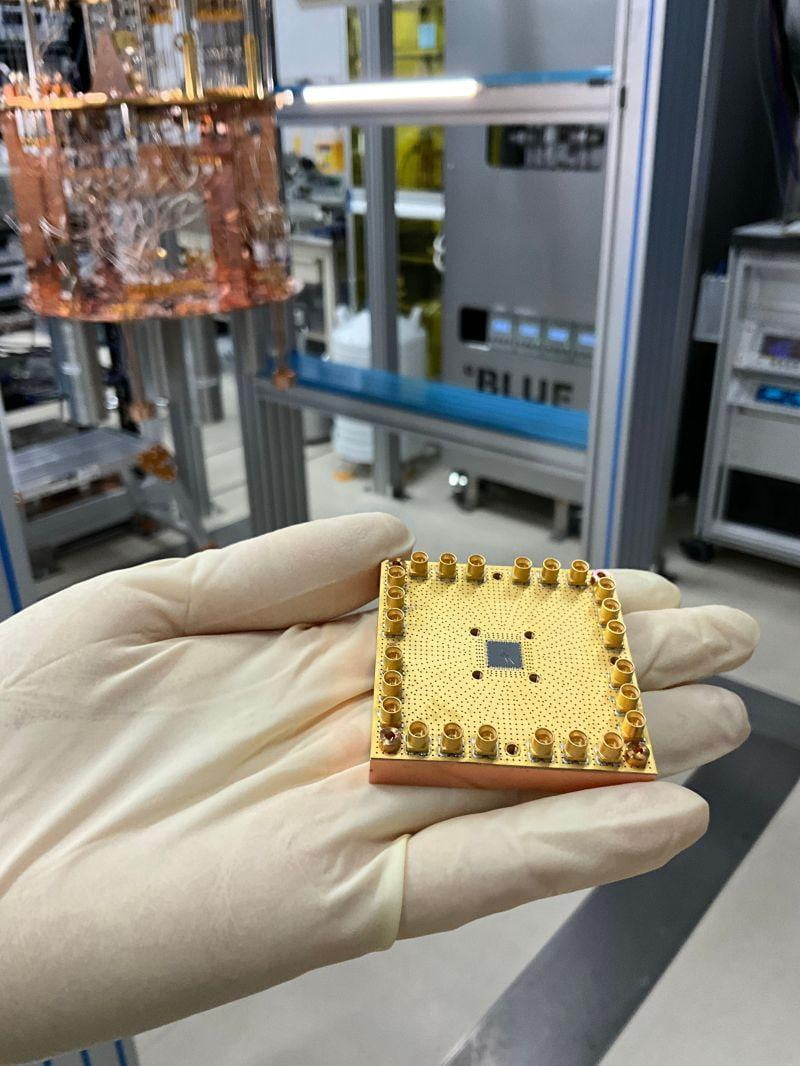
Quantum chips are unlike anything in a conventional laptop. They manipulate fragile quantum states that collapse at the faintest disturbance, and building them demands advances in materials, cryogenics, control electronics and fabrication all at once. Get it right and certain problems that would defeat today’s fastest supercomputers become tractable.

Places like Delft explain why Europe thinks it has a shot. The Dutch city hosts one of the continent’s deepest concentrations of quantum expertise, the kind of academic and industrial cluster the new funding is meant to knit into something more competitive.

The calls sit inside a broader strategy that has gathered pace this year. They dovetail with the Chips Act 2.0, the follow-up to Europe’s semiconductor law that the Commission put forward in June to cut strategic dependencies and pull more advanced production onto European soil. A separate call for evidence is already shaping a future Quantum Act, pencilled in for adoption during 2026.

The logic is defensive as much as ambitious. Europe designs and researches at the frontier but manufactures too little of the most advanced hardware, leaving it exposed if supply chains fracture or export controls tighten elsewhere. Quantum is the arena where officials are determined not to repeat the mistakes made with classical chips.

Money alone rarely settles these races. The United States and China are pouring vast public and private sums into quantum, and Europe’s fragmented markets and cautious capital have long let promising research drift abroad before it could scale. That pattern, brilliant labs feeding other continents’ companies, is the one this funding is designed to break.

The design of the calls hints at lessons learned. Shorter proposals, faster evaluation and tighter links between research and industry all reflect complaints that Europe’s funding machinery moves too ponderously for a field advancing this quickly. Whether the streamlining is enough to keep pace is the open question.

For the researchers and start-ups chasing the deadlines, the immediate prize is capital to push prototypes further. For the bloc as a whole, the stakes are larger: whether Europe ends the decade as a maker of quantum chips or merely a customer for them. Details of the semiconductor push sit with the Commission’s Chips Act team and its quantum programme.