Seoul: South Korea has quietly done something no other Asian country had managed before it. Under a transitional arrangement that took effect at the start of 2025, the country associated itself with Horizon Europe, the European Union’s ninety-five-billion-euro research and innovation programme, and became the first Asian partner to sit inside the bloc’s flagship science effort.
The move matters more than the paperwork suggests. Korean researchers can now apply for grants on equal footing with their European peers in Pillar II of the programme, the industrial and societal-challenges strand that holds the bulk of the budget. A physicist in Daejeon and an engineer in Delft can join the same consortium, share the same funding and chase the same breakthroughs without navigating a maze of bilateral deals.
Seoul made the bet deliberately. South Korea spends heavily on research as a share of its economy, yet its scientists have long worked at the edge of the European networks where much of the world’s collaborative science happens. Association buys them a seat at the table in health, climate, digital technology and clean energy, the fields where Korean industry already competes hard and wants to compete harder.
For Brussels the appeal runs in the opposite direction. The European Union has spent the past two years widening Horizon Europe beyond its own borders, courting partners from the United Kingdom to Japan in a push to globalise its science. Each new associate deepens the talent pool European researchers can draw on and strengthens the argument that the bloc, not Washington or Beijing, sets the terms of open scientific cooperation.
There is a strategic layer beneath the laboratory language. Research partnerships bind economies together in ways trade deals rarely reach, because they create shared knowledge, common standards and personal ties among the people who will run the industries of the next decade. When a Korean and a German team co-author a paper on battery chemistry, they are also quietly aligning two supply chains that both governments want to keep out of Chinese control.
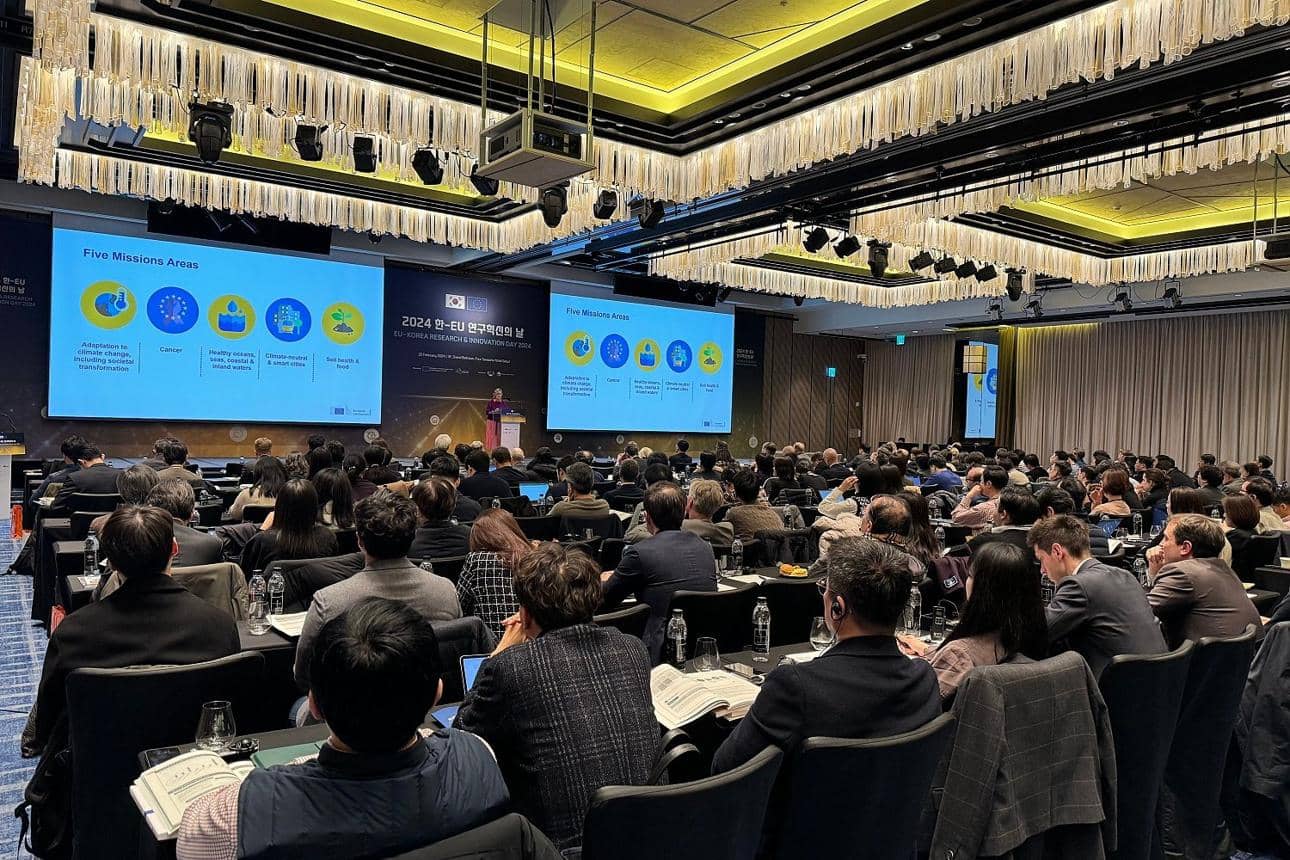
The relationship is already moving from principle to practice. An EU-Korea Research and Innovation Day held in Seoul in March 2026 brought funders and universities together to match Korean laboratories with European calls, the unglamorous plumbing that decides whether an association agreement produces real collaboration or merely a signing photograph.
Obstacles remain. Money flows and intellectual-property rules still have to be worked out call by call, and Korean firms will watch closely to ensure that participation delivers commercial returns rather than one-way access to their know-how. Yet the direction is set. By tying its scientists to Europe’s research engine, South Korea has made a calculated wager that the future of advanced technology will be written by countries that build it together, and it wants to be inside the room when the drafting starts.