August 22, 2026
LATEST
What the EU Taiwan Framework Would Actually Have to DoKorea Signed a Digital Trade Deal That Nobody Has RatifiedCritical Minerals in Mongolia Still Have to Cross Two BordersCan an Indonesia Trade Deal Survive Two Years of RatifyingCross-Border Data Orders Went Live Before the Plumbing DidPlatform Work Rules Take Effect in December and Few Are ReadyCan Europe’s Firefighting Fleet Keep Pace With EU WildfiresThe AI Act Deadline Passed on 2 August and Nothing BitWhy Construction Keeps Shrinking While Confidence ImprovesAccession Talks Stall Again and September 1 Is the TestBrussels Applied a Trade Deal It Cannot Yet RatifyAfrica’s Power Market Now Needs Money More Than BlueprintsLong-Term Budget Talks Enter Autumn Without a Council LineForeign Subsidies Enforcement Now Turns on a Dublin RaidWho Writes Europe’s Telecom Rules Once Copper DisappearsDisability Cards Exist on Paper and Nowhere Else Until 2028Losing Visa-Free Travel Now Takes a Thirty Percent SwingTwenty Flagship Actions Will Test Whether the Culture Compass WorksEurope’s Quality Jobs Act Now Rests on What Unions Do by SeptemberDoes a Three Euro Parcel Duty Change Anything About Cheap ImportsWhat the EU Taiwan Framework Would Actually Have to DoKorea Signed a Digital Trade Deal That Nobody Has RatifiedCritical Minerals in Mongolia Still Have to Cross Two BordersCan an Indonesia Trade Deal Survive Two Years of RatifyingCross-Border Data Orders Went Live Before the Plumbing DidPlatform Work Rules Take Effect in December and Few Are ReadyCan Europe’s Firefighting Fleet Keep Pace With EU WildfiresThe AI Act Deadline Passed on 2 August and Nothing BitWhy Construction Keeps Shrinking While Confidence ImprovesAccession Talks Stall Again and September 1 Is the TestBrussels Applied a Trade Deal It Cannot Yet RatifyAfrica’s Power Market Now Needs Money More Than BlueprintsLong-Term Budget Talks Enter Autumn Without a Council LineForeign Subsidies Enforcement Now Turns on a Dublin RaidWho Writes Europe’s Telecom Rules Once Copper DisappearsDisability Cards Exist on Paper and Nowhere Else Until 2028Losing Visa-Free Travel Now Takes a Thirty Percent SwingTwenty Flagship Actions Will Test Whether the Culture Compass WorksEurope’s Quality Jobs Act Now Rests on What Unions Do by SeptemberDoes a Three Euro Parcel Duty Change Anything About Cheap Imports
August 22, 2026
LATEST
What the EU Taiwan Framework Would Actually Have to DoKorea Signed a Digital Trade Deal That Nobody Has RatifiedCritical Minerals in Mongolia Still Have to Cross Two BordersCan an Indonesia Trade Deal Survive Two Years of RatifyingCross-Border Data Orders Went Live Before the Plumbing DidPlatform Work Rules Take Effect in December and Few Are ReadyCan Europe’s Firefighting Fleet Keep Pace With EU WildfiresThe AI Act Deadline Passed on 2 August and Nothing BitWhy Construction Keeps Shrinking While Confidence ImprovesAccession Talks Stall Again and September 1 Is the TestBrussels Applied a Trade Deal It Cannot Yet RatifyAfrica’s Power Market Now Needs Money More Than BlueprintsLong-Term Budget Talks Enter Autumn Without a Council LineForeign Subsidies Enforcement Now Turns on a Dublin RaidWho Writes Europe’s Telecom Rules Once Copper DisappearsDisability Cards Exist on Paper and Nowhere Else Until 2028Losing Visa-Free Travel Now Takes a Thirty Percent SwingTwenty Flagship Actions Will Test Whether the Culture Compass WorksEurope’s Quality Jobs Act Now Rests on What Unions Do by SeptemberDoes a Three Euro Parcel Duty Change Anything About Cheap ImportsWhat the EU Taiwan Framework Would Actually Have to DoKorea Signed a Digital Trade Deal That Nobody Has RatifiedCritical Minerals in Mongolia Still Have to Cross Two BordersCan an Indonesia Trade Deal Survive Two Years of RatifyingCross-Border Data Orders Went Live Before the Plumbing DidPlatform Work Rules Take Effect in December and Few Are ReadyCan Europe’s Firefighting Fleet Keep Pace With EU WildfiresThe AI Act Deadline Passed on 2 August and Nothing BitWhy Construction Keeps Shrinking While Confidence ImprovesAccession Talks Stall Again and September 1 Is the TestBrussels Applied a Trade Deal It Cannot Yet RatifyAfrica’s Power Market Now Needs Money More Than BlueprintsLong-Term Budget Talks Enter Autumn Without a Council LineForeign Subsidies Enforcement Now Turns on a Dublin RaidWho Writes Europe’s Telecom Rules Once Copper DisappearsDisability Cards Exist on Paper and Nowhere Else Until 2028Losing Visa-Free Travel Now Takes a Thirty Percent SwingTwenty Flagship Actions Will Test Whether the Culture Compass WorksEurope’s Quality Jobs Act Now Rests on What Unions Do by SeptemberDoes a Three Euro Parcel Duty Change Anything About Cheap Imports

Australia and Europe Turn a Trade Deal Into a Defence Alliance

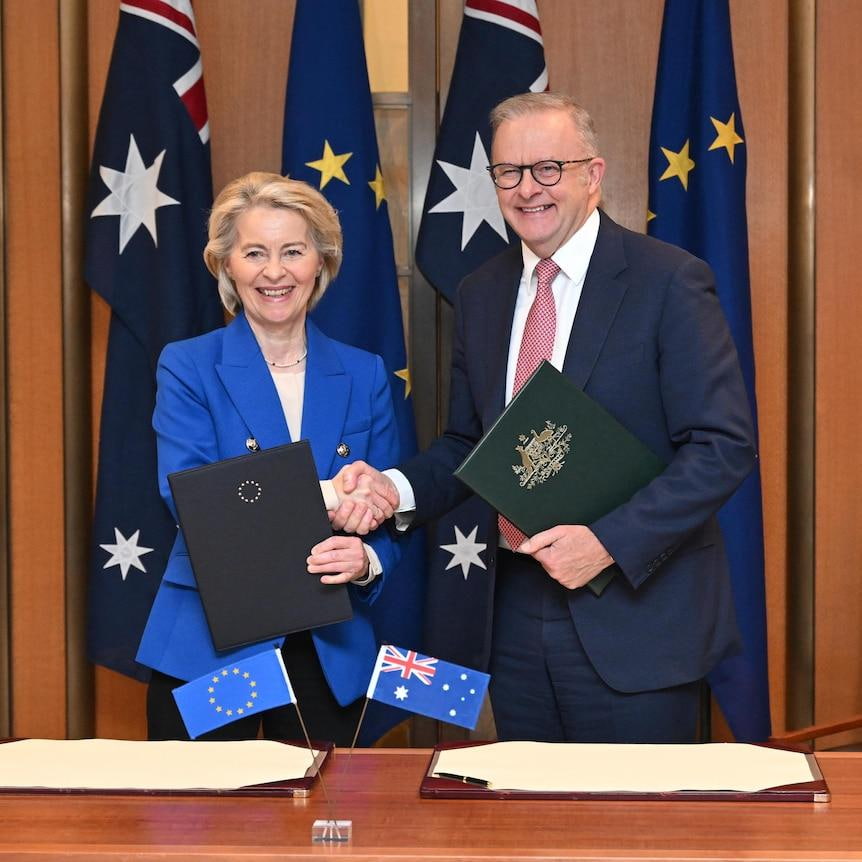
Canberra: When Australian and European negotiators finally closed an eight-year pursuit of a trade agreement earlier this year, the headline landed on tariffs and critical minerals. The quieter document signed the same day may prove more consequential: a Security and Defence Partnership that pulls two ends of the democratic world into a single strategic conversation.

The pairing was no accident. Ursula von der Leyen framed the twin deals around what she called collective resilience, a phrase meant to capture a moment when great powers wield tariffs as leverage and supply chains as pressure points. Australia offers Europe a like-minded anchor in a region the Union keeps describing as decisive for its future but where it owns little hard power of its own.

The defence pact commits the two sides to work together on maritime security, cyber defence, space, counter-disinformation and crisis management, and it opens the door for Australia to take part in selected European security missions and defence-industrial projects. For a bloc that has spent the past three years rebuilding its arsenal, Australian shipyards, testing ranges and rare-earth deposits read less like distant curiosities than like missing pieces of an industrial map.

Canberra has its own arithmetic. Australia already sits inside the AUKUS submarine venture with Washington and London, yet the government has grown wary of leaning on a single guarantor. A formal channel to Brussels spreads the bet across a second bloc of wealthy democracies, one that brings regulatory weight, defence manufacturers and a seat in most of the world’s standard-setting rooms. The European link also gives Australia cover to diversify away from a Chinese market that still buys much of what it digs up.

Skeptics in both capitals ask a fair question: what can a partnership deliver that geography denies? Europe cannot sail a fleet into the South China Sea and hold it there, and Australia will not send a brigade to the Baltic. The honest answer is that the pact is built for the grey zone rather than open war. It targets the coercion that arrives through blocked ports, jammed satellites, hacked utilities and weaponised export licences, the everyday pressure that neither side can face alone.

The agreement also carries a signal aimed at Washington. By binding themselves closer, Brussels and Canberra hedge against an American partner whose reliability now swings with each election cycle. If the transatlantic and trans-Pacific guarantees both wobble, a Europe-Australia spine gives the wider democratic camp a second load-bearing wall.

Details will decide whether the language becomes muscle. The partnership still needs joint exercises, shared procurement, intelligence plumbing and the unglamorous business of making twenty-seven governments move as one. You can read the outline in the Commission’s own account of the Australia agreement, but the substance will be written over years, not press conferences. Still, a decade of talks has left Europe and Australia with more than lower tariffs. It has left them, for the first time, with a security relationship worth the name.