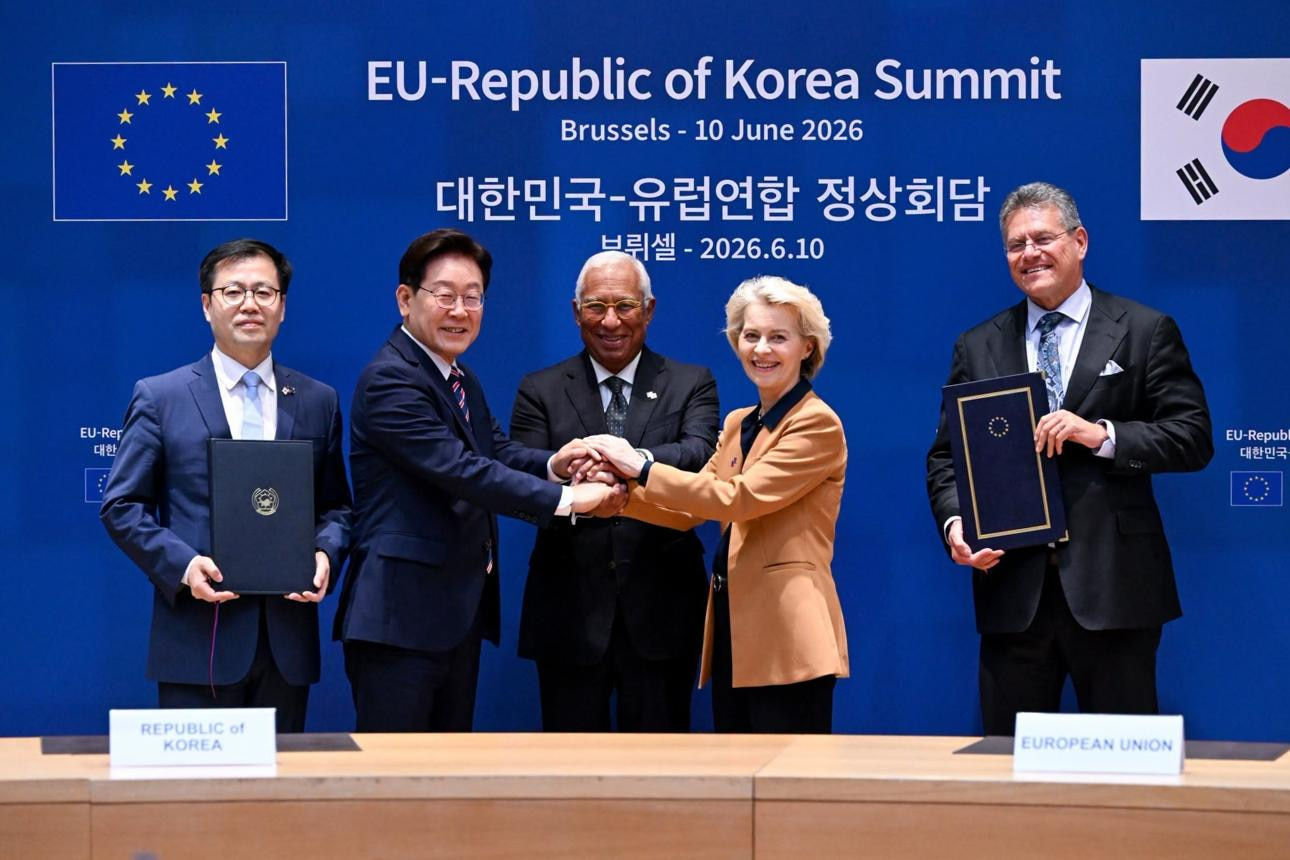
Seongnam: The software firms clustered in this satellite city south of Seoul export code, cloud services and platform licences to Europe every day. Their governments signed a digital trade agreement in Brussels on 10 June, at the eleventh summit between the European Union and the Republic of Korea. More than two months later, the text binds nobody, because neither side has ratified it.
The agreement does three concrete things. It guarantees cross border data flows between the two economies. It forbids either side from demanding source code as a condition of market entry. It recognises electronic contracts and electronic signatures, which removes a recurring friction in services procurement. The Commission describes the package as keeping the 2011 free trade agreement current, and framed the signature that way in June.
Ratification is where the calendar bites. The European Parliament must give consent before entry into force, and the committee stage has not started. Korea’s National Assembly runs its own approval process. Nobody in either capital predicts a fight, but digital trade files attract scrutiny that tariff schedules do not, because data flow commitments intersect with privacy law and privacy law attracts petitioners.
That intersection is manageable in this case. The two sides already recognise each other’s data protection regimes through a mutual adequacy arrangement concluded in 2021, so personal data moves lawfully today without the new text. The agreement therefore protects an existing arrangement rather than creating one. Officials rarely say this plainly, because insurance policies make poor announcements.
The source code provision matters more than it sounds. Korean and European firms both sell industrial software into third markets that increasingly demand code disclosure as a licensing condition. By writing the prohibition into a bilateral text, Brussels and Seoul create a reference clause they can carry into negotiations with other partners. Standard setting through precedent works slowly and costs nothing.
Delivery is now the harder half. The two administrations will convene in Seoul from 15 to 17 September for a digital partnership event built around artificial intelligence, 6G networks, cybersecurity and standardisation. Those four workstreams predate the trade agreement and run on separate money. Standardisation is the one that will decide whether the partnership produces anything durable, because whoever writes the specifications for AI native networks shapes procurement for a decade.
Europe brings regulatory reach to that table and little manufacturing. Korea brings equipment vendors, memory fabrication and a domestic operator base willing to trial early. The complementarity is real, and it is also asymmetric. European negotiators want Korean firms inside European standards bodies. Korean firms want European market certainty before they commit engineering time. Neither side can force the other.
Watch three markers over the autumn. First, whether Parliament’s trade committee schedules the consent file before December. Second, whether the September meeting produces named joint projects with budget lines rather than a communique. Third, whether Korean vendors join the European 6G research consortia that will bid for the next research framework. Two of those three would make the June signature look like the start of something. One would make it look like housekeeping.