August 22, 2026
LATEST
What the EU Taiwan Framework Would Actually Have to DoKorea Signed a Digital Trade Deal That Nobody Has RatifiedCritical Minerals in Mongolia Still Have to Cross Two BordersCan an Indonesia Trade Deal Survive Two Years of RatifyingCross-Border Data Orders Went Live Before the Plumbing DidPlatform Work Rules Take Effect in December and Few Are ReadyCan Europe’s Firefighting Fleet Keep Pace With EU WildfiresThe AI Act Deadline Passed on 2 August and Nothing BitWhy Construction Keeps Shrinking While Confidence ImprovesAccession Talks Stall Again and September 1 Is the TestBrussels Applied a Trade Deal It Cannot Yet RatifyAfrica’s Power Market Now Needs Money More Than BlueprintsLong-Term Budget Talks Enter Autumn Without a Council LineForeign Subsidies Enforcement Now Turns on a Dublin RaidWho Writes Europe’s Telecom Rules Once Copper DisappearsDisability Cards Exist on Paper and Nowhere Else Until 2028Losing Visa-Free Travel Now Takes a Thirty Percent SwingTwenty Flagship Actions Will Test Whether the Culture Compass WorksEurope’s Quality Jobs Act Now Rests on What Unions Do by SeptemberDoes a Three Euro Parcel Duty Change Anything About Cheap ImportsWhat the EU Taiwan Framework Would Actually Have to DoKorea Signed a Digital Trade Deal That Nobody Has RatifiedCritical Minerals in Mongolia Still Have to Cross Two BordersCan an Indonesia Trade Deal Survive Two Years of RatifyingCross-Border Data Orders Went Live Before the Plumbing DidPlatform Work Rules Take Effect in December and Few Are ReadyCan Europe’s Firefighting Fleet Keep Pace With EU WildfiresThe AI Act Deadline Passed on 2 August and Nothing BitWhy Construction Keeps Shrinking While Confidence ImprovesAccession Talks Stall Again and September 1 Is the TestBrussels Applied a Trade Deal It Cannot Yet RatifyAfrica’s Power Market Now Needs Money More Than BlueprintsLong-Term Budget Talks Enter Autumn Without a Council LineForeign Subsidies Enforcement Now Turns on a Dublin RaidWho Writes Europe’s Telecom Rules Once Copper DisappearsDisability Cards Exist on Paper and Nowhere Else Until 2028Losing Visa-Free Travel Now Takes a Thirty Percent SwingTwenty Flagship Actions Will Test Whether the Culture Compass WorksEurope’s Quality Jobs Act Now Rests on What Unions Do by SeptemberDoes a Three Euro Parcel Duty Change Anything About Cheap Imports
August 22, 2026
LATEST
What the EU Taiwan Framework Would Actually Have to DoKorea Signed a Digital Trade Deal That Nobody Has RatifiedCritical Minerals in Mongolia Still Have to Cross Two BordersCan an Indonesia Trade Deal Survive Two Years of RatifyingCross-Border Data Orders Went Live Before the Plumbing DidPlatform Work Rules Take Effect in December and Few Are ReadyCan Europe’s Firefighting Fleet Keep Pace With EU WildfiresThe AI Act Deadline Passed on 2 August and Nothing BitWhy Construction Keeps Shrinking While Confidence ImprovesAccession Talks Stall Again and September 1 Is the TestBrussels Applied a Trade Deal It Cannot Yet RatifyAfrica’s Power Market Now Needs Money More Than BlueprintsLong-Term Budget Talks Enter Autumn Without a Council LineForeign Subsidies Enforcement Now Turns on a Dublin RaidWho Writes Europe’s Telecom Rules Once Copper DisappearsDisability Cards Exist on Paper and Nowhere Else Until 2028Losing Visa-Free Travel Now Takes a Thirty Percent SwingTwenty Flagship Actions Will Test Whether the Culture Compass WorksEurope’s Quality Jobs Act Now Rests on What Unions Do by SeptemberDoes a Three Euro Parcel Duty Change Anything About Cheap ImportsWhat the EU Taiwan Framework Would Actually Have to DoKorea Signed a Digital Trade Deal That Nobody Has RatifiedCritical Minerals in Mongolia Still Have to Cross Two BordersCan an Indonesia Trade Deal Survive Two Years of RatifyingCross-Border Data Orders Went Live Before the Plumbing DidPlatform Work Rules Take Effect in December and Few Are ReadyCan Europe’s Firefighting Fleet Keep Pace With EU WildfiresThe AI Act Deadline Passed on 2 August and Nothing BitWhy Construction Keeps Shrinking While Confidence ImprovesAccession Talks Stall Again and September 1 Is the TestBrussels Applied a Trade Deal It Cannot Yet RatifyAfrica’s Power Market Now Needs Money More Than BlueprintsLong-Term Budget Talks Enter Autumn Without a Council LineForeign Subsidies Enforcement Now Turns on a Dublin RaidWho Writes Europe’s Telecom Rules Once Copper DisappearsDisability Cards Exist on Paper and Nowhere Else Until 2028Losing Visa-Free Travel Now Takes a Thirty Percent SwingTwenty Flagship Actions Will Test Whether the Culture Compass WorksEurope’s Quality Jobs Act Now Rests on What Unions Do by SeptemberDoes a Three Euro Parcel Duty Change Anything About Cheap Imports

Record Planes and Crews Power Europe’s 2026 Wildfire Response

Brussels: The European Commission has mounted its largest ever wildfire response, pooling planes, helicopters and firefighters from across the continent as record heat and drought drive extreme blazes through southern Europe this summer. Officials describe the 2026 wildfire response as the biggest coordinated firefighting effort the bloc has assembled.

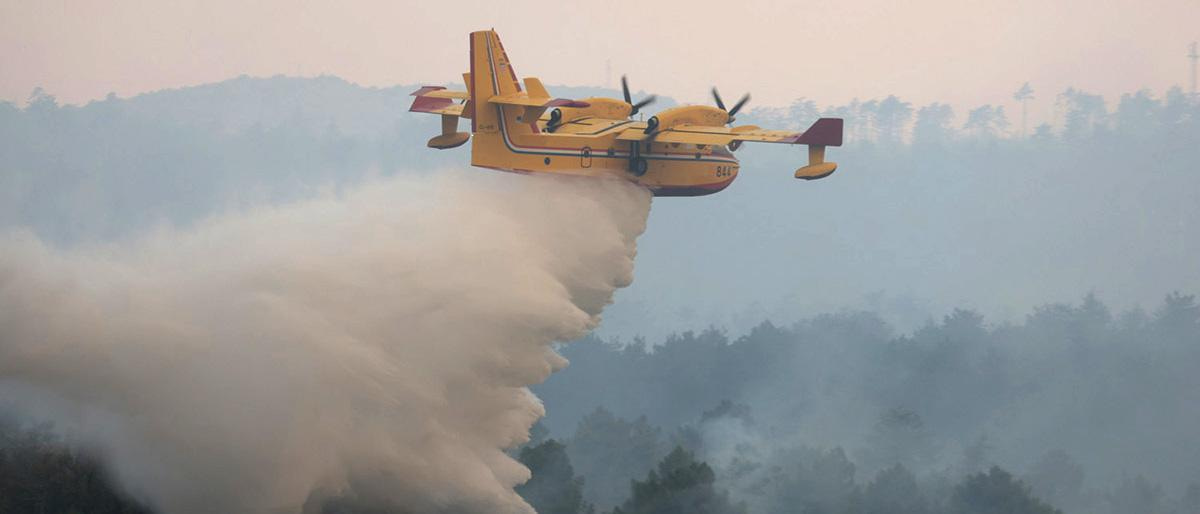
At the heart of the operation sits rescEU, the EU's reserve of civil protection assets, together with the European Civil Protection Pool. For 2026 that combined fleet counts 22 firefighting aircraft, made up of 14 amphibious planes and 8 lighter aircraft, backed by 5 helicopters stationed across 12 countries. Ground teams and an advisory unit stand ready alongside them.

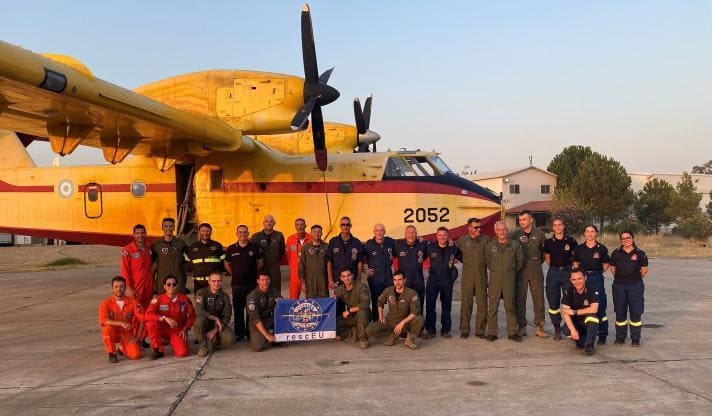
The Commission also pre-positioned crews before the peak of the season. It stationed 777 firefighters from 14 countries in high-risk areas across Cyprus, Greece, Italy, France, Spain and Portugal, the strongest turnout since the pre-positioning scheme began in 2022. The Commission set out the scale when it announced the EU had launched its largest ever wildfire response for the 2026 summer.

Those preparations turned into rapid deployments as fires spread. By late July and early August, the EU sent 7 planes and 4 helicopters from Czechia, Croatia, Germany, Portugal, Slovakia, Sweden and Türkiye to help France battle its blazes, drawing largely on the rescEU fleet. In Spain, the bloc mobilised 6 planes from Greece, Italy and Türkiye and welcomed 134 personnel and 41 vehicles sent by Portugal.

The Emergency Response Coordination Centre runs the effort around the clock, matching requests for help to available assets and staying in constant contact with national authorities. When a member state's own resources run short, it can call on the Union Civil Protection Mechanism, and rescEU steps in as the backstop. The Commission explains how that reserve works on its rescEU information page.

Scientists warn the conditions fuelling the fires keep worsening. The Commission's Joint Research Centre reported this month that deepening drought and record heat grip much of Europe, feeding extraordinary wildfires and pushing rivers to extremely low flows. The JRC laid out the picture in its assessment of drought and heat across Europe.

The pattern points to a structural problem rather than a one-off bad year. As hotter, drier summers lengthen the fire season, national fleets increasingly lean on shared European capacity to cope, and the Commission has steadily expanded rescEU to keep pace.

The bloc is already buying its own aircraft to ease that strain. It is financing a permanent fleet of firefighting planes for member states, with deliveries stretching into the coming years, so the wildfire response depends less on borrowing whatever assets happen to be free during a crisis.

For the communities under smoke this August, the machinery is doing its job: cross-border crews reach France and Spain within days of a request. The harder question Brussels faces is whether even its largest ever effort can keep up with summers that keep breaking records.