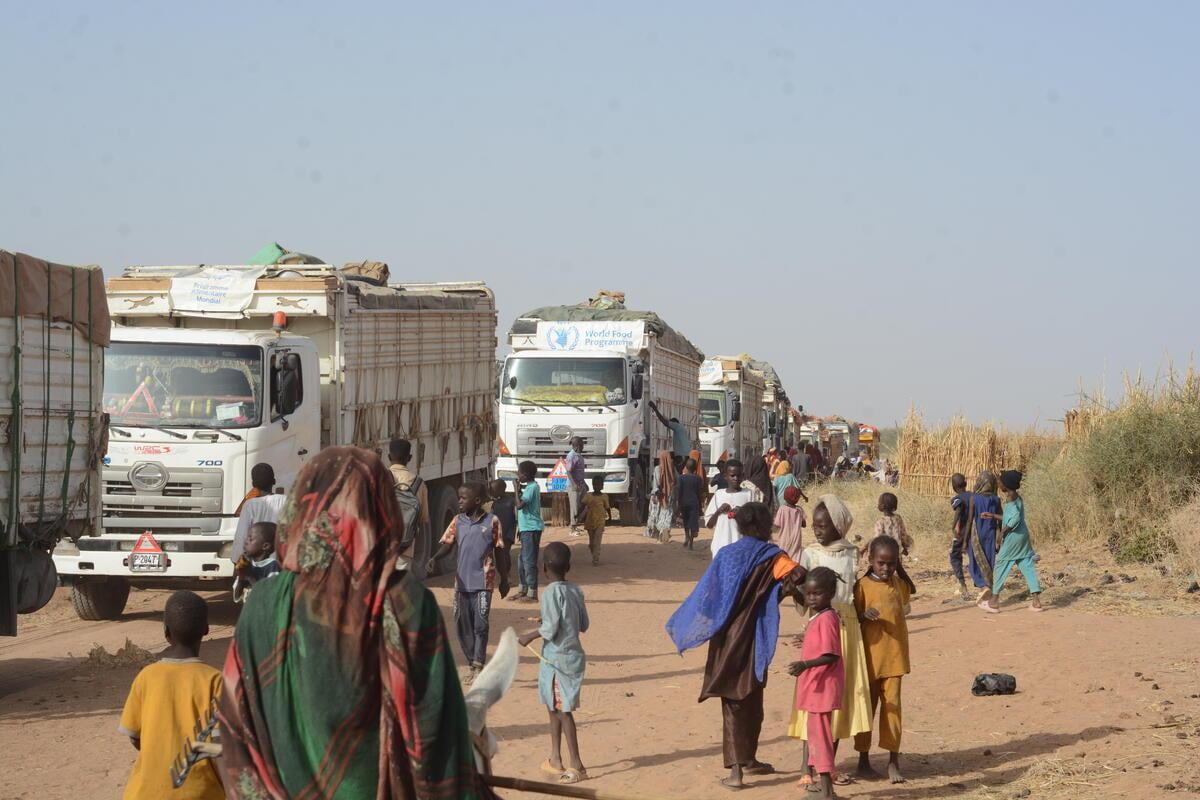
Port Sudan: Sudan aid arrives here in quantities that look impressive on a spreadsheet and inadequate on a road. The European Union has allocated 162 million euro for lifesaving assistance inside the country this year, lifting its total response, counting neighbouring states absorbing refugees, to 276.3 million euro. That makes Sudan the largest single humanitarian commitment Europe holds anywhere in Africa. It also makes Sudan the clearest illustration of a problem money does not solve.
Aid agencies have been unable to reach El Fasher with meaningful supplies for more than a year. Food security analysts placed the town in the highest famine classification the IPC scale allows, and the designation has not shifted because nobody with trucks can get through. Europe responded by flying supplies into Darfur on an emergency air bridge, a method that moves tonnes where convoys move thousands of tonnes. Officials in Brussels do not pretend otherwise.
The financing arithmetic explains part of the strain. The Commission opened 2026 with a 1.9 billion euro humanitarian budget against 239 million people worldwide who need assistance, and it did so while several major donors cut their own contributions sharply. Europe has held its line and now finds itself carrying a larger share of a shrinking pot. That is a defensible position. It is not a sustainable one, and nobody in the humanitarian directorate describes it as such.
Access, not funding, does most of the damage. Warring parties inspect, delay and reroute convoys with an efficiency they rarely apply to anything else. The Union’s operational priorities now list access and coordination alongside famine response, which is an unusual admission for a donor. It concedes that a portion of European money buys negotiation, deconfliction and logistics rather than food.
Partners on the ground report what that buys. One international agency renewed a one-year Sudan programme this month on EU funding, having reached close to 150,000 people with health, nutrition, protection and water services in the preceding cycle. Those are real numbers against a caseload measured in tens of millions, and the gap between the two figures is the honest measure of the response.
Critics of European policy argue the Union has separated its humanitarian generosity from its diplomatic weight, funding the consequences of a war it does little to shorten. The counterargument holds that Europe lacks leverage over either belligerent and that conditioning aid on political outcomes would starve civilians to punish generals. Both positions have merit. Neither has produced a corridor into El Fasher.
What Europe can still change sits at the margins and matters anyway. Multi-year funding lets agencies hire and pre-position instead of renewing contracts annually. Sustained pressure through the states that arm and finance the combatants reaches places European statements do not. And publishing what the access constraints actually cost, in tonnes undelivered rather than euro disbursed, would tell European taxpayers something more useful than another pledging total.