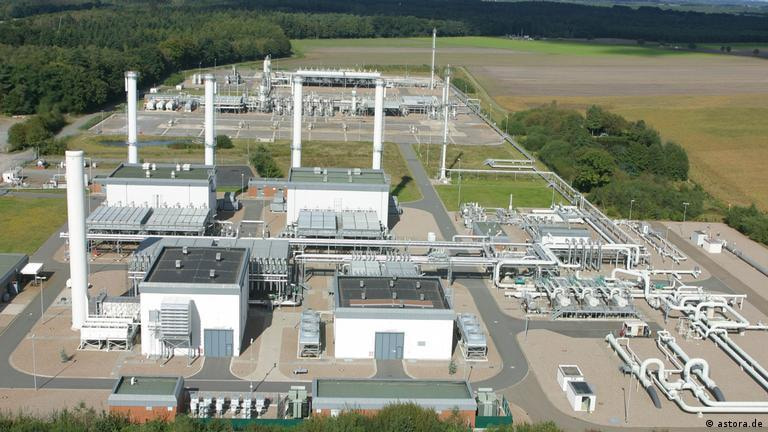
Brussels: Europe entered August 2026 with gas storage barely above half full, and the European Union now has less than three months to reach the 80 percent filling target that member states must meet by 1 November under the bloc’s storage rules.
Gas storage sites across the EU held roughly 57 percent of working capacity on 2 August, some 11 to 12 percentage points below the five-year seasonal norm. Injection rates have run slightly ahead of the pace needed to close the gap, but the margin is thin and depends on liquefied natural gas cargoes that Asia also wants.
Energy Commissioner Dan Jørgensen wrote to capitals earlier this year urging them to use the flexibility written into the storage regulation and to drop their filling ambition from 90 percent to 80 percent as early in the season as possible.
The Commissioner invited EU countries to make use of the flexibility provisions in the Gas Storage Regulation, and to consider reducing their filling target to 80 percent early in the season to give market participants certainty.
That letter mattered because a rigid 90 percent rule turns every summer into a seller’s market. Traders knew European buyers had to fill, so they priced accordingly. Loosening the target removed part of that premium and let utilities buy when prices suited them rather than when the calendar demanded.
The trade-off arrives in January. A store filled to 80 percent instead of 90 percent leaves roughly a fortnight less cushion during a sustained cold spell, and the bloc starts from a low base after drawing storage down to 31 billion cubic metres by the end of the last heating season, the weakest opening position since 2018.
The regulator ACER has warned that reaching comfortable gas storage levels demands more LNG than Europe imported last year. Its assessment sets out the arithmetic bluntly:
- The mandatory target for winter 2026/27 stands at 80 percent, with scope to deviate by a further 4 percentage points
- Storage sat near 57 percent on 2 August 2026
- Injections must average about 0.25 percentage points per day to hit the target by 1 November
- Hitting 90 percent would require LNG imports roughly 13 percent above 2025 levels
National positions diverge sharply. Germany, Italy and the Netherlands hold the bulk of EU capacity and carry most of the filling burden, while countries with little storage of their own rely on their neighbours honouring solidarity commitments if a cold January bites.
The ACER assessment of storage refilling needs stresses that infrastructure is not the constraint. Regasification terminals built after 2022 sit underused for much of the year. The constraint is price, and whether European buyers outbid Asian utilities through the autumn.
Russian pipeline volumes no longer feature in the calculation. The bloc has legislated an end to Russian gas imports, which removes a political vulnerability and replaces it with a commercial one, since Europe now competes for cargoes in a global market rather than drawing on a fixed pipeline.
The Commission’s Gas Coordination Group, which brings together member states, regulators and industry, has met repeatedly through the year and reported no immediate risk to security of supply. Its assessment of seasonal preparedness modelled several disruption scenarios with the gas transmission operators.
Gas storage rules were an emergency measure in 2022, drafted while prices touched levels that closed factories. Four years on, they function as ordinary market regulation, and the argument in Brussels has shifted from whether to mandate filling to how much insurance European households should pay for. A mild winter makes the 80 percent choice look prudent. A cold one makes it look like a gamble taken in August.