August 22, 2026
LATEST
What the EU Taiwan Framework Would Actually Have to DoKorea Signed a Digital Trade Deal That Nobody Has RatifiedCritical Minerals in Mongolia Still Have to Cross Two BordersCan an Indonesia Trade Deal Survive Two Years of RatifyingCross-Border Data Orders Went Live Before the Plumbing DidPlatform Work Rules Take Effect in December and Few Are ReadyCan Europe’s Firefighting Fleet Keep Pace With EU WildfiresThe AI Act Deadline Passed on 2 August and Nothing BitWhy Construction Keeps Shrinking While Confidence ImprovesAccession Talks Stall Again and September 1 Is the TestBrussels Applied a Trade Deal It Cannot Yet RatifyAfrica’s Power Market Now Needs Money More Than BlueprintsLong-Term Budget Talks Enter Autumn Without a Council LineForeign Subsidies Enforcement Now Turns on a Dublin RaidWho Writes Europe’s Telecom Rules Once Copper DisappearsDisability Cards Exist on Paper and Nowhere Else Until 2028Losing Visa-Free Travel Now Takes a Thirty Percent SwingTwenty Flagship Actions Will Test Whether the Culture Compass WorksEurope’s Quality Jobs Act Now Rests on What Unions Do by SeptemberDoes a Three Euro Parcel Duty Change Anything About Cheap ImportsWhat the EU Taiwan Framework Would Actually Have to DoKorea Signed a Digital Trade Deal That Nobody Has RatifiedCritical Minerals in Mongolia Still Have to Cross Two BordersCan an Indonesia Trade Deal Survive Two Years of RatifyingCross-Border Data Orders Went Live Before the Plumbing DidPlatform Work Rules Take Effect in December and Few Are ReadyCan Europe’s Firefighting Fleet Keep Pace With EU WildfiresThe AI Act Deadline Passed on 2 August and Nothing BitWhy Construction Keeps Shrinking While Confidence ImprovesAccession Talks Stall Again and September 1 Is the TestBrussels Applied a Trade Deal It Cannot Yet RatifyAfrica’s Power Market Now Needs Money More Than BlueprintsLong-Term Budget Talks Enter Autumn Without a Council LineForeign Subsidies Enforcement Now Turns on a Dublin RaidWho Writes Europe’s Telecom Rules Once Copper DisappearsDisability Cards Exist on Paper and Nowhere Else Until 2028Losing Visa-Free Travel Now Takes a Thirty Percent SwingTwenty Flagship Actions Will Test Whether the Culture Compass WorksEurope’s Quality Jobs Act Now Rests on What Unions Do by SeptemberDoes a Three Euro Parcel Duty Change Anything About Cheap Imports
August 22, 2026
LATEST
What the EU Taiwan Framework Would Actually Have to DoKorea Signed a Digital Trade Deal That Nobody Has RatifiedCritical Minerals in Mongolia Still Have to Cross Two BordersCan an Indonesia Trade Deal Survive Two Years of RatifyingCross-Border Data Orders Went Live Before the Plumbing DidPlatform Work Rules Take Effect in December and Few Are ReadyCan Europe’s Firefighting Fleet Keep Pace With EU WildfiresThe AI Act Deadline Passed on 2 August and Nothing BitWhy Construction Keeps Shrinking While Confidence ImprovesAccession Talks Stall Again and September 1 Is the TestBrussels Applied a Trade Deal It Cannot Yet RatifyAfrica’s Power Market Now Needs Money More Than BlueprintsLong-Term Budget Talks Enter Autumn Without a Council LineForeign Subsidies Enforcement Now Turns on a Dublin RaidWho Writes Europe’s Telecom Rules Once Copper DisappearsDisability Cards Exist on Paper and Nowhere Else Until 2028Losing Visa-Free Travel Now Takes a Thirty Percent SwingTwenty Flagship Actions Will Test Whether the Culture Compass WorksEurope’s Quality Jobs Act Now Rests on What Unions Do by SeptemberDoes a Three Euro Parcel Duty Change Anything About Cheap ImportsWhat the EU Taiwan Framework Would Actually Have to DoKorea Signed a Digital Trade Deal That Nobody Has RatifiedCritical Minerals in Mongolia Still Have to Cross Two BordersCan an Indonesia Trade Deal Survive Two Years of RatifyingCross-Border Data Orders Went Live Before the Plumbing DidPlatform Work Rules Take Effect in December and Few Are ReadyCan Europe’s Firefighting Fleet Keep Pace With EU WildfiresThe AI Act Deadline Passed on 2 August and Nothing BitWhy Construction Keeps Shrinking While Confidence ImprovesAccession Talks Stall Again and September 1 Is the TestBrussels Applied a Trade Deal It Cannot Yet RatifyAfrica’s Power Market Now Needs Money More Than BlueprintsLong-Term Budget Talks Enter Autumn Without a Council LineForeign Subsidies Enforcement Now Turns on a Dublin RaidWho Writes Europe’s Telecom Rules Once Copper DisappearsDisability Cards Exist on Paper and Nowhere Else Until 2028Losing Visa-Free Travel Now Takes a Thirty Percent SwingTwenty Flagship Actions Will Test Whether the Culture Compass WorksEurope’s Quality Jobs Act Now Rests on What Unions Do by SeptemberDoes a Three Euro Parcel Duty Change Anything About Cheap Imports

Can Ten Billion Fix the Middle Corridor Bottlenecks

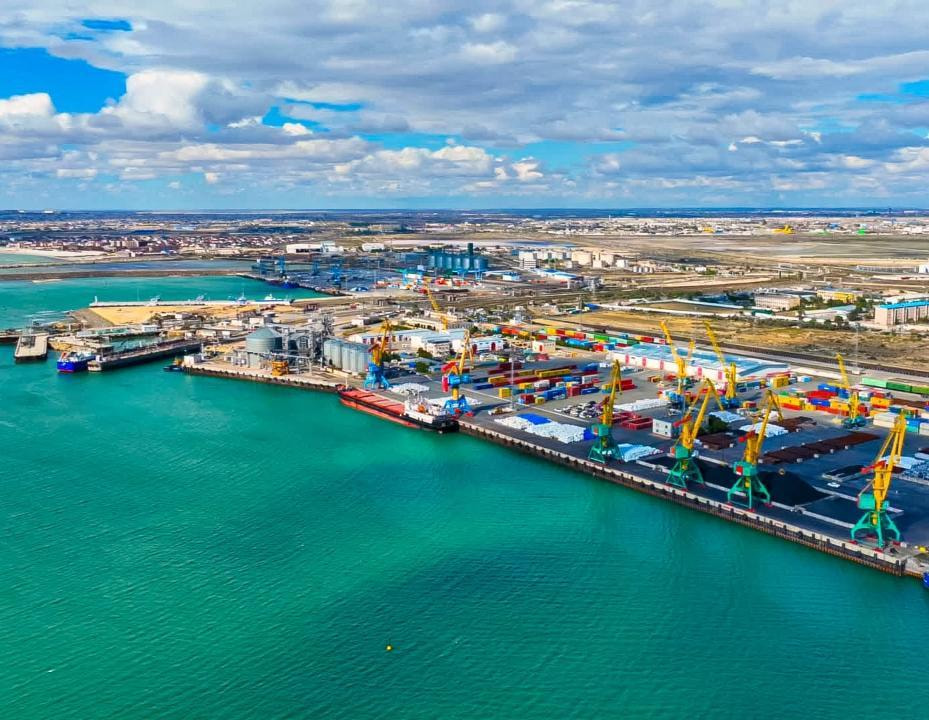
Aktau: The Caspian port that Europe needs most handles a fraction of what European planning documents assume it can. Freight moving between China and Europe along the Middle Corridor crosses this water on a small fleet, waits for berths that fill quickly, and then meets a rail gauge change on the far shore. European money has been promised. The bottlenecks have not moved much.

Brussels pledged around EUR 10 billion for the route in 2024 through Global Gateway and its lending institutions, and the number still anchors every speech about connectivity with Central Asia. In February the European Commission published a meta-study mapping where the money should go. The study identifies missing and outdated stretches across transport, energy and digital links, and it points hardest at the Caucasus segment and the Caspian basin, where port capacity, vessel numbers and multimodal handling all fall short of current volumes.

That finding deserves attention because it inverts the usual story. Traffic on the route quadrupled after 2022, when sanctions pushed cargo off the Russian corridor. Demand arrived first. Infrastructure did not follow. Europe now funds a corridor that traders already use, rather than building one to attract them, and that changes what good policy looks like. The constraint is throughput, not interest.

Throughput problems resist headline financing. A ship ordered today reaches the Caspian in years, not months. A port crane arrives faster but only helps if customs clearance keeps pace. The meta-study flags regulatory bottlenecks alongside physical ones, and the regulatory list is longer. Five Central Asian states, three Caucasus states and Turkiye each apply their own documentation, tariffs and inspection practice. Cargo crossing all of them meets more paperwork than track.

Europe funded a coordination platform to address exactly this. A consortium took over its operation in 2025 for a three-year term, tasked with getting Kazakhstan, the Kyrgyz Republic, Tajikistan, Turkmenistan and Uzbekistan to align procedures. Coordination platforms rarely produce quick results, and this one carries an unusual burden. It must deliver interoperability among governments that compete for transit revenue from the same containers.

The strategic case remains strong, which is why the difficulty gets less scrutiny than it should. A working Middle Corridor gives Europe a land route to Asia that avoids Russian territory and reduces exposure to Chinese-controlled logistics. It gives Central Asian states an export path that is not a favour from a neighbour. Kazakhstan in particular sells oil, uranium and increasingly critical raw materials that European industry wants, and Brussels earmarked billions for those supply chains at the same forum where it pledged corridor money.

Volumes still tell a modest story. The route carries a small share of Europe-Asia freight, and forecasts that it could triple by 2030 rest on investment decisions that have not all been taken. Financing pledges announced at investor forums convert into signed projects slowly, and the gap between pledge and disbursement is where connectivity strategies usually stall.

Europe has done the diagnostic work. The meta-study reads as an honest inventory of what does not yet work, which is more than most connectivity strategies produce. The test now is whether Brussels spends against that inventory or against the political map. Ports and ferries in the Caspian will decide the corridor’s capacity. Summits will decide how often anyone mentions it.