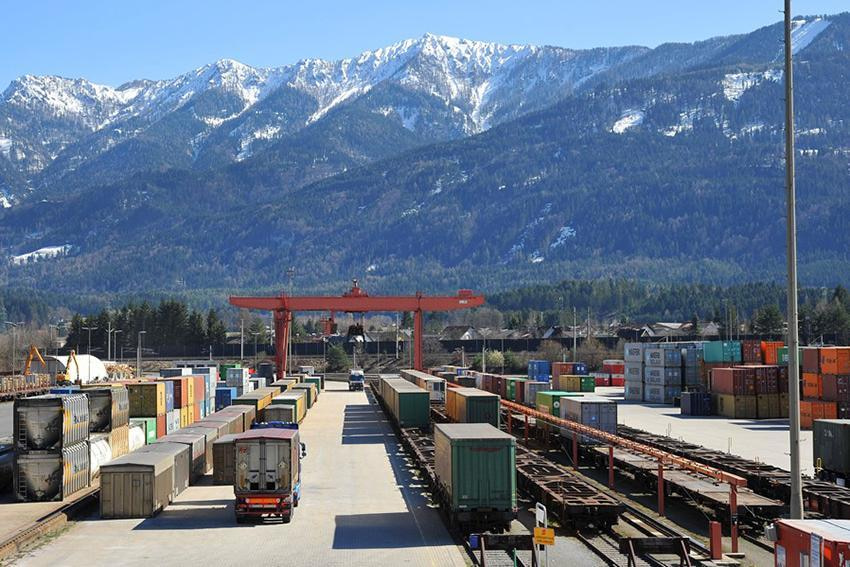
Villach: Freight trains crossing the Austrian border at this Carinthian junction still run on timetables that three national infrastructure managers plan separately, once a year, largely by hand. New EU rail capacity rules took effect on 11 June 2026 to change that, and the first timetable built under them arrives in December 2030.
Regulation (EU) 2026/1184 governs the use of railway infrastructure capacity across the single European railway area. The European Parliament and the Council adopted it on 20 May 2026. It amends the 2012 railway area directive and repeals the 2010 rail freight corridors regulation that most operators had long treated as a dead letter.
The problem it targets is easy to state. Around half of all rail freight traffic in the Union crosses at least one national border, yet capacity management stays annual, national and manual. A path that a Slovenian operator books for a train from Koper to Munich depends on three separate allocation processes that do not share a calendar. When one leg slips, the whole booking unravels.
The regulation introduces multiannual planning and pulls cross-border coordination into the allocation process itself. It also lets infrastructure managers slot in additional services at short notice, which matters for freight customers who cannot commit a year ahead. The Commission set out the expected gains in its announcement on cross-border rail traffic: better punctuality, fewer border bottlenecks and more predictable freight.
Two new bodies carry the load. The European Network of Infrastructure Managers builds timetables that give cross-border traffic real weight rather than treating it as a residual. The European Railway Platform speaks for the users of the network, from freight operators to passenger franchises. The Community of European Railway and Infrastructure Companies filed the sector’s proposal for that platform as the regulation entered into force, and it wants the governance settled quickly rather than negotiated for years.
Here the timeline turns awkward. Governance bodies gained their tasks in June 2026, and they are drafting harmonised rules and procedures now. The first optimised timetable only enters service in December 2030. That leaves four and a half years in which shippers see no schedule change while the institutions build the machinery. Anyone selling rail capacity reform as an immediate answer to Europe’s modal-shift targets is overselling it.
The regulation also cannot conjure track where none exists. Congestion on the Rhine-Alpine axis, the Brenner approaches and the Polish-German crossings reflects physical limits and long construction programmes, not only planning failures. Better coordination extracts more from the network. It does not finish a tunnel.
What the file does change is who decides. National infrastructure managers have run capacity allocation as a sovereign function since liberalisation began, and they have quietly protected domestic passenger operators when paths grew scarce. Pushing allocation into a European network with common procedures shifts that balance, and the fights over the network’s internal rules will show how far member states really accepted it.
The regulation sits alongside the Commission’s high-speed rail plan and the proposed passenger package on booking and planning. Read together, they describe a network the Commission wants integrated by the early 2030s. The text published in the Official Journal gives operators the legal certainty they asked for.
Delivery now depends on ordinary institutional work over the next four years, not on the day the rules entered into force.