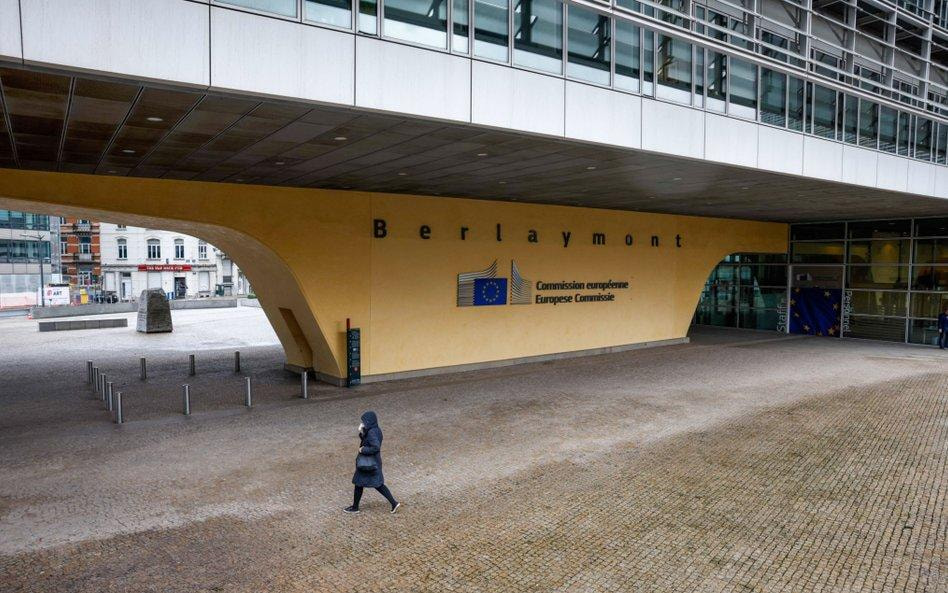
Legislators wrote the current media rules when the main question was how many hours of European programming a broadcaster carried between advertising breaks. The Commission now has to report on whether those rules still work, and it has until 19 December to do it. Article 33 of the Audiovisual Media Services Directive obliges the Commission to publish an ex-post evaluation before that date, with legislative proposals attached where it thinks they are needed. The deadline is statutory, not political, which is why the file has kept moving through a summer in which almost nothing else has.
The evidence-gathering finished some time ago. A call for evidence closed in December, and the full public consultation ran from 10 February to 1 May. It was organised around four pillars: the scope of the directive and how it is enforced, audiovisual commercial communications, the protection of viewers, and media diversity in the internal market. That last pillar carries more weight than its technical name suggests, because it covers whether services of general interest stay findable on a connected television interface designed by a manufacturer with its own commercial priorities.
Three pressures run through the responses. The first is that the directive draws a line between broadcasters and on-demand services that the market stopped recognising years ago. A national broadcaster carries obligations on advertising minutes, minor protection and European works quotas. A streaming service carries a lighter version of the same obligations. An individual posting the same content to a video-sharing platform often carries none, and increasingly reaches a larger audience than either.
The second pressure is fragmentation. Member states have responded to the rise of commercial content creators by writing their own rules, and those rules do not match. France, Belgium, Spain and Italy have each moved on influencer advertising with different definitions, different disclosure duties and different regulators. A creator based in one country and monetised across twenty-six others has to guess which regime binds them. The Commission has been told repeatedly that this is the single-market problem the directive was supposed to prevent.
The third is coherence with the Digital Services Act. Video-sharing platforms fall under both instruments, and the boundary between them is not obvious to anyone who has to comply. The DSA governs systemic risk and content moderation across platforms generally. The audiovisual directive governs a narrower category of content with more specific duties on advertising and on protecting minors. Where a duty appears in both, national regulators and platforms disagree about which authority enforces it.
Rewriting the directive would be the more consequential outcome, and also the slower one. The 2018 revision took two years to negotiate and considerably longer to transpose; several capitals missed the September 2020 deadline by well over a year, and infringement proceedings followed. A proposal landing in December 2026 would realistically not bind anyone until the end of the decade. By then the connected-television interfaces and creator economics that prompted the review will have changed again.
That timing problem is the real subject of the evaluation, whatever the report formally concludes. The Commission has framed the review as part of the European Democracy Shield, which treats a visible and financially viable European media sector as democratic infrastructure rather than a cultural preference. Under that framing, prominence rules stop being a favour to public broadcasters and become a question about who decides what a viewer sees first.
The counterargument deserves a hearing. Extending broadcast-era obligations to online creators imposes compliance costs that established media companies absorb and individuals cannot, which would entrench the incumbents the rules were meant to discipline. Prominence mandates also require someone to decide which services qualify as being of general interest, and that decision sits uncomfortably close to the state in several member states.
What arrives in December will indicate which of those risks the Commission takes more seriously. Anyone reading it should check the enforcement chapter before the headline recommendations. The 2018 revision was not short of ambition; it was short of regulators with the resources to act on it.