

Washington wants to return to a three-way table with Moscow and Kyiv. The case for speed is real; the case for excluding the continent underwriting the outcome is not.
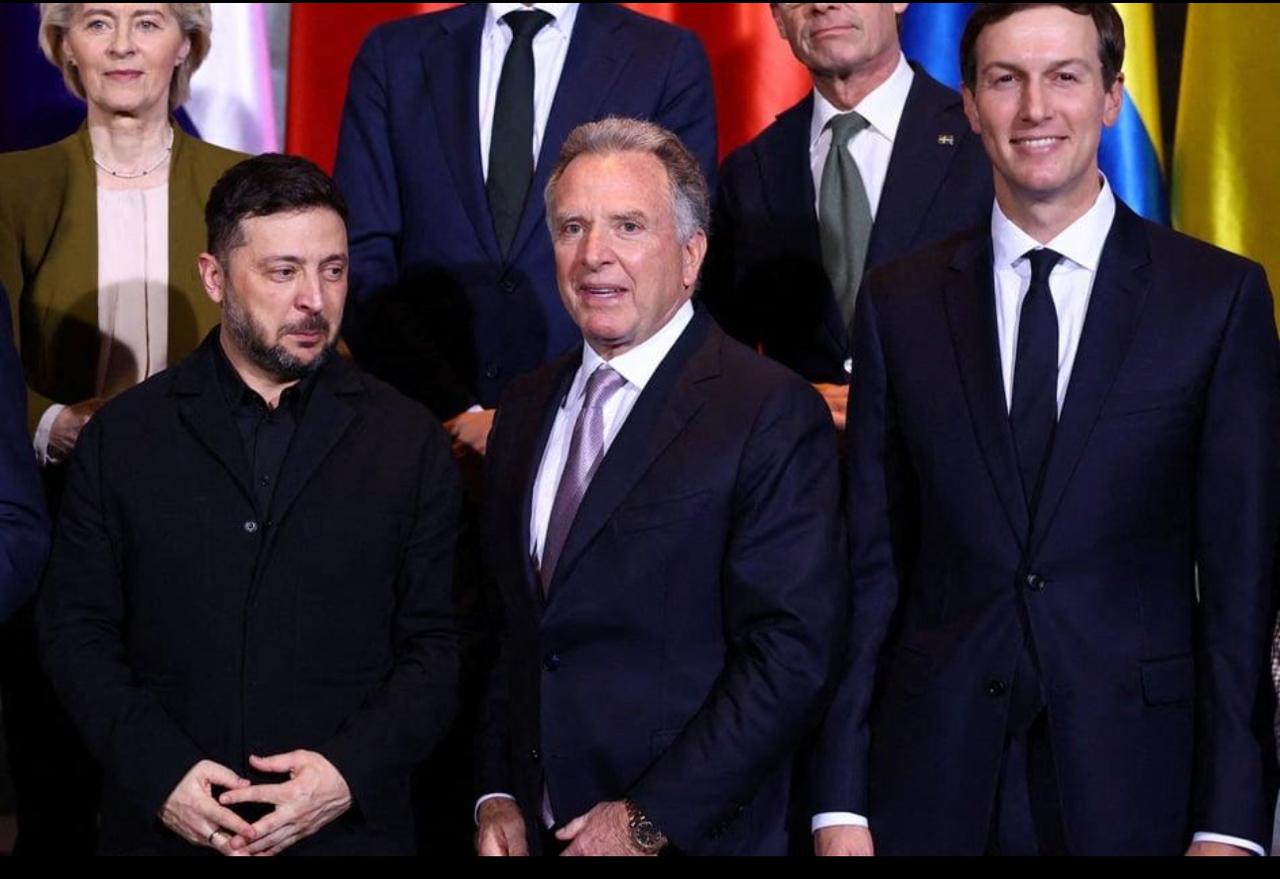
Steve Witkoff and Jared Kushner spent the weekend of 5 and 6 September doing what American envoys have done every few months since the war entered its fifth year: flying to Moscow, sitting with Vladimir Putin for hours, then travelling on to Kyiv to relay what was said. By Sunday, Kushner was in front of cameras in the Ukrainian capital arguing for something more ambitious than another shuttle round. He wants to restore the trilateral format, the direct three-way table between Washington, Moscow and Kyiv that operated, in his telling, with unusual candour six months ago. “Everyone was speaking, you know, in Russian to each other and really discussing these issues in a very actually friendly manner, all in Russian,” he told reporters in Kyiv, adding that he expected progress on reviving the trilateral format soon.
A Defensible Instrument
It is worth taking Kushner’s argument at face value before testing it, because the case for a trilateral format is not weak. Bilateral shuttle diplomacy carries an inherent loss of information every time envoys carry positions between capitals rather than letting principals hear each other directly, and Kushner’s underlying complaint, that Washington is left speaking for both sides in translation, describes a real structural problem, not a rhetorical one. A trilateral format removes a layer of interpretation between two governments that trust each other less with every month the war continues. If the objective is a text that both Moscow and Kyiv can sign at speed, the trilateral format is a reasonable instrument for getting there.
Three Parties, Not Four
But reasonable for whom. A negotiating format is not neutral simply because it is efficient; it also decides who is present when the terms of the postwar order are fixed, and a three-sided table, by construction, seats no one from the continent that will end up financing, sanctioning, and guaranteeing whatever the trilateral format produces. Read Kushner’s own framing again: three parties, not four. National security advisers from France, Germany, and the United Kingdom travelled to Kyiv for Sunday’s talks alongside Volodymyr Zelenskyy, and that presence will likely be cited as proof that Europe was in the room. It was, in a fashion: Kyiv’s consultations ran in stages, a bilateral session between Zelenskyy and the American envoys, then a multilateral round that added the European advisers, then a further round Zelenskyy held with the Europeans alone, without Witkoff or Kushner present. That sequencing describes a briefing track running alongside the negotiation, not a seat inside it. Europe has no guaranteed place in Moscow, and none inside the trilateral format Kushner wants to bring back.
Kyiv Wants It Too
The convergence runs deeper than Washington’s preference alone. After the Kyiv talks concluded, Zelenskyy himself called for the resumption of trilateral negotiations with Russia, and the format is not new; delegations from the United States, Russia, and Ukraine met under a trilateral structure in Abu Dhabi in January and February and again in Geneva in February 2026. Kushner’s reference to talks conducted with unusual candour “about six months ago” most plausibly refers to that Geneva round, given the timing. With both Washington and Kyiv now openly favouring a return to the same three-sided structure, its revival looks more likely than not, which raises the stakes attached to the seat Europe does not hold rather than lowering them.
The Cost of Correcting Afterwards
The distinction is not academic. It is the same one that produced the 28-point plan that leaked in November 2025, a draft that European governments and Kyiv itself judged so tilted toward Russian demands, on the permanent occupation of Ukrainian territory, on limits to the size of Kyiv’s army, on a permanent bar to NATO membership, that a wave of counter-negotiation was needed simply to bring it back toward terms Ukraine and Europe could accept. That correction was possible because European capitals were willing to spend political capital fighting a text after it already existed. It would have been cheaper, and more durable, to have shaped the text before it existed. A negotiating architecture that treats European input as a consultation to be scheduled around the real conversation, rather than a seat inside it, will keep generating drafts that need that kind of rescue after the fact.
What Moscow Prefers
Vladimir Putin has held this position publicly for the better part of a year. Meeting Witkoff and Kushner in Moscow in December 2025, he called European counterproposals to Washington’s plan absolutely unacceptable, accused European governments of blocking a settlement that Washington and Moscow could otherwise reach on their own, and warned that Russia stood ready for war should Europe want one. Kremlin officials, including spokesman Dmitry Peskov, have repeated versions of that argument since, accusing a “European party of war” of continuing to hinder a settlement as recently as May 2026. That is not a neutral complaint about procedural clutter. It is a stated preference, sustained over many months, for the very structure now back on the table: a trilateral format in which the country conducting the invasion and the country brokering its end negotiate directly with the invaded party, while the actor holding much of the financial and legal instruments relevant to any settlement sits outside.
Standing Without a Seat
That actor’s position is not abstract. Roughly €200 billion in Russian central bank assets remains frozen at the Brussels-based depositary Euroclear, an asset base Moscow’s own courts have already ordered Euroclear to repay in damages, and whose eventual use for Ukrainian reconstruction remains unresolved among member states. None of that disappears because Europe is absent from the trilateral format. It simply goes unused as bargaining weight, because bargaining weight that cannot be exercised in the room where terms are set is not bargaining weight; it is a pledge to be redeemed later, on someone else’s schedule. If a settlement eventually calls for European peacekeeping, European-funded reconstruction, or European enforcement of whatever sanctions relief Moscow is offered in return for concessions, those commitments will have been drafted by a continent that had no hand in writing them, only the option of paying for them, or refusing to, once the trilateral format has already produced its text.
There is a version of European standing that would answer Kushner’s structural complaint rather than simply reasserting a seat for its own sake. Europe does not need to sit inside every round of a trilateral format to matter; it needs the instruments it already controls, the frozen assets, the sanctions calendar, and the accession and financing pathways Ukraine depends on, formally tied to sign-off from Brussels, Paris, Berlin, and London before any settlement takes effect. That would let Washington negotiate at whatever speed the trilateral format allows while making clear that speed is not the same as finality. Absent that kind of structural guarantee, presence in Kyiv for one Sunday’s talks is consultation, not authorship, and the difference will matter far more on the day a text is actually ready to sign.
ABOUT THE AUTHOR
Leon Adrian is a Senior Analyst and Policy Analyst specialising in external relations and diplomacy. He writes on European foreign policy, diplomatic strategy, multilateral alliances, and international security cooperation for The European Post.