November 9, 2026
LATEST
Economic Coercion Instrument Gains Paris and Berlin BackingSyria Trade Relations Restart While Hunger Still Grips MillionsVietnam Partnership Hinges on Ratifying the Investment PactHybrid Car Price Undertakings Now Decide the Beijing TruceRape Definition Gap Persists Two Years After EU DirectiveBanking Competitiveness Report Vote Slips To 1 DecemberUkraine Accession Clusters Four And Five Stay Shut After Hungary DealEU Steel Measure Caps Tariff-Free Imports At 18.3 Million TonnesAI Act Omnibus Sets 2 December Deadline For Deepfake WatermarksTürkiye EU Report Row Clouds Customs Union Upgrade HopesWestern Balkans Roaming Talks Test Brussels Integration PledgeRail Ticketing Package Reaches Ministers With Gaps OpenMarket Integration Package Narrows As ESMA Powers ShrinkWolf Protection Rules Meet Sweden’s 72-Wolf Hunt TestPay Transparency Directive Deadline Passes With Only Four States ReadyHolding Cap Fight Shadows Digital Euro Law Ahead Of Council TalksCBAM Expansion Talks Test Whether Finished Goods Face Carbon LevyIsraeli Settlement Imports Ban Splits Commission And CouncilUnlimited Pesticide Approvals Face Public Rejection In PollMethane Import Rules Delayed A Year With Review ClauseEconomic Coercion Instrument Gains Paris and Berlin BackingSyria Trade Relations Restart While Hunger Still Grips MillionsVietnam Partnership Hinges on Ratifying the Investment PactHybrid Car Price Undertakings Now Decide the Beijing TruceRape Definition Gap Persists Two Years After EU DirectiveBanking Competitiveness Report Vote Slips To 1 DecemberUkraine Accession Clusters Four And Five Stay Shut After Hungary DealEU Steel Measure Caps Tariff-Free Imports At 18.3 Million TonnesAI Act Omnibus Sets 2 December Deadline For Deepfake WatermarksTürkiye EU Report Row Clouds Customs Union Upgrade HopesWestern Balkans Roaming Talks Test Brussels Integration PledgeRail Ticketing Package Reaches Ministers With Gaps OpenMarket Integration Package Narrows As ESMA Powers ShrinkWolf Protection Rules Meet Sweden’s 72-Wolf Hunt TestPay Transparency Directive Deadline Passes With Only Four States ReadyHolding Cap Fight Shadows Digital Euro Law Ahead Of Council TalksCBAM Expansion Talks Test Whether Finished Goods Face Carbon LevyIsraeli Settlement Imports Ban Splits Commission And CouncilUnlimited Pesticide Approvals Face Public Rejection In PollMethane Import Rules Delayed A Year With Review Clause

Economic Coercion Instrument Gains Paris and Berlin Backing

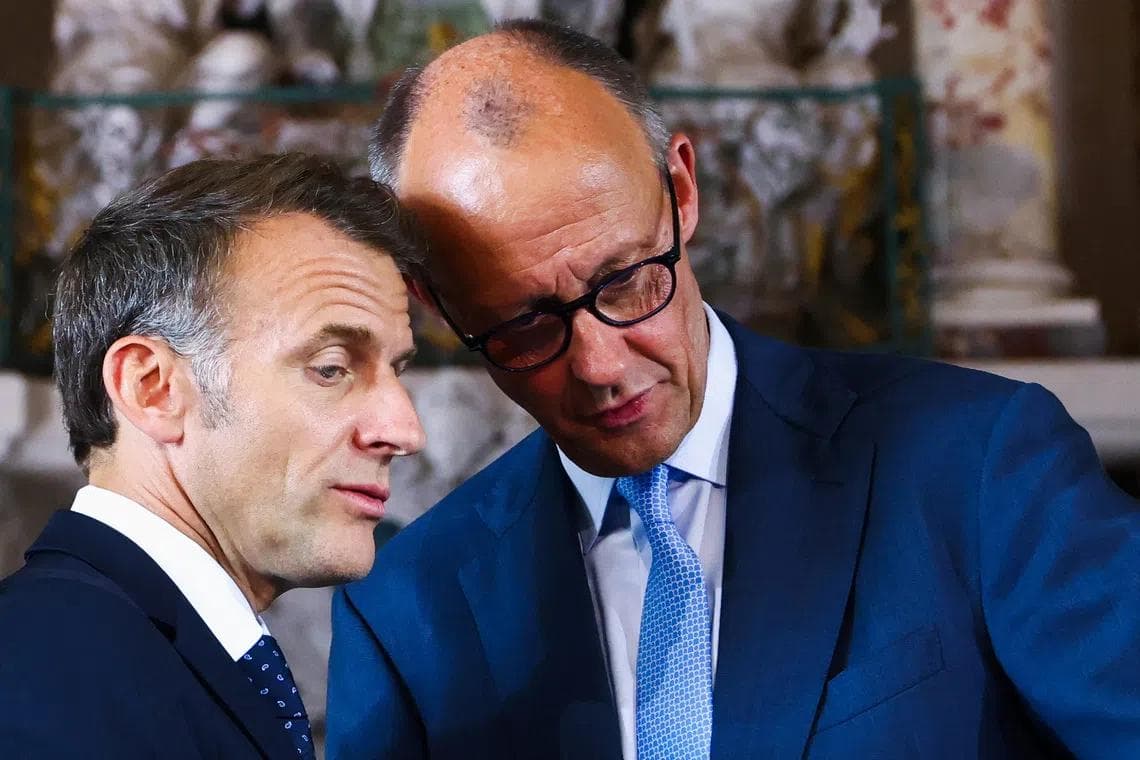
Paris: A credible economic coercion instrument is now at the top of the European economic security agenda after French President Emmanuel Macron and German Chancellor Friedrich Merz asked for a fast-acting tool to deter trade pressure. The request, reported in early October 2026, is due to be discussed at the next EU leaders’ summit and comes just as Brussels negotiates with Beijing over rare earths and cars.

The timing is deliberate. Chinese export controls on rare earths and other critical minerals have shown how quickly a supply chain can become a political weapon. The EU runs a trade deficit with China of about one billion euros a day, and European manufacturers have little room to absorb a sudden licensing freeze. Paris and Berlin want a mechanism that responds in weeks rather than months.

The European Union already has an anti-coercion regulation on its books, but critics argue that it was designed for slow, consultative use. A faster economic coercion instrument would need clear triggers, pre-agreed countermeasures and decision rules that do not depend on unanimity. Those design choices are politically sensitive because they determine which governments can slow a response and which sectors would face retaliation.

China has already signalled its position. It said it would respond firmly if Europe restricts Chinese goods and urged France and Germany to avoid protectionism. That reaction shows how any new European economic coercion instrument will be read in Beijing: as a threat to be answered in kind. The risk is escalation, which is why supporters describe the instrument mainly as deterrence rather than a weapon to be used often.

There is also an international dimension. G20 finance leaders, excluding China, agreed in September to act against non-market distortions, which suggests growing alignment among major economies. A European economic coercion instrument that fits into that wider coalition would carry more weight than one acting alone.

Business groups are cautious. The EU Chamber of Commerce in China has stressed that companies want measures that are proportionate, specific and negotiated, since European firms with operations in China are the most exposed to retaliation. Trade negotiators, meanwhile, fear that a hawkish signal could complicate the diplomacy under way, including the March 2027 meeting agreed with Chinese officials.

The leaders’ discussion will therefore reveal whether Europe’s appetite for deterrence matches its tolerance for risk. If member states agree on a rapid, rules-based economic coercion instrument, the Union will enter 2027 with a stronger hand. If they defer, Beijing will conclude that Europe’s leverage still depends more on its rhetoric than on its tools.