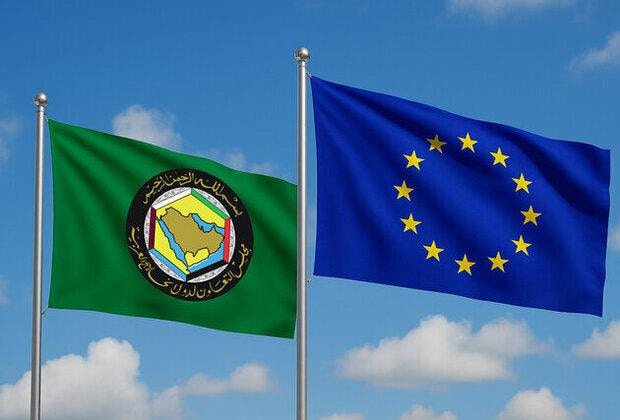
Riyadh: The Gulf trade deal is back on the European agenda, but only as a request addressed to leaders. On 16 October 2026 the European Parliament and the speakers of the Gulf Cooperation Council parliamentary bodies asked the next EU-GCC Summit to resume stalled negotiations, and the Gulf trade deal now depends on a political decision that no institution has yet scheduled.
The call came from the second EP-GCC Speakers’ Conference, held in Brussels and the first hosted by the Parliament. The first took place in Abu Dhabi on 23 June 2025. Roberta Metsola and the Gulf speakers adopted a joint statement that links trade to a wider list of shared interests, including energy cooperation and visa-free travel for the five GCC states whose citizens still need a visa for the Schengen area.
The security language is just as striking. The statement condemns continued Iranian missile and drone attacks on Gulf states, cites UN Security Council Resolution 2817 (2026), and demands freedom of navigation in the Strait of Hormuz and the Bab el-Mandeb. It welcomes the EU naval operations Aspides and Atalanta. Parliamentarians clearly want to present trade as one part of a security partnership, and not as a standalone tariff negotiation.
That framing explains why the Gulf trade deal has struggled for so long. Talks between the two blocs have stopped and started for years, and each pause left both sides with a different explanation. Brussels pressed for sustainability and labour language, while Gulf capitals preferred to deal with energy and investment. A joint parliamentary text cannot settle those disputes, yet it does signal that legislators on both shores will not oppose a restart.
The February 2026 decision to open bilateral negotiations with the United Arab Emirates offers a useful comparison. Luigi Di Maio, the EU special representative for the Gulf, described that track as a building block toward the regional deal, and the Commission is also negotiating separate strategic partnership agreements with individual Gulf states. Bilateral tracks move faster, but they also risk fragmenting the bloc-to-bloc agreement that Gulf Secretary-General Jasem Albudaiwi has called a priority.
The proposed parliamentary dimension deserves attention for a practical reason. The European Parliament must consent to any trade agreement, and early contact with Gulf legislators gives MEPs a voice before a text reaches the plenary. The parties agreed to meet regularly, alternating between Europe and the Gulf, and that routine could reduce the surprises that derailed earlier Gulf trade deal rounds.
Three questions will decide what happens next. Leaders must fix a date for the summit. The Commission must decide whether the UAE track supports or competes with the regional talks. And both sides must show how a Gulf trade deal can survive a regional security crisis that shapes every shipping and energy decision. Until those answers arrive, the October statement remains a signal of intent, not a mandate.
For European exporters and Gulf investors alike, the message is cautious optimism. The political climate favours a restart, the parliamentary groundwork exists, and the bilateral talks provide experience. The Gulf trade deal still needs a summit date, and that single decision will show whether the October statement was a turning point or a courtesy.