The Public Procurement Act that the European Commission proposed on 9 September 2026 would rewrite how governments across the bloc buy goods, works and services. Public buying amounts to about 15 percent of EU gross domestic product, or roughly 2.5 trillion euros in 2025, so the proposal touches a large part of the economy. It replaces three existing directives with a single regulation and adds a European preference mechanism.
The new regulation covers all sectors except defence. For award decisions it stresses the best price-quality ratio, with quality accounting for at least 30 percent of the total score and at least 50 percent for labour-intensive contracts. That shift responds to criticism from Mario Draghi and Enrico Letta that the bloc fails to use procurement strategically.
European preference is the most debated element, but it is not a blanket Buy European rule. Under the Public Procurement Act, contracting authorities may exclude bids with less than 50 percent European content by total value, restrict participation to EU operators and favour EU companies in strategic sectors. Countries that have trade agreements with the EU and offer reciprocal access to their own public markets are not excluded.
Authorities are also encouraged, and in some cases required, to weigh risk factors such as critical infrastructure, cybersecurity, supply chain disruption, strategic dependencies and foreign influence. This reflects a security-driven reading of the Public Procurement Act, in which a tender is also a tool for resilience as well as a way to buy at a fair price.
On the practical side, the proposal creates a single EU-wide digital procurement platform with electronic business credentials, interoperability rules and national and EU data spaces. Commissioner Stéphane Séjourné said businesses would register once instead of once per tender. Firms have long complained about fragmented templates, languages and duplicated paperwork across 27 jurisdictions, which weigh on businesses and SMEs alike.
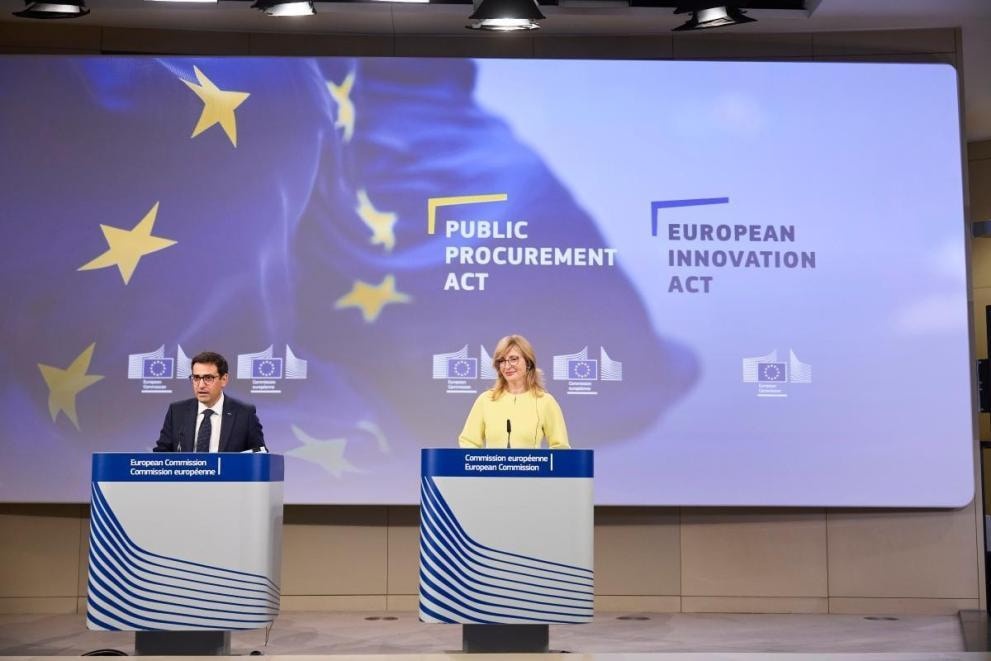
The Commission presented the Public Procurement Act alongside the European Innovation Act, which signals that it sees public purchasing as a lever for innovation as well as security. The proposal must now pass through Parliament and Council, where capitals with open-market traditions and those favouring industrial policy may bargain over the preference thresholds.
Companies selling into European public markets should read the preference rules closely. How the Public Procurement Act balances openness, resilience and simplicity will determine whether it earns support from governments and bidders, or becomes another source of complexity.