August 9, 2026
LATEST
New EU Gas Market Rules Take Effect With Consumer SafeguardsDeforestation Regulation Holds Its December Deadline Despite CutsDigital Omnibus Delays Europe’s High-Risk AI Deadline to 2027Europe’s Schools Confront a Widening Basic Skills GapRule of Law Report Finds Progress but Trust Still LagsIRIS2 Gains 66 Satellites as Brussels Signs the Rollout DealNature Restoration Plans Come Due as Member States Race a DeadlineECB Rates Hold at 2.25 Percent as Frankfurt Waits on the DataEU Budget Talks Turn to Cohesion as Ireland Takes OverWildfire Response Stretches Europe’s Emergency Fleet ThinCan Europe’s Quantum Plan Match Its Big Ambitions?Armenia Edges West as Moscow’s Grip Slips AwayEurope Inherits the World’s Aid Bill It Cannot Fully PayAir Passenger Rights Get Their First Overhaul in Two DecadesErasmus Opens a 5 Billion Euro Round for Skills and MobilityCeuta Crisis Pushes the EU Toward Faster Migrant ReturnsBulky Parcels Face a Packaging Crackdown From August 12Can Europe Build Its Drone Wall Before 2030 Arrives?Indonesia’s Trade Deal With Europe Nears Its Final SignatureEurope Leans on Beijing to Keep Climate Talks Alive Before AntalyaNew EU Gas Market Rules Take Effect With Consumer SafeguardsDeforestation Regulation Holds Its December Deadline Despite CutsDigital Omnibus Delays Europe’s High-Risk AI Deadline to 2027Europe’s Schools Confront a Widening Basic Skills GapRule of Law Report Finds Progress but Trust Still LagsIRIS2 Gains 66 Satellites as Brussels Signs the Rollout DealNature Restoration Plans Come Due as Member States Race a DeadlineECB Rates Hold at 2.25 Percent as Frankfurt Waits on the DataEU Budget Talks Turn to Cohesion as Ireland Takes OverWildfire Response Stretches Europe’s Emergency Fleet ThinCan Europe’s Quantum Plan Match Its Big Ambitions?Armenia Edges West as Moscow’s Grip Slips AwayEurope Inherits the World’s Aid Bill It Cannot Fully PayAir Passenger Rights Get Their First Overhaul in Two DecadesErasmus Opens a 5 Billion Euro Round for Skills and MobilityCeuta Crisis Pushes the EU Toward Faster Migrant ReturnsBulky Parcels Face a Packaging Crackdown From August 12Can Europe Build Its Drone Wall Before 2030 Arrives?Indonesia’s Trade Deal With Europe Nears Its Final SignatureEurope Leans on Beijing to Keep Climate Talks Alive Before Antalya
August 9, 2026
LATEST
New EU Gas Market Rules Take Effect With Consumer SafeguardsDeforestation Regulation Holds Its December Deadline Despite CutsDigital Omnibus Delays Europe’s High-Risk AI Deadline to 2027Europe’s Schools Confront a Widening Basic Skills GapRule of Law Report Finds Progress but Trust Still LagsIRIS2 Gains 66 Satellites as Brussels Signs the Rollout DealNature Restoration Plans Come Due as Member States Race a DeadlineECB Rates Hold at 2.25 Percent as Frankfurt Waits on the DataEU Budget Talks Turn to Cohesion as Ireland Takes OverWildfire Response Stretches Europe’s Emergency Fleet ThinCan Europe’s Quantum Plan Match Its Big Ambitions?Armenia Edges West as Moscow’s Grip Slips AwayEurope Inherits the World’s Aid Bill It Cannot Fully PayAir Passenger Rights Get Their First Overhaul in Two DecadesErasmus Opens a 5 Billion Euro Round for Skills and MobilityCeuta Crisis Pushes the EU Toward Faster Migrant ReturnsBulky Parcels Face a Packaging Crackdown From August 12Can Europe Build Its Drone Wall Before 2030 Arrives?Indonesia’s Trade Deal With Europe Nears Its Final SignatureEurope Leans on Beijing to Keep Climate Talks Alive Before AntalyaNew EU Gas Market Rules Take Effect With Consumer SafeguardsDeforestation Regulation Holds Its December Deadline Despite CutsDigital Omnibus Delays Europe’s High-Risk AI Deadline to 2027Europe’s Schools Confront a Widening Basic Skills GapRule of Law Report Finds Progress but Trust Still LagsIRIS2 Gains 66 Satellites as Brussels Signs the Rollout DealNature Restoration Plans Come Due as Member States Race a DeadlineECB Rates Hold at 2.25 Percent as Frankfurt Waits on the DataEU Budget Talks Turn to Cohesion as Ireland Takes OverWildfire Response Stretches Europe’s Emergency Fleet ThinCan Europe’s Quantum Plan Match Its Big Ambitions?Armenia Edges West as Moscow’s Grip Slips AwayEurope Inherits the World’s Aid Bill It Cannot Fully PayAir Passenger Rights Get Their First Overhaul in Two DecadesErasmus Opens a 5 Billion Euro Round for Skills and MobilityCeuta Crisis Pushes the EU Toward Faster Migrant ReturnsBulky Parcels Face a Packaging Crackdown From August 12Can Europe Build Its Drone Wall Before 2030 Arrives?Indonesia’s Trade Deal With Europe Nears Its Final SignatureEurope Leans on Beijing to Keep Climate Talks Alive Before Antalya

Hoekstra Pushes Radical Energy Shift as Oil Prices Spike Above 100

Brussels: Climate Commissioner Wopke Hoekstra has called for a more radical European response to the unfolding energy crisis, arguing that the spike in Brent crude above USD 100 per barrel in early May has exposed the strategic cost of incomplete decarbonisation. Speaking in an interview pegged to the publication of the Commission’s AccelerateEU package on 22 April, the Commissioner framed the present moment as a third oil shock, distinct in character but comparable in significance to those of 1973 and 1979.

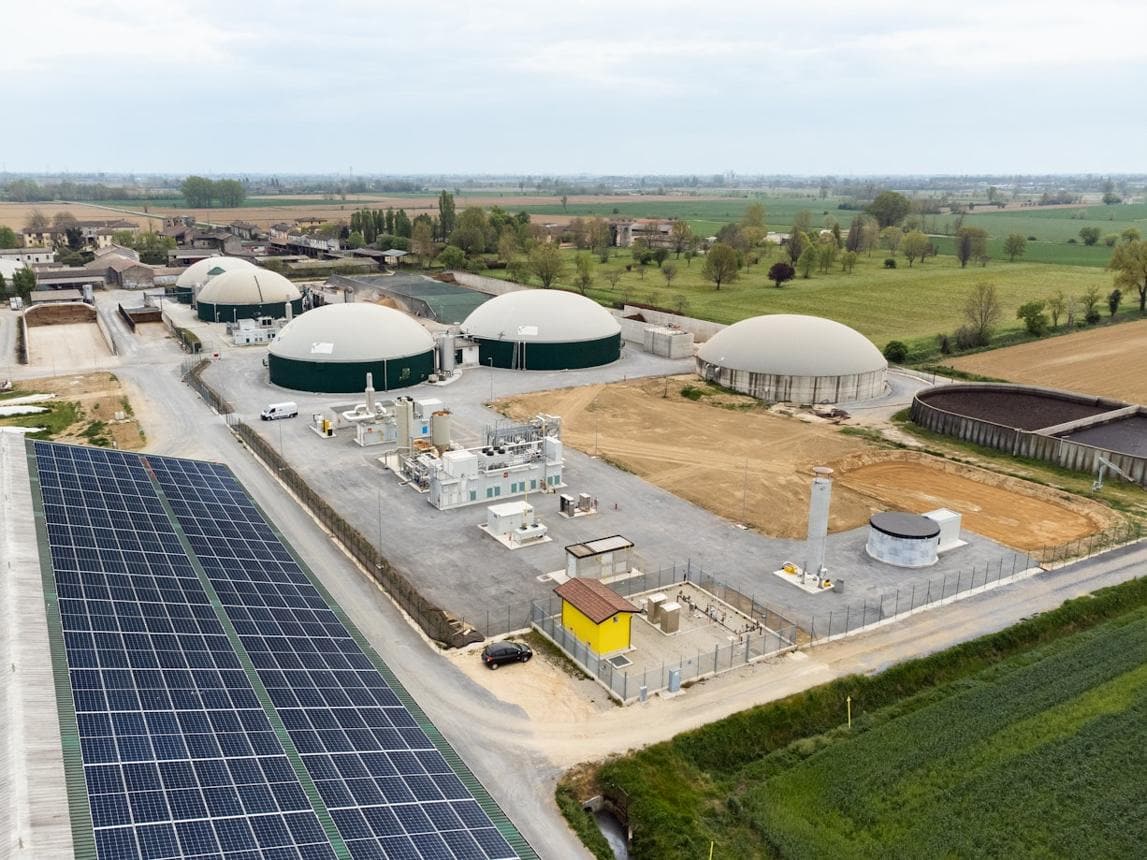
The AccelerateEU package combines short-term measures designed to cushion households and energy-intensive industries from price volatility with structural reforms intended to insulate the Union from future shocks. On the demand side, the Commission proposes accelerated permitting for heat-pump deployment, an expanded Renovation Wave programme aligned with the revised Energy Performance of Buildings Directive, and incentives for electrification of light industrial processes through the Innovation Fund. On the supply side, more than EUR 1 billion has been awarded under the European Hydrogen Bank to seven projects spanning Spain, Portugal, Germany, the Netherlands, Sweden and Finland, with first deliveries expected from 2027.

Hoekstra’s language was unusually direct. He told Euronews that the bloc needs more electrification, more renewables, more heat pumps, more cross-border interconnectors and more nuclear capacity, a list that pointedly includes technologies on which member states remain politically divided. The reference to nuclear power, in particular, signals an effort to rebuild a workable centre of gravity in the Council ahead of negotiations on the post-2030 climate framework, where France and a coalition of central European states have insisted on technology neutrality while Germany and Austria have resisted formal inclusion of new nuclear build in EU funding instruments.

The structural reforms run on a longer timeline. The Commission is preparing a legislative package to translate the 90 percent net greenhouse-gas reduction target for 2040 into binding sectoral trajectories, with the proposals expected in the second half of 2026. The package will revise the Emissions Trading System for the post-2030 period, calibrate the carbon-border adjustment mechanism against expected international developments, and propose a new framework for industrial decarbonisation contracts to underwrite investment in steel, cement, chemicals and aluminium. The Clean Industrial Deal adopted in early 2025 will be folded into this architecture.

The political environment is more complicated than the technical agenda suggests. Member states are negotiating the next Multiannual Financial Framework with sharply divergent views on how much of the green transition should be financed at Union level, and the European Parliament has signalled that the credibility of the 2040 target depends on the visibility of social-protection measures attached to it. Hoekstra has placed weight on the Social Climate Fund, due to begin disbursements in 2026, as evidence that the architecture of the Green Deal includes redistribution by design rather than as an afterthought.

Critics from industry argue that even at this scale, the response remains misaligned with the speed of decisions being taken in Beijing and Washington on clean-tech manufacturing. Hoekstra acknowledged the competitiveness dimension and indicated that the forthcoming legislation will include provisions on resilience criteria in public procurement, designed to give weight to European-made components without breaching World Trade Organization disciplines. Whether such criteria will be sufficient to anchor manufacturing investment in Europe remains, on the Commissioner’s own admission, the open question of the coming decade.