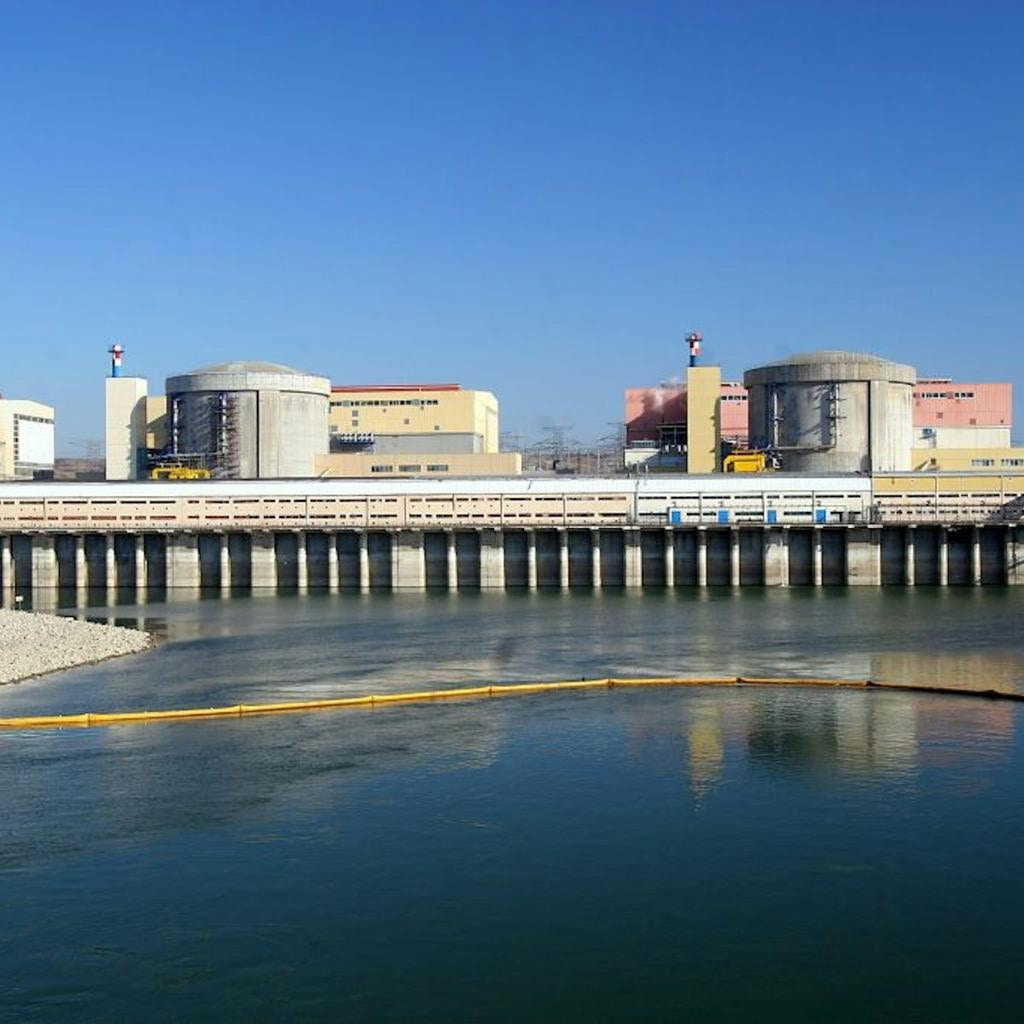
The Cernavodă nuclear plant in south-eastern Romania has secured a first €400 million loan from the European Investment Bank, unlocking half of the €800 million the bank has earmarked for refurbishing its oldest reactor. The EIB and operator Nuclearelectrica signed the agreement on 16 November 2026, and the bank announced the deal the following day.
The money goes to Unit 1, which will undergo a full refurbishment and a life extension of 30 years, subject to regulatory approval. Work is scheduled to begin in 2027 and run for about three years. The total bill is estimated at €3.1 billion, so the EIB contribution, even at its full €800 million, covers roughly a quarter of the cost.
Nuclearelectrica is negotiating the rest with export credit agencies, commercial banks and other international lenders, alongside its own resources. The Romanian state holds 82.49% of the company. The EIB loan carries a maturity of up to 22 years, a long horizon that matches the decades of output the Cernavodă nuclear plant upgrade is meant to secure. The bank’s board approved the full €800 million envelope in July 2026.
Why does this matter beyond Romania? The two CANDU reactors at the Cernavodă nuclear plant produce about 20% of the country’s electricity, with almost no direct carbon emissions. Taking Unit 1 offline for refurbishment will create a temporary supply gap, but letting it reach the end of its design life without an upgrade would create a permanent one.
For the EU’s climate and energy agenda, the deal is a signal as much as a loan. Brussels spent years debating whether nuclear power deserves a place in green finance, and the 2022 taxonomy compromise allowed certain nuclear activities under strict conditions. The EIB has since grown more willing to back life extensions, which usually deliver low-carbon power at a lower cost per megawatt-hour than new-build projects.
Energy security adds another layer. Romania sits on the eastern flank of the EU and NATO, next to Ukraine and Moldova, and its grid helps balance a region still adjusting after Russia’s full-scale invasion. Stable baseload output from the Cernavodă nuclear plant supports exports to neighbours during tight winters and reduces exposure to imported gas.
The EIB framed the financing as a contribution to energy security, climate goals and infrastructure renewal. EIB Vice-President Ioannis Tsakiris and Nuclearelectrica chief executive Mihai Gioara both presented the signing as a milestone for a project that has been years in preparation.
Risks remain. Refurbishments of CANDU units elsewhere, notably in Canada, have shown that schedules can slip and costs can rise, and Romania will need to manage a three-year outage at the Cernavodă nuclear plant carefully. Plans for Units 3 and 4, which would double the site’s capacity, also compete for capital and political attention.
Still, the first tranche shows that the EU’s own bank is prepared to commit long-term money to existing nuclear assets rather than only to wind, solar and grids. If the remaining financing closes on time, the Cernavodă nuclear plant could keep supplying a fifth of Romania’s power for another three decades.