August 10, 2026
LATEST
Europe’s Air Quality Improves but WHO Limits LoomTwelve New EU Medicines Win a Green Light from EMAFIFA Agent Rules Must Answer to Europe’s CourtsTachograph Rules Now Reach Vans Crossing Europe’s BordersNature Restoration Plans Come Due as a Hard Deadline NearsBrussels Opens a State Aid Probe Into Spain’s Renewables PayoutBrussels Extends Its Tariff Suspension on US Goods IndefinitelyFarmers Win Stronger Contract Rights Across the EU Supply ChainEurope Finally Locks In Its 348-Satellite Answer to StarlinkPlatform Work Rules Face a National Scramble Before DecemberDuty-Free Parcels Reach the End of the Line for EU ShoppersAfter Nine Years, Europe and Australia Seal a Trade PactBeijing Answers Europe’s Russia Sanctions in KindOne Year On, the EU-Japan Alliance Faces Its First TestEurope’s Chip Ambitions Still Run Through Taiwan’s FabsWhy South Korea Bet Its Research Future on Europe’s ProgrammeEurope and Japan Deepen Their Economic Alliance as Rivals CircleFive Joint Defence Projects Launch Europe’s Military ShieldElectrification Plan Aims to Make Europe First Electro ContinentHorizon Europe Budget Fight Heats Up as Ministers Push BackEurope’s Air Quality Improves but WHO Limits LoomTwelve New EU Medicines Win a Green Light from EMAFIFA Agent Rules Must Answer to Europe’s CourtsTachograph Rules Now Reach Vans Crossing Europe’s BordersNature Restoration Plans Come Due as a Hard Deadline NearsBrussels Opens a State Aid Probe Into Spain’s Renewables PayoutBrussels Extends Its Tariff Suspension on US Goods IndefinitelyFarmers Win Stronger Contract Rights Across the EU Supply ChainEurope Finally Locks In Its 348-Satellite Answer to StarlinkPlatform Work Rules Face a National Scramble Before DecemberDuty-Free Parcels Reach the End of the Line for EU ShoppersAfter Nine Years, Europe and Australia Seal a Trade PactBeijing Answers Europe’s Russia Sanctions in KindOne Year On, the EU-Japan Alliance Faces Its First TestEurope’s Chip Ambitions Still Run Through Taiwan’s FabsWhy South Korea Bet Its Research Future on Europe’s ProgrammeEurope and Japan Deepen Their Economic Alliance as Rivals CircleFive Joint Defence Projects Launch Europe’s Military ShieldElectrification Plan Aims to Make Europe First Electro ContinentHorizon Europe Budget Fight Heats Up as Ministers Push Back
August 10, 2026
LATEST
Europe’s Air Quality Improves but WHO Limits LoomTwelve New EU Medicines Win a Green Light from EMAFIFA Agent Rules Must Answer to Europe’s CourtsTachograph Rules Now Reach Vans Crossing Europe’s BordersNature Restoration Plans Come Due as a Hard Deadline NearsBrussels Opens a State Aid Probe Into Spain’s Renewables PayoutBrussels Extends Its Tariff Suspension on US Goods IndefinitelyFarmers Win Stronger Contract Rights Across the EU Supply ChainEurope Finally Locks In Its 348-Satellite Answer to StarlinkPlatform Work Rules Face a National Scramble Before DecemberDuty-Free Parcels Reach the End of the Line for EU ShoppersAfter Nine Years, Europe and Australia Seal a Trade PactBeijing Answers Europe’s Russia Sanctions in KindOne Year On, the EU-Japan Alliance Faces Its First TestEurope’s Chip Ambitions Still Run Through Taiwan’s FabsWhy South Korea Bet Its Research Future on Europe’s ProgrammeEurope and Japan Deepen Their Economic Alliance as Rivals CircleFive Joint Defence Projects Launch Europe’s Military ShieldElectrification Plan Aims to Make Europe First Electro ContinentHorizon Europe Budget Fight Heats Up as Ministers Push BackEurope’s Air Quality Improves but WHO Limits LoomTwelve New EU Medicines Win a Green Light from EMAFIFA Agent Rules Must Answer to Europe’s CourtsTachograph Rules Now Reach Vans Crossing Europe’s BordersNature Restoration Plans Come Due as a Hard Deadline NearsBrussels Opens a State Aid Probe Into Spain’s Renewables PayoutBrussels Extends Its Tariff Suspension on US Goods IndefinitelyFarmers Win Stronger Contract Rights Across the EU Supply ChainEurope Finally Locks In Its 348-Satellite Answer to StarlinkPlatform Work Rules Face a National Scramble Before DecemberDuty-Free Parcels Reach the End of the Line for EU ShoppersAfter Nine Years, Europe and Australia Seal a Trade PactBeijing Answers Europe’s Russia Sanctions in KindOne Year On, the EU-Japan Alliance Faces Its First TestEurope’s Chip Ambitions Still Run Through Taiwan’s FabsWhy South Korea Bet Its Research Future on Europe’s ProgrammeEurope and Japan Deepen Their Economic Alliance as Rivals CircleFive Joint Defence Projects Launch Europe’s Military ShieldElectrification Plan Aims to Make Europe First Electro ContinentHorizon Europe Budget Fight Heats Up as Ministers Push Back

Strasbourg Locks In 50 Percent Steel Duty Wall From July Onward

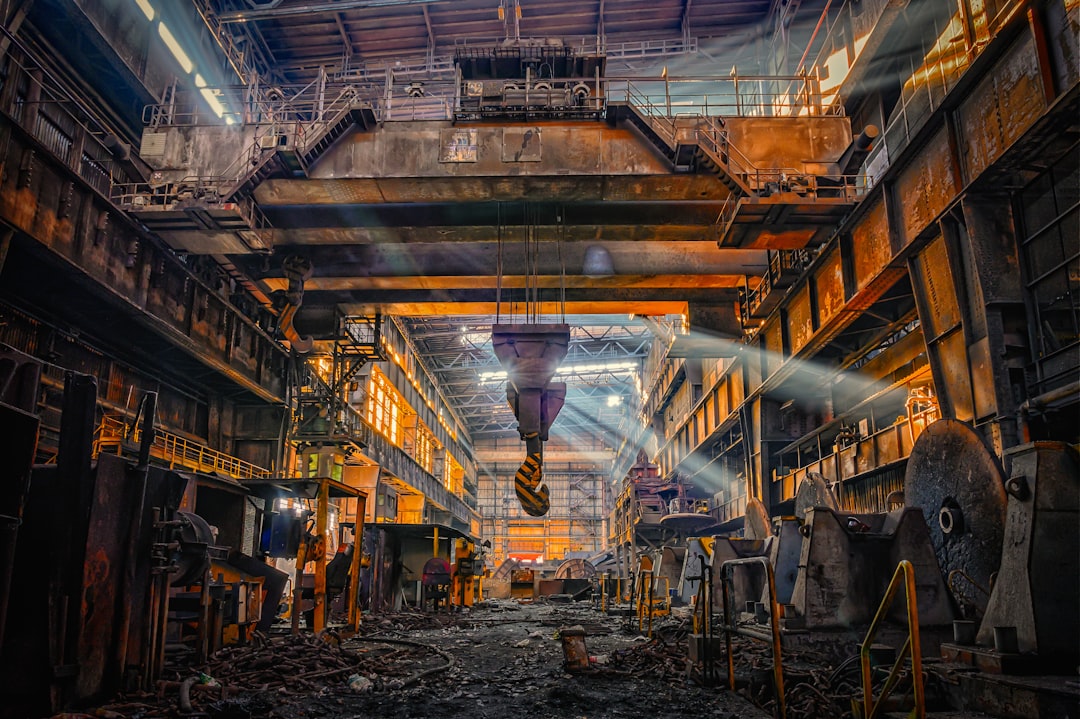
Strasbourg: The 606 to 16 plenary tally on 19 May that pushed the new EU steel safeguard through Parliament is one of those numbers that flatters the depth of consensus behind a file. The margin was crushing, the abstentions modest at thirty-nine, and the political signal unmistakable—Europe’s mills will be shielded from a global oversupply wave with a 47 percent reduction in tariff-free import quotas and a 50 percent customs duty applied to every tonne above the new 18.3 million tonne ceiling. Yet the technical substance of the regulation, set to enter into force on 1 July as soon as Council formalises adoption, sits at the centre of a much harder argument about what Europe can still build at scale and at what price its downstream users will accept the bill.

The safeguard architecture inherited from the 2018 measure was always conceived as a transitional cushion against the spillover of US Section 232 tariffs. Eight years on, the conditions that triggered it have hardened. Chinese crude steel capacity has expanded by more than 100 million tonnes since 2018, while European demand has flatlined; net imports have crept from 17 percent of consumption to nearly 28 percent across the same period. The Commission’s impact assessment, circulated to MEPs ahead of the vote, made the case bluntly that the previous quota structure had become porous, that quarterly allocations were being exhausted within days, and that surge inflows in carbon and stainless flat products were pushing utilisation rates at several EU integrated mills below the threshold at which blast furnaces remain economic.

The new instrument therefore does three things simultaneously. It tightens the headline quota to 18.3 million tonnes annually—a level calibrated to leave roughly two-thirds of the historical import baseline intact while crowding out the marginal surge volumes that had been undercutting EU producers. It doubles the out-of-quota duty from 25 to 50 percent, removing the arbitrage that had let certain origins simply pay the existing penalty and continue to land tonnage. And it introduces a melt-and-pour origin requirement that closes a transhipment loophole producers had been quietly exploiting through third-country finishing operations.

For the steel industry, the symbolism is welcome and the economics are urgent. ArcelorMittal, Salzgitter, Voestalpine and Tata Steel Netherlands have each spent the past two years restructuring around the planned phase-out of free CBAM allocations, and several decarbonisation projects predicated on green hydrogen offtake have wobbled in their final investment decisions because the underlying capital structure assumed a degree of import price discipline that the old safeguard could no longer deliver. The new measure restores some of that discipline, though analysts at WoodMac and CRU caution that price uplift in the back half of 2026 will depend more on order book recovery in automotive and construction than on quota mathematics alone.

The downstream constituency is less enthusiastic. Tube and section converters, white-goods makers, automotive Tier 2 suppliers and shipyards have all warned that a 50 percent out-of-quota penalty will pull through into input costs at exactly the moment when the Strait of Hormuz crisis is already feeding energy-driven inflation into the production base. Parliament’s INTA committee softened the worst of this by writing in a review clause that obliges the Commission to assess price effects on user industries every six months and to expand quota envelopes if measurable distortion appears. Whether that mechanism survives implementation pressure from steel-producing capitals is one of the open questions of the autumn.

The regulation’s longer-term significance lies in what it implies about the bloc’s tolerance for industrial protection. Europe has long argued that its trade defence toolkit must remain WTO-compatible and proportionate. The 50 percent rate sits at the upper bound of what the General Agreement on Tariffs and Trade Article XIX permits, and the melt-and-pour rule pushes the envelope on origin-determination doctrine. Brussels has bet that the strategic case for preserving primary steelmaking capacity outweighs the litigation risk; Beijing, Ankara and Seoul are likely to test that bet. The file’s real legacy will not be the July activation but the dispute settlement docket it generates by year-end.