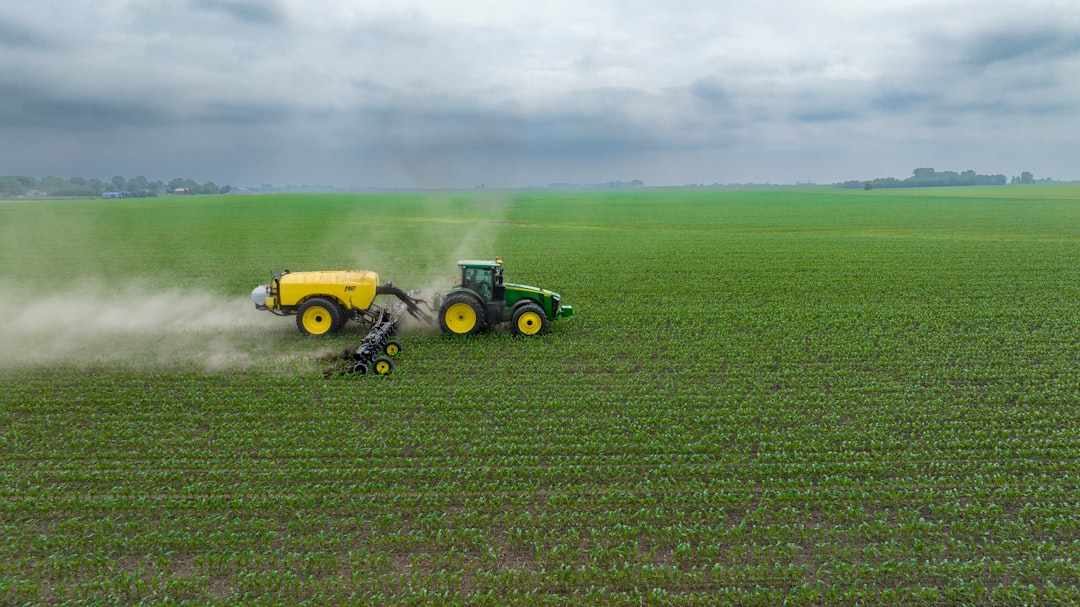
Few input markets matter more to European farm balance sheets than nitrogen, and few have moved more violently in the past eighteen months. The Commission’s Fertiliser Action Plan, adopted in Strasbourg on 19 May 2026 as COM(2026) 310, was conceived precisely because the data had become impossible to ignore. Nitrogen fertiliser prices in April 2026 ran 71 per cent above their 2024 average, with a sharp leg up after the February shock in the Middle East corridor that supplies between a fifth and a third of global ammonia and urea trade. The Commission concedes openly that another spring like 2024, when convoys of tractors converged on the European quarter, would now be a near certainty without policy intervention.
The plan is split between a short-fuse package and a structural pivot, and reading it strictly as a producer subsidy understates what is happening. The immediate measures are designed to push liquidity into farm accounts before the next planting cycle. Existing Common Agricultural Policy crisis instruments will be reprogrammed within Member State strategic plans, advance payment ceilings will be raised, and a targeted financial package is promised before the summer recess. Crucially, the Commission has signalled that environmental payment streams will be promoted alongside emergency liquidity, in an attempt to prevent the political compromise from collapsing into another round of green deregulation by stealth.
The longer arc of the plan is the more consequential one. The Commission is now explicit that fertiliser dependency on a small number of third-country suppliers is a strategic vulnerability comparable to gas in 2022. The text instructs services to scope a domestic decarbonised ammonia production base, accelerate market access for digestate and recovered nutrients from biogas plants and waste streams, and ease registration pathways for organic and bio-based fertiliser products under Regulation 2019/1009. That last point is significant because it answers a long-standing complaint from the bioeconomy sector that conventional mineral suppliers face a lighter regulatory glide path than circular alternatives.
The reception in farm organisations has been measured rather than triumphant. Copa-Cogeca welcomed the liquidity arm but warned that without a binding signal on price formation, the relief risks being absorbed by upstream margin rather than landing in farm gates. European environmental groups went further, accusing the Commission of locking in fossil-derived ammonia for another investment cycle by treating decarbonisation as a 2030 problem rather than a 2026 one. Donegal and other peripheral farming regions in the bloc have already calculated that the proposed CAP advances will cover only a fraction of the price differential on this year’s nitrogen applications.
The plan also opens a delicate negotiation track with the fertiliser industry itself. The Commission has invited producers to a structured dialogue on capacity, with the implicit threat that without a credible domestic investment pipeline, the door to anti-dumping relief on Russian and Belarusian urea, suspended for political reasons since 2023, may be reopened. Industry has not commented on the record, but private signals suggest receptivity to a capacity programme tied to state aid flexibility under the Clean Industrial Deal framework.
For the agriculture ministers due to meet in June, the political question is whether to push the Commission to convert the action plan into a binding regulation before the autumn, or to let it operate as a coordinating framework. The first route would offer farmers legal certainty heading into 2027 planting decisions but risks reopening the entire CAP architecture. The second preserves flexibility but invites every Member State to game the rules. Either way, the 71 per cent number is now the benchmark every Council conclusion will be judged against.