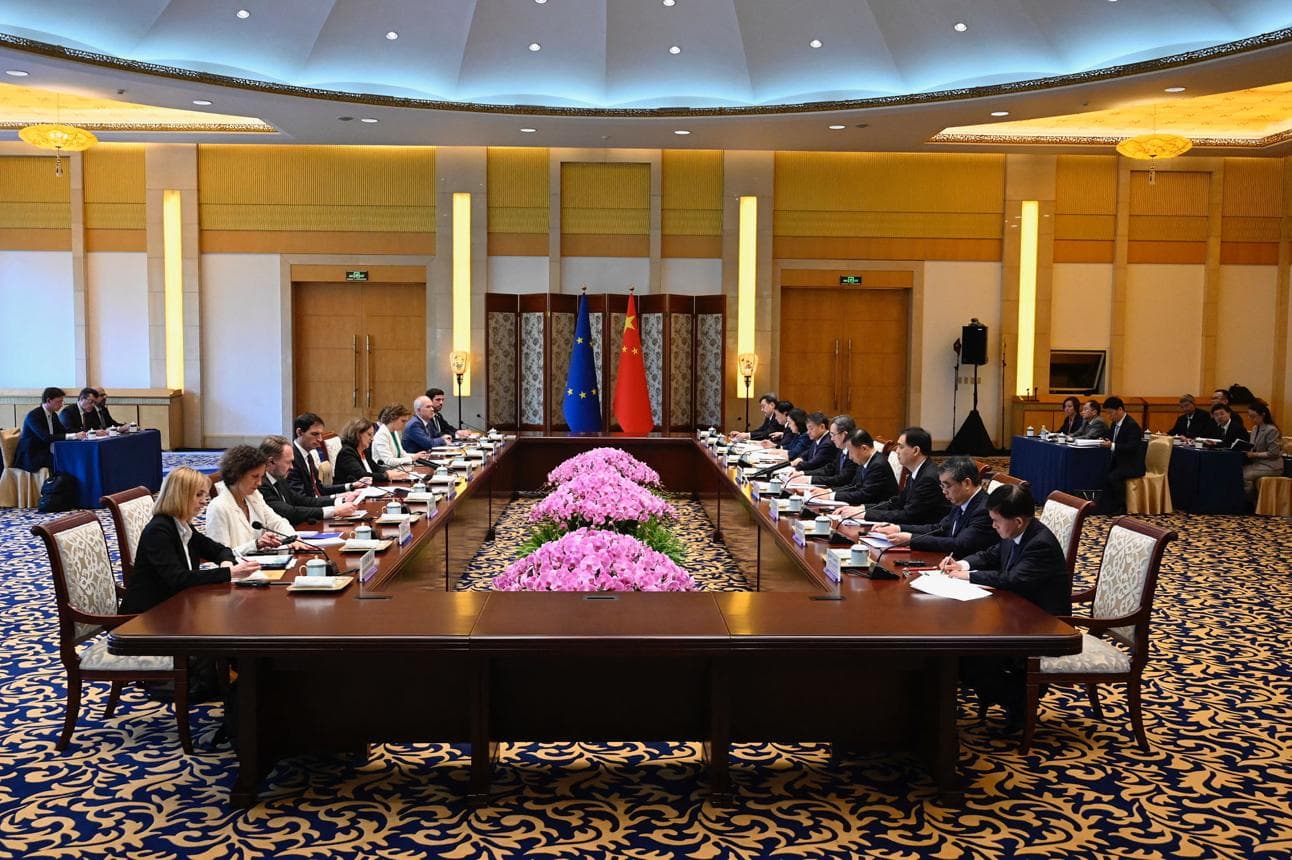
Ankara: The joint statement issued after Commissioner Marta Kos’s most recent visit confirmed what Turkish officials had been signalling through the spring. The 1995 customs union framework is no longer a settled instrument. It is a working file that both sides have agreed to reopen, even if the formal negotiating mandate from the Council remains weeks or months away. Foreign Minister Hakan Fidan’s read-out emphasised that fifteen of the twenty-nine problem areas the two sides had inventoried last winter have now been resolved through technical exchanges. The remaining fourteen are the ones that determine whether modernisation reaches the kind of scope that Turkish industry has been demanding.
The strategic case for an updated text has shifted measurably since the political deadlock of 2018. Three structural forces are now pulling in the same direction. The first is the expansion of EU free trade agreements with third partners, including Mercosur, Mexico, Australia, India, and soon Thailand and the Philippines, that all bind concessions Turkish exporters do not currently enjoy. Without a parallel reset of the customs union, Ankara’s manufacturing base operates under a widening preference gap. The second is the inclusion of Turkish industry in the Made in Europe supply chain strand of the new Competitiveness Compass, which gives Brussels a procedural anchor it did not have last decade. The third is the political need on both sides to provide a tangible deliverable that does not require unblocking the accession file, where Cyprus retains its veto and where bilateral disputes in the Eastern Mediterranean have hardened.
Three areas dominate the substantive agenda. Services come first. The current customs union covers only industrial goods, and the Ifo Institute estimates that adding services could add up to 2.5 percentage points to Turkish GDP over a decade and lift exports to the EU by fifteen to twenty-five percent. The mathematics is asymmetric. Turkish service exporters gain the larger relative uplift, but European logistics, financial services, and digital firms gain durable access to a market of eighty-five million consumers. Agriculture comes second. The exclusion of agri products has cost both sides — Turkish exporters lose against Mediterranean competitors that benefit from full FTAs, and European producers face a regulatory environment in Turkey that has drifted from EU standards. Public procurement is the third file. Inclusion would open Turkish state tenders that today operate under nationality preferences and would give European bidders predictable access to one of the largest infrastructure programmes outside the Union.
The political bottleneck has moved from the Commission to the Council. The Commission has signalled it would welcome a modernisation mandate. The blockage sits with member states that link any customs union reset to progress on Cyprus, on the rule of law trajectory, and on the management of the 2016 migration statement. Athens and Nicosia retain effective veto leverage, and the new German coalition’s position has been more cautious than the public messaging suggests. The Italian government, by contrast, has been the loudest advocate for a procedural breakthrough, framing it as essential for Turkish industrial cooperation on defence supply chains.
The next inflection points are visible. The General Affairs Council session in June will be the first window in which a customs union mandate could be formally tabled. If that slot slips, the Polish presidency’s January 2027 agenda becomes the next plausible vehicle. Turkish business federations have warned that a further year of drift would push large exporters to consider alternative supply chain configurations through North African free zones. Whether Brussels treats that warning as bargaining posture or as a structural risk will shape the size of the eventual mandate.