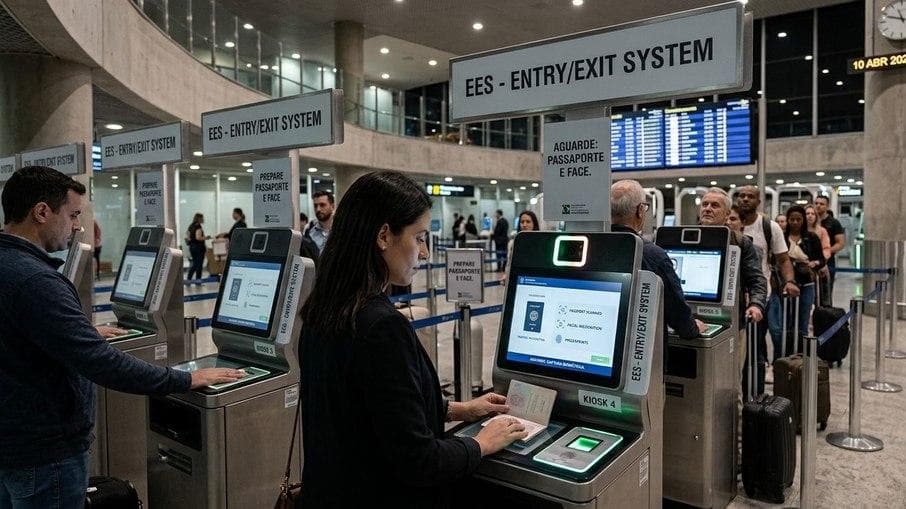
Warsaw: Frontex has brought Member State officials, Commission representatives and EU agencies into its headquarters to nail down the operational architecture for the Screening Regulation that begins binding application on 12 June 2026. The workshop, organised by the agency’s screening implementation team, is the latest in a sequence of preparatory rounds intended to convert legislative text into a working day-one routine for border posts, screening centres and onward referral pipelines.
The Screening Regulation sits inside the Pact on Migration and Asylum and obliges Member States to subject third-country nationals who fail entry conditions to a short, structured check before they are routed into asylum, return or alternative procedures. The instrument prescribes identity, health and security screens within seven days and requires that vulnerable persons, including unaccompanied minors and victims of trafficking, be identified at the earliest possible point. For frontline practitioners, the regulation is the connective tissue that allows the new procedural acquis to function in the round.
Frontex’s own role under the regulation is supporting rather than executive, but the agency has spent the past two years building the capacity Member States are likely to request once the regulation triggers. Its Centre of Excellence for Combating Document Fraud has expanded its screening curriculum, with new modules on biometric capture and on identifying false claims of vulnerability. The agency has also developed standard operating procedures that Member State authorities can adopt or adapt, sparing administrations the cost of building screening playbooks from scratch.
The headline anxiety around the 12 June trigger remains capacity rather than law. Several Member States with significant arrival profiles, including Greece, Italy, Cyprus and Spain, have flagged shortfalls in screening centre infrastructure and in trained personnel. The Commission’s most recent implementation tracking document, circulated to the Justice and Home Affairs Council, identifies bottlenecks in the rapid medical assessment chain, in interpretation services for low-incidence languages, and in the data systems that connect screening outputs to the new Eurodac database. Member States have been pressed to confirm their go-live readiness with formal notifications by the end of May.
The Warsaw workshop has examined the screening-to-procedure handover in particular detail. Officials are working through the data fields that must transfer cleanly from the screening file to the asylum border procedure, the return border procedure, or the regular asylum track. The handover specification matters because procedural deadlines under the asylum border procedure begin running from the moment screening ends, leaving no slack for paperwork delays. The agency’s IT division has shown participants how the upgraded Eurodac interface will time-stamp these moments.
A further round of preparation will take place at the Commission’s expert group on the implementation of the Pact, which has scheduled a final session for early June. There the focus will be the contingency mechanism that allows Member States facing exceptional pressure to derogate temporarily from key timelines, including the seven-day screening window. The mechanism, designed to forestall the kind of breakdowns seen during the 2015 and 2023 spikes, is widely expected to be triggered in at least one Member State during the first six months of operation.
Frontex executive director Hans Leijtens has framed the screening regulation as the Pact’s most operationally exposed instrument, telling participants that the agency stands ready to deploy additional standing corps officers, return specialists and screening experts within hours of a formal request. The agency has earmarked a reserve of around 500 deployable staff for the first wave of Pact application, supplementing existing operational footprints in the Mediterranean and along the eastern flank.
For the European Parliament, attention will turn to scrutiny once the regulation begins to operate. The LIBE committee has scheduled a hearing on Pact implementation in the second half of June, and rapporteurs are expected to focus particularly on the screening regulation’s interaction with fundamental rights monitoring mechanisms.