August 9, 2026
LATEST
New EU Gas Market Rules Take Effect With Consumer SafeguardsDeforestation Regulation Holds Its December Deadline Despite CutsDigital Omnibus Delays Europe’s High-Risk AI Deadline to 2027Europe’s Schools Confront a Widening Basic Skills GapRule of Law Report Finds Progress but Trust Still LagsIRIS2 Gains 66 Satellites as Brussels Signs the Rollout DealNature Restoration Plans Come Due as Member States Race a DeadlineECB Rates Hold at 2.25 Percent as Frankfurt Waits on the DataEU Budget Talks Turn to Cohesion as Ireland Takes OverWildfire Response Stretches Europe’s Emergency Fleet ThinCan Europe’s Quantum Plan Match Its Big Ambitions?Armenia Edges West as Moscow’s Grip Slips AwayEurope Inherits the World’s Aid Bill It Cannot Fully PayAir Passenger Rights Get Their First Overhaul in Two DecadesErasmus Opens a 5 Billion Euro Round for Skills and MobilityCeuta Crisis Pushes the EU Toward Faster Migrant ReturnsBulky Parcels Face a Packaging Crackdown From August 12Can Europe Build Its Drone Wall Before 2030 Arrives?Indonesia’s Trade Deal With Europe Nears Its Final SignatureEurope Leans on Beijing to Keep Climate Talks Alive Before AntalyaNew EU Gas Market Rules Take Effect With Consumer SafeguardsDeforestation Regulation Holds Its December Deadline Despite CutsDigital Omnibus Delays Europe’s High-Risk AI Deadline to 2027Europe’s Schools Confront a Widening Basic Skills GapRule of Law Report Finds Progress but Trust Still LagsIRIS2 Gains 66 Satellites as Brussels Signs the Rollout DealNature Restoration Plans Come Due as Member States Race a DeadlineECB Rates Hold at 2.25 Percent as Frankfurt Waits on the DataEU Budget Talks Turn to Cohesion as Ireland Takes OverWildfire Response Stretches Europe’s Emergency Fleet ThinCan Europe’s Quantum Plan Match Its Big Ambitions?Armenia Edges West as Moscow’s Grip Slips AwayEurope Inherits the World’s Aid Bill It Cannot Fully PayAir Passenger Rights Get Their First Overhaul in Two DecadesErasmus Opens a 5 Billion Euro Round for Skills and MobilityCeuta Crisis Pushes the EU Toward Faster Migrant ReturnsBulky Parcels Face a Packaging Crackdown From August 12Can Europe Build Its Drone Wall Before 2030 Arrives?Indonesia’s Trade Deal With Europe Nears Its Final SignatureEurope Leans on Beijing to Keep Climate Talks Alive Before Antalya
August 9, 2026
LATEST
New EU Gas Market Rules Take Effect With Consumer SafeguardsDeforestation Regulation Holds Its December Deadline Despite CutsDigital Omnibus Delays Europe’s High-Risk AI Deadline to 2027Europe’s Schools Confront a Widening Basic Skills GapRule of Law Report Finds Progress but Trust Still LagsIRIS2 Gains 66 Satellites as Brussels Signs the Rollout DealNature Restoration Plans Come Due as Member States Race a DeadlineECB Rates Hold at 2.25 Percent as Frankfurt Waits on the DataEU Budget Talks Turn to Cohesion as Ireland Takes OverWildfire Response Stretches Europe’s Emergency Fleet ThinCan Europe’s Quantum Plan Match Its Big Ambitions?Armenia Edges West as Moscow’s Grip Slips AwayEurope Inherits the World’s Aid Bill It Cannot Fully PayAir Passenger Rights Get Their First Overhaul in Two DecadesErasmus Opens a 5 Billion Euro Round for Skills and MobilityCeuta Crisis Pushes the EU Toward Faster Migrant ReturnsBulky Parcels Face a Packaging Crackdown From August 12Can Europe Build Its Drone Wall Before 2030 Arrives?Indonesia’s Trade Deal With Europe Nears Its Final SignatureEurope Leans on Beijing to Keep Climate Talks Alive Before AntalyaNew EU Gas Market Rules Take Effect With Consumer SafeguardsDeforestation Regulation Holds Its December Deadline Despite CutsDigital Omnibus Delays Europe’s High-Risk AI Deadline to 2027Europe’s Schools Confront a Widening Basic Skills GapRule of Law Report Finds Progress but Trust Still LagsIRIS2 Gains 66 Satellites as Brussels Signs the Rollout DealNature Restoration Plans Come Due as Member States Race a DeadlineECB Rates Hold at 2.25 Percent as Frankfurt Waits on the DataEU Budget Talks Turn to Cohesion as Ireland Takes OverWildfire Response Stretches Europe’s Emergency Fleet ThinCan Europe’s Quantum Plan Match Its Big Ambitions?Armenia Edges West as Moscow’s Grip Slips AwayEurope Inherits the World’s Aid Bill It Cannot Fully PayAir Passenger Rights Get Their First Overhaul in Two DecadesErasmus Opens a 5 Billion Euro Round for Skills and MobilityCeuta Crisis Pushes the EU Toward Faster Migrant ReturnsBulky Parcels Face a Packaging Crackdown From August 12Can Europe Build Its Drone Wall Before 2030 Arrives?Indonesia’s Trade Deal With Europe Nears Its Final SignatureEurope Leans on Beijing to Keep Climate Talks Alive Before Antalya

Disconnect Push Returns As Commission Reopens Telework Consultation

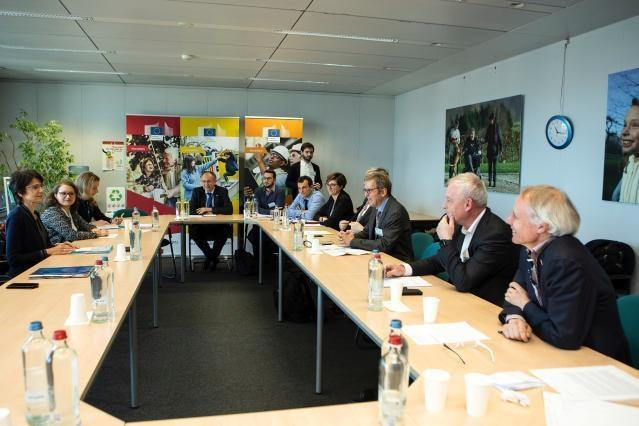
Tampere: The first-stage consultation of European social partners on fair telework and the right to disconnect that the Commission launched in April has moved into the substantive comment phase this month, with the European Trade Union Confederation and the major employer federations preparing the detailed positions that will shape the next legislative step. The consultation revives a file that has been stuck in social dialogue limbo since the 2023 negotiating round between BusinessEurope, SME United and the trade unions broke down without an agreed text.

The Commission’s first-stage consultation document, in line with the procedure under Article 154 TFEU, asks the social partners whether EU-level action is needed and what its possible direction should be. The trade-union side has been clear since the breakdown of the 2022 negotiations that legislative action is required and that the autonomous framework agreement route has been exhausted. The employer side is more divided. The 2023 negotiations failed in part because the employer organisations were unable to put forward a draft text, and that internal lack of alignment may resurface in the responses to this consultation.

The scope of any future directive remains the live political question. A narrow directive focused on the right to disconnect, building on the Parliament’s 2021 own-initiative resolution, would be the path of least resistance. A broader directive that codifies a fair telework framework, including monitoring rules, equipment cost coverage and equal treatment with on-site workers, runs into more substantive disagreement. The Finnish, Belgian and Portuguese national frameworks, all of which have moved well ahead of EU-level action, offer competing templates for what the directive could embed.

Finland’s labour market institutions have watched the file closely. The Tampere region’s mixed economy of digital services and advanced manufacturing has seen the most pronounced telework adoption in the country, and the social-partner-led approach that has shaped Finnish working time and remote work practice is one of the templates the trade-union side is pointing to in its submission. The right-to-disconnect element is less politically contested in Finland than the monitoring rules, which is where the European Commission is most likely to face employer pushback.

The behavioural evidence base has firmed up since the last attempt. Eurofound’s working time and life balance surveys consistently show that workers regularly performing tasks from home are more likely to work in their free time than office-based comparators, by a multiple that has remained roughly stable across the past three rounds. The AI-driven monitoring tools deployed in some workplaces have separately drawn data-protection authority attention, with several national supervisory authorities reaching findings that the deployments were unlawful under the GDPR.

The Commission’s calendar for the file points to a second-stage consultation, possibly with a draft proposal annexed, in the autumn if first-stage responses warrant. That timeline would put a legislative proposal on the Parliament’s plate in the early part of the next institutional cycle, with trilogues likely running through 2027 if the file moves to negotiation mode. The election of a Parliament with a meaningful share of MEPs who campaigned on labour-rights platforms has shifted the political arithmetic, although the right-to-disconnect file has historically attracted cross-political-group support.

Whether the second attempt at a directive reaches statute book depends on whether the employer side can come to the table with a draft text this time, and whether the trade-union side accepts a narrower scope as the price of getting any legislation across the line. The Tampere social-partner traditions suggest that pragmatic compromise is possible, but the European-level negotiating dynamics rarely look like the Finnish ones. The consultation responses, due in early summer, will tell.