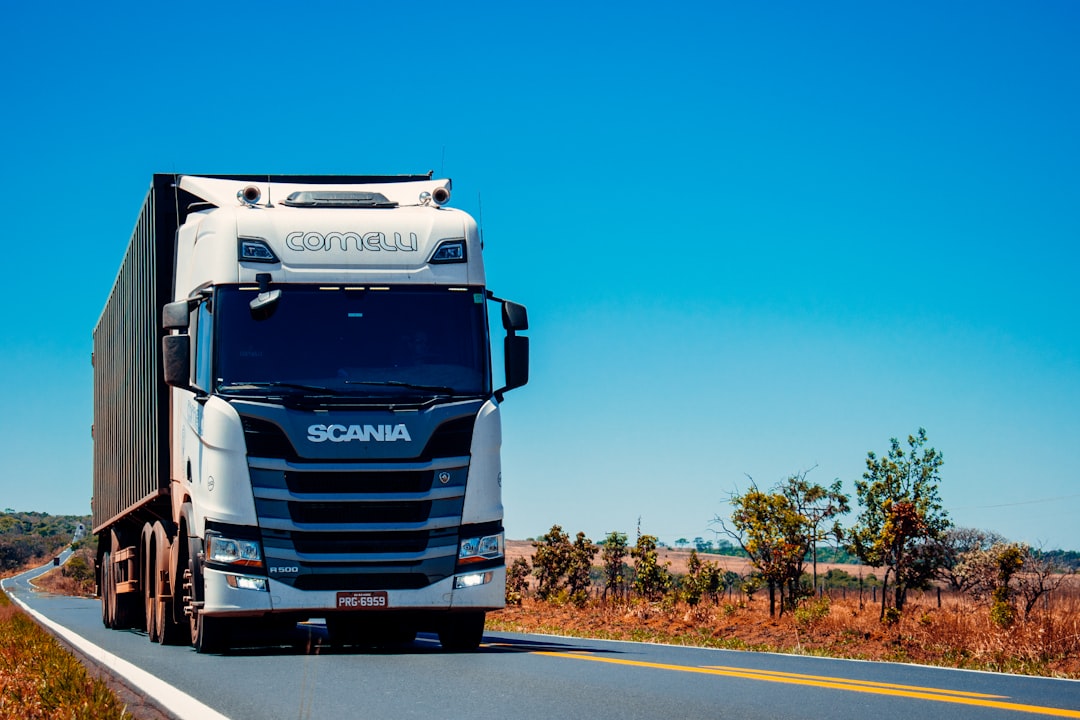
Rotterdam: The revision of the Weights and Dimensions Directive looks, on paper, like a technical housekeeping file. It governs how heavy and how long a lorry may be on European roads, the kind of regulation that rarely escapes the trade press. Yet it has become one of the more revealing fault lines in current transport policy, because the question of whether longer and heavier vehicles should be allowed to cross borders freely pits two coherent visions of decarbonisation against each other, and neither side is obviously wrong.
The Commission’s proposal would, among other things, make it easier for so-called European Modular Systems, the extra-long combinations already common in Sweden and Finland, to run across national frontiers rather than stopping at them. The logic is straightforward. Two long vehicles can carry the freight of three standard ones, cutting fuel burn, driver hours and the number of trucks on the motorway per tonne shifted. Nordic operators, who have run these combinations safely for decades on quieter networks, see no reason the rest of the continent should be walled off from the efficiency.
The objection comes mostly from countries with dense networks and strong rail freight sectors, and it has two strands. The first is a safety and infrastructure argument. Heavier axle loads accelerate wear on bridges and pavements that were not engineered for them, and longer vehicles complicate roundabouts, slip roads and urban approaches in places with no Nordic-style open road. The second is a modal-shift argument that cuts to the heart of the Green Deal. Make road haulage cheaper and more productive, the rail lobby warns, and you undercut the very shift to rail that other EU policies spend billions trying to engineer. A directive sold as climate-friendly could, on this reading, lock in road dominance for another generation.
The European Parliament and Council have circled these questions for months without converging, and the trilogue now forming will have to reconcile texts that differ on the central permission. Parliament has leaned toward tighter conditions and a cautious approach to cross-border running, while parts of the Council want the flexibility the proposal offers. The zero-emission angle complicates matters further, because heavier battery and hydrogen powertrains weigh more than diesel, and almost everyone agrees that electric trucks deserve a weight allowance so that the battery does not eat into payload. The fight is over how generous that allowance should be and whether it quietly becomes a back door for heavier vehicles generally.
What makes the file genuinely hard is that the evidence is contested rather than absent. Studies commissioned by haulage interests show emissions falling; studies commissioned by rail interests show traffic migrating off the tracks. Both can be true at once depending on the corridor, the price of diesel and the state of the local railway. That ambiguity hands negotiators an excuse to split the difference, which usually means an opt-in patchwork where member states decide for themselves, the opposite of the seamless cross-border market the proposal set out to create.
The likeliest outcome is a compromise that grants the zero-emission weight allowance cleanly and treats the megatruck question gingerly, leaving cross-border running subject to bilateral agreement. That would disappoint the Nordics and reassure the rail sector, and it would confirm a familiar pattern in European transport policy, where the single market stops politely at the point where national infrastructure and national lobbies begin.