August 10, 2026
LATEST
Europe’s Air Quality Improves but WHO Limits LoomTwelve New EU Medicines Win a Green Light from EMAFIFA Agent Rules Must Answer to Europe’s CourtsTachograph Rules Now Reach Vans Crossing Europe’s BordersNature Restoration Plans Come Due as a Hard Deadline NearsBrussels Opens a State Aid Probe Into Spain’s Renewables PayoutBrussels Extends Its Tariff Suspension on US Goods IndefinitelyFarmers Win Stronger Contract Rights Across the EU Supply ChainEurope Finally Locks In Its 348-Satellite Answer to StarlinkPlatform Work Rules Face a National Scramble Before DecemberDuty-Free Parcels Reach the End of the Line for EU ShoppersAfter Nine Years, Europe and Australia Seal a Trade PactBeijing Answers Europe’s Russia Sanctions in KindOne Year On, the EU-Japan Alliance Faces Its First TestEurope’s Chip Ambitions Still Run Through Taiwan’s FabsWhy South Korea Bet Its Research Future on Europe’s ProgrammeEurope and Japan Deepen Their Economic Alliance as Rivals CircleFive Joint Defence Projects Launch Europe’s Military ShieldElectrification Plan Aims to Make Europe First Electro ContinentHorizon Europe Budget Fight Heats Up as Ministers Push BackEurope’s Air Quality Improves but WHO Limits LoomTwelve New EU Medicines Win a Green Light from EMAFIFA Agent Rules Must Answer to Europe’s CourtsTachograph Rules Now Reach Vans Crossing Europe’s BordersNature Restoration Plans Come Due as a Hard Deadline NearsBrussels Opens a State Aid Probe Into Spain’s Renewables PayoutBrussels Extends Its Tariff Suspension on US Goods IndefinitelyFarmers Win Stronger Contract Rights Across the EU Supply ChainEurope Finally Locks In Its 348-Satellite Answer to StarlinkPlatform Work Rules Face a National Scramble Before DecemberDuty-Free Parcels Reach the End of the Line for EU ShoppersAfter Nine Years, Europe and Australia Seal a Trade PactBeijing Answers Europe’s Russia Sanctions in KindOne Year On, the EU-Japan Alliance Faces Its First TestEurope’s Chip Ambitions Still Run Through Taiwan’s FabsWhy South Korea Bet Its Research Future on Europe’s ProgrammeEurope and Japan Deepen Their Economic Alliance as Rivals CircleFive Joint Defence Projects Launch Europe’s Military ShieldElectrification Plan Aims to Make Europe First Electro ContinentHorizon Europe Budget Fight Heats Up as Ministers Push Back
August 10, 2026
LATEST
Europe’s Air Quality Improves but WHO Limits LoomTwelve New EU Medicines Win a Green Light from EMAFIFA Agent Rules Must Answer to Europe’s CourtsTachograph Rules Now Reach Vans Crossing Europe’s BordersNature Restoration Plans Come Due as a Hard Deadline NearsBrussels Opens a State Aid Probe Into Spain’s Renewables PayoutBrussels Extends Its Tariff Suspension on US Goods IndefinitelyFarmers Win Stronger Contract Rights Across the EU Supply ChainEurope Finally Locks In Its 348-Satellite Answer to StarlinkPlatform Work Rules Face a National Scramble Before DecemberDuty-Free Parcels Reach the End of the Line for EU ShoppersAfter Nine Years, Europe and Australia Seal a Trade PactBeijing Answers Europe’s Russia Sanctions in KindOne Year On, the EU-Japan Alliance Faces Its First TestEurope’s Chip Ambitions Still Run Through Taiwan’s FabsWhy South Korea Bet Its Research Future on Europe’s ProgrammeEurope and Japan Deepen Their Economic Alliance as Rivals CircleFive Joint Defence Projects Launch Europe’s Military ShieldElectrification Plan Aims to Make Europe First Electro ContinentHorizon Europe Budget Fight Heats Up as Ministers Push BackEurope’s Air Quality Improves but WHO Limits LoomTwelve New EU Medicines Win a Green Light from EMAFIFA Agent Rules Must Answer to Europe’s CourtsTachograph Rules Now Reach Vans Crossing Europe’s BordersNature Restoration Plans Come Due as a Hard Deadline NearsBrussels Opens a State Aid Probe Into Spain’s Renewables PayoutBrussels Extends Its Tariff Suspension on US Goods IndefinitelyFarmers Win Stronger Contract Rights Across the EU Supply ChainEurope Finally Locks In Its 348-Satellite Answer to StarlinkPlatform Work Rules Face a National Scramble Before DecemberDuty-Free Parcels Reach the End of the Line for EU ShoppersAfter Nine Years, Europe and Australia Seal a Trade PactBeijing Answers Europe’s Russia Sanctions in KindOne Year On, the EU-Japan Alliance Faces Its First TestEurope’s Chip Ambitions Still Run Through Taiwan’s FabsWhy South Korea Bet Its Research Future on Europe’s ProgrammeEurope and Japan Deepen Their Economic Alliance as Rivals CircleFive Joint Defence Projects Launch Europe’s Military ShieldElectrification Plan Aims to Make Europe First Electro ContinentHorizon Europe Budget Fight Heats Up as Ministers Push Back

Member States Race To File Nature Restoration Plans On Deadline

Strasbourg: After one of the most bruising legislative fights of the decade, the Nature Restoration Regulation has moved from contested principle to administrative reality. The arguments that nearly sank it have not disappeared, but they have changed shape. The question is no longer whether Europe should restore degraded ecosystems on a binding timetable, but whether national governments can produce restoration plans that are ambitious enough to matter and realistic enough to survive contact with the farmers, foresters and landowners who must carry them out.

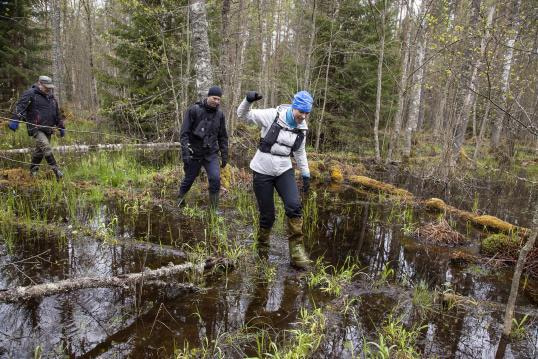
The regulation asks each member state to draft a national plan setting out where and how it will bring back wetlands, rivers, forests and farmland habitats, with measurable targets and timelines. This is where the abstract becomes concrete. A binding obligation to restore a percentage of drained peatland sounds clean in a legislative text and looks very different on a map dotted with active farms and drainage rights established over generations. The plans are the moment the law meets the land registry, and the friction is showing.

Agricultural groups, who fought the regulation hardest, are watching the drafting closely for signs that restoration will be imposed on productive land without adequate compensation or flexibility. Their concern is legitimate even where their tactics were obstructive. Rewetting a peatland can strand a working farm, and a target met on paper through coercion will not survive politically. The lawmakers who wrote the regulation understood this, which is why the plans are meant to favour incentives, voluntary uptake and public land before reaching for mandates. Whether that sequencing holds under deadline pressure is the open question.

The environmental case for moving quickly is not sentimental. Restored wetlands store carbon and buffer floods, healthy soils hold water through drought, and pollinator habitats underpin the very agriculture that fears the law. Many of the ecosystems the regulation targets are degraded to the point where delay compounds the eventual cost, and where some losses tip toward the irreversible. The economic framing that pits farming against nature misreads a relationship in which the two ultimately depend on the same ground.

Funding is the hinge on which credibility turns. Member states are expected to braid together cohesion money, agricultural payments and national budgets to finance restoration, but those streams were not designed for this purpose and compete with other priorities. A plan with bold targets and no clear financing is a plan written to fail, and several early drafts read that way. The Commission will assess the plans for exactly this gap, and its willingness to send weak ones back will signal how serious the obligation really is.

What makes this phase decisive is that it is largely invisible. The headline battles are over, the cameras have moved on, and the work now happens in environment ministries and regional agencies far from public attention. That quiet is where ambition tends to leak away. The regulation will ultimately be judged not by the votes it once survived but by whether a wetland that was drained is wet again a decade from now, and that verdict is being written, line by line, in the plans taking shape today.