August 9, 2026
LATEST
New EU Gas Market Rules Take Effect With Consumer SafeguardsDeforestation Regulation Holds Its December Deadline Despite CutsDigital Omnibus Delays Europe’s High-Risk AI Deadline to 2027Europe’s Schools Confront a Widening Basic Skills GapRule of Law Report Finds Progress but Trust Still LagsIRIS2 Gains 66 Satellites as Brussels Signs the Rollout DealNature Restoration Plans Come Due as Member States Race a DeadlineECB Rates Hold at 2.25 Percent as Frankfurt Waits on the DataEU Budget Talks Turn to Cohesion as Ireland Takes OverWildfire Response Stretches Europe’s Emergency Fleet ThinCan Europe’s Quantum Plan Match Its Big Ambitions?Armenia Edges West as Moscow’s Grip Slips AwayEurope Inherits the World’s Aid Bill It Cannot Fully PayAir Passenger Rights Get Their First Overhaul in Two DecadesErasmus Opens a 5 Billion Euro Round for Skills and MobilityCeuta Crisis Pushes the EU Toward Faster Migrant ReturnsBulky Parcels Face a Packaging Crackdown From August 12Can Europe Build Its Drone Wall Before 2030 Arrives?Indonesia’s Trade Deal With Europe Nears Its Final SignatureEurope Leans on Beijing to Keep Climate Talks Alive Before AntalyaNew EU Gas Market Rules Take Effect With Consumer SafeguardsDeforestation Regulation Holds Its December Deadline Despite CutsDigital Omnibus Delays Europe’s High-Risk AI Deadline to 2027Europe’s Schools Confront a Widening Basic Skills GapRule of Law Report Finds Progress but Trust Still LagsIRIS2 Gains 66 Satellites as Brussels Signs the Rollout DealNature Restoration Plans Come Due as Member States Race a DeadlineECB Rates Hold at 2.25 Percent as Frankfurt Waits on the DataEU Budget Talks Turn to Cohesion as Ireland Takes OverWildfire Response Stretches Europe’s Emergency Fleet ThinCan Europe’s Quantum Plan Match Its Big Ambitions?Armenia Edges West as Moscow’s Grip Slips AwayEurope Inherits the World’s Aid Bill It Cannot Fully PayAir Passenger Rights Get Their First Overhaul in Two DecadesErasmus Opens a 5 Billion Euro Round for Skills and MobilityCeuta Crisis Pushes the EU Toward Faster Migrant ReturnsBulky Parcels Face a Packaging Crackdown From August 12Can Europe Build Its Drone Wall Before 2030 Arrives?Indonesia’s Trade Deal With Europe Nears Its Final SignatureEurope Leans on Beijing to Keep Climate Talks Alive Before Antalya
August 9, 2026
LATEST
New EU Gas Market Rules Take Effect With Consumer SafeguardsDeforestation Regulation Holds Its December Deadline Despite CutsDigital Omnibus Delays Europe’s High-Risk AI Deadline to 2027Europe’s Schools Confront a Widening Basic Skills GapRule of Law Report Finds Progress but Trust Still LagsIRIS2 Gains 66 Satellites as Brussels Signs the Rollout DealNature Restoration Plans Come Due as Member States Race a DeadlineECB Rates Hold at 2.25 Percent as Frankfurt Waits on the DataEU Budget Talks Turn to Cohesion as Ireland Takes OverWildfire Response Stretches Europe’s Emergency Fleet ThinCan Europe’s Quantum Plan Match Its Big Ambitions?Armenia Edges West as Moscow’s Grip Slips AwayEurope Inherits the World’s Aid Bill It Cannot Fully PayAir Passenger Rights Get Their First Overhaul in Two DecadesErasmus Opens a 5 Billion Euro Round for Skills and MobilityCeuta Crisis Pushes the EU Toward Faster Migrant ReturnsBulky Parcels Face a Packaging Crackdown From August 12Can Europe Build Its Drone Wall Before 2030 Arrives?Indonesia’s Trade Deal With Europe Nears Its Final SignatureEurope Leans on Beijing to Keep Climate Talks Alive Before AntalyaNew EU Gas Market Rules Take Effect With Consumer SafeguardsDeforestation Regulation Holds Its December Deadline Despite CutsDigital Omnibus Delays Europe’s High-Risk AI Deadline to 2027Europe’s Schools Confront a Widening Basic Skills GapRule of Law Report Finds Progress but Trust Still LagsIRIS2 Gains 66 Satellites as Brussels Signs the Rollout DealNature Restoration Plans Come Due as Member States Race a DeadlineECB Rates Hold at 2.25 Percent as Frankfurt Waits on the DataEU Budget Talks Turn to Cohesion as Ireland Takes OverWildfire Response Stretches Europe’s Emergency Fleet ThinCan Europe’s Quantum Plan Match Its Big Ambitions?Armenia Edges West as Moscow’s Grip Slips AwayEurope Inherits the World’s Aid Bill It Cannot Fully PayAir Passenger Rights Get Their First Overhaul in Two DecadesErasmus Opens a 5 Billion Euro Round for Skills and MobilityCeuta Crisis Pushes the EU Toward Faster Migrant ReturnsBulky Parcels Face a Packaging Crackdown From August 12Can Europe Build Its Drone Wall Before 2030 Arrives?Indonesia’s Trade Deal With Europe Nears Its Final SignatureEurope Leans on Beijing to Keep Climate Talks Alive Before Antalya

Can A New Space Law Clean Up Europe’s Crowded Orbits In Time

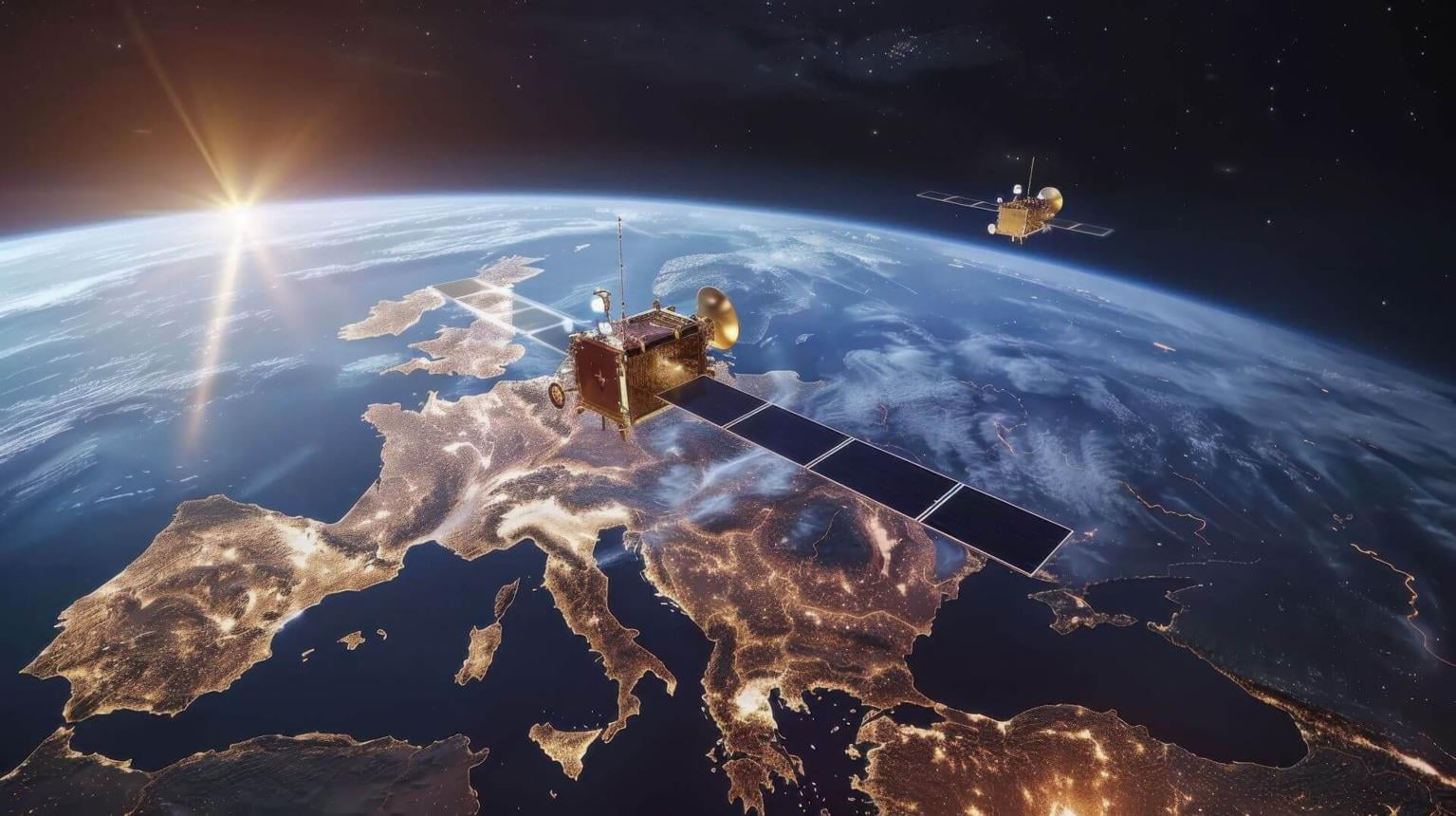
Strasbourg: Space used to be the preserve of a handful of national agencies and a treaty signed long before anyone imagined tens of thousands of satellites circling overhead. That world is gone. Low Earth orbit is now crowded with commercial constellations, the debris from old launches and the wreckage of occasional collisions, and Europe has finally decided it needs its own rulebook to manage the mess. The proposed EU Space Act is that attempt, and the debate around it reveals just how far the continent has fallen behind.

The draft law tries to do three things at once. It sets safety rules, requiring operators to track their satellites, avoid collisions and remove hardware from orbit once it stops working rather than leaving it to drift for decades. It sets resilience rules, treating satellites as critical infrastructure that must be hardened against cyberattacks and jamming, threats that have moved from theory to routine since the war on Europe’s eastern flank. And it sets sustainability rules, pushing operators to limit the light pollution and radio interference that increasingly frustrate astronomers and rival services alike.

The deeper purpose is to knit together a fragmented market. At present an operator may face one set of national rules in France, another in Germany and nothing at all elsewhere, an incoherence that raises costs and scares off investors. A single European framework, supporters argue, would do for space what the single market did for goods, giving smaller firms the legal certainty to scale and compete. That matters because Europe’s launch capacity and satellite industry have been comprehensively outpaced, above all by a single American company whose reusable rockets and sprawling broadband constellation have rewritten the economics of the sector.

Not everyone is convinced the timing is right. Industry groups warn that piling new compliance obligations onto European firms while their foreign rivals operate under lighter regimes could entrench the very weakness the law is meant to cure. Smaller start-ups fear the cost of deorbiting requirements and tracking mandates will fall hardest on them. Some member states with established national agencies are wary of ceding authority to Brussels over a domain long tied to sovereignty and defence. The Commission counters that clear rules attract capital rather than repelling it, and that the cost of inaction is an orbit so cluttered it becomes unusable.

Underneath the technical clauses lies a strategic anxiety. Europe depends on space for navigation, weather forecasting, secure communications and military intelligence, yet relies heavily on others to reach orbit at all. The Space Act will not fix that dependence on its own. But by setting standards the rest of the world may eventually copy, Brussels is betting it can shape the sector through regulation even where it cannot yet compete through engineering. Whether that bet pays off depends on how quickly the law moves from ambition to enforcement, and on whether Europe finds the rockets to match its rules.