August 9, 2026
LATEST
New EU Gas Market Rules Take Effect With Consumer SafeguardsDeforestation Regulation Holds Its December Deadline Despite CutsDigital Omnibus Delays Europe’s High-Risk AI Deadline to 2027Europe’s Schools Confront a Widening Basic Skills GapRule of Law Report Finds Progress but Trust Still LagsIRIS2 Gains 66 Satellites as Brussels Signs the Rollout DealNature Restoration Plans Come Due as Member States Race a DeadlineECB Rates Hold at 2.25 Percent as Frankfurt Waits on the DataEU Budget Talks Turn to Cohesion as Ireland Takes OverWildfire Response Stretches Europe’s Emergency Fleet ThinCan Europe’s Quantum Plan Match Its Big Ambitions?Armenia Edges West as Moscow’s Grip Slips AwayEurope Inherits the World’s Aid Bill It Cannot Fully PayAir Passenger Rights Get Their First Overhaul in Two DecadesErasmus Opens a 5 Billion Euro Round for Skills and MobilityCeuta Crisis Pushes the EU Toward Faster Migrant ReturnsBulky Parcels Face a Packaging Crackdown From August 12Can Europe Build Its Drone Wall Before 2030 Arrives?Indonesia’s Trade Deal With Europe Nears Its Final SignatureEurope Leans on Beijing to Keep Climate Talks Alive Before AntalyaNew EU Gas Market Rules Take Effect With Consumer SafeguardsDeforestation Regulation Holds Its December Deadline Despite CutsDigital Omnibus Delays Europe’s High-Risk AI Deadline to 2027Europe’s Schools Confront a Widening Basic Skills GapRule of Law Report Finds Progress but Trust Still LagsIRIS2 Gains 66 Satellites as Brussels Signs the Rollout DealNature Restoration Plans Come Due as Member States Race a DeadlineECB Rates Hold at 2.25 Percent as Frankfurt Waits on the DataEU Budget Talks Turn to Cohesion as Ireland Takes OverWildfire Response Stretches Europe’s Emergency Fleet ThinCan Europe’s Quantum Plan Match Its Big Ambitions?Armenia Edges West as Moscow’s Grip Slips AwayEurope Inherits the World’s Aid Bill It Cannot Fully PayAir Passenger Rights Get Their First Overhaul in Two DecadesErasmus Opens a 5 Billion Euro Round for Skills and MobilityCeuta Crisis Pushes the EU Toward Faster Migrant ReturnsBulky Parcels Face a Packaging Crackdown From August 12Can Europe Build Its Drone Wall Before 2030 Arrives?Indonesia’s Trade Deal With Europe Nears Its Final SignatureEurope Leans on Beijing to Keep Climate Talks Alive Before Antalya
August 9, 2026
LATEST
New EU Gas Market Rules Take Effect With Consumer SafeguardsDeforestation Regulation Holds Its December Deadline Despite CutsDigital Omnibus Delays Europe’s High-Risk AI Deadline to 2027Europe’s Schools Confront a Widening Basic Skills GapRule of Law Report Finds Progress but Trust Still LagsIRIS2 Gains 66 Satellites as Brussels Signs the Rollout DealNature Restoration Plans Come Due as Member States Race a DeadlineECB Rates Hold at 2.25 Percent as Frankfurt Waits on the DataEU Budget Talks Turn to Cohesion as Ireland Takes OverWildfire Response Stretches Europe’s Emergency Fleet ThinCan Europe’s Quantum Plan Match Its Big Ambitions?Armenia Edges West as Moscow’s Grip Slips AwayEurope Inherits the World’s Aid Bill It Cannot Fully PayAir Passenger Rights Get Their First Overhaul in Two DecadesErasmus Opens a 5 Billion Euro Round for Skills and MobilityCeuta Crisis Pushes the EU Toward Faster Migrant ReturnsBulky Parcels Face a Packaging Crackdown From August 12Can Europe Build Its Drone Wall Before 2030 Arrives?Indonesia’s Trade Deal With Europe Nears Its Final SignatureEurope Leans on Beijing to Keep Climate Talks Alive Before AntalyaNew EU Gas Market Rules Take Effect With Consumer SafeguardsDeforestation Regulation Holds Its December Deadline Despite CutsDigital Omnibus Delays Europe’s High-Risk AI Deadline to 2027Europe’s Schools Confront a Widening Basic Skills GapRule of Law Report Finds Progress but Trust Still LagsIRIS2 Gains 66 Satellites as Brussels Signs the Rollout DealNature Restoration Plans Come Due as Member States Race a DeadlineECB Rates Hold at 2.25 Percent as Frankfurt Waits on the DataEU Budget Talks Turn to Cohesion as Ireland Takes OverWildfire Response Stretches Europe’s Emergency Fleet ThinCan Europe’s Quantum Plan Match Its Big Ambitions?Armenia Edges West as Moscow’s Grip Slips AwayEurope Inherits the World’s Aid Bill It Cannot Fully PayAir Passenger Rights Get Their First Overhaul in Two DecadesErasmus Opens a 5 Billion Euro Round for Skills and MobilityCeuta Crisis Pushes the EU Toward Faster Migrant ReturnsBulky Parcels Face a Packaging Crackdown From August 12Can Europe Build Its Drone Wall Before 2030 Arrives?Indonesia’s Trade Deal With Europe Nears Its Final SignatureEurope Leans on Beijing to Keep Climate Talks Alive Before Antalya

How Canberra Won A Tariff-Free Path Into Europe’s Supply Lines

Canberra: After eight years of stop-start bargaining, the European Union and Australia have signed a free trade agreement that does something more revealing than cut tariffs. It codifies how Europe now thinks about raw materials. The headline numbers are real enough. More than ninety-nine percent of tariff lines on Australian mineral exports will fall away, including the duties of roughly five and a half percent that long sat on lithium hydroxide, hydrogen carriers and a swathe of processed metals. Yet the tariffs were never the binding constraint. Australia and Europe traded comfortably without a deal. What changed is the willingness of both sides to treat supply chains as a security question rather than a commercial one.

That shift explains why the agreement took so long and why it nearly collapsed more than once. Earlier rounds foundered on agriculture, with European farmers resisting Australian beef and sugar, and on Canberra’s suspicion that Brussels wanted privileged access to its mines without offering much in return. The version finally signed reflects a hard compromise. Europe secured a rules-based framework for sourcing critical minerals, including commitments against dual pricing and arbitrary export restrictions. Australia, in exchange, won durable market access and, more importantly, the investment confidence that comes from a treaty rather than a memorandum.

The strategic logic is not subtle. Europe imports the overwhelming share of its refined lithium, rare earths and processed battery metals from a single supplier, and the past three years have taught Brussels how uncomfortable that dependence can become. Australia offers an alternative that is geologically rich, politically aligned and already integrated into Western financial and legal norms. The agreement reinforces an existing strategic partnership on critical minerals, turning a loose political understanding into something with enforceable texture.

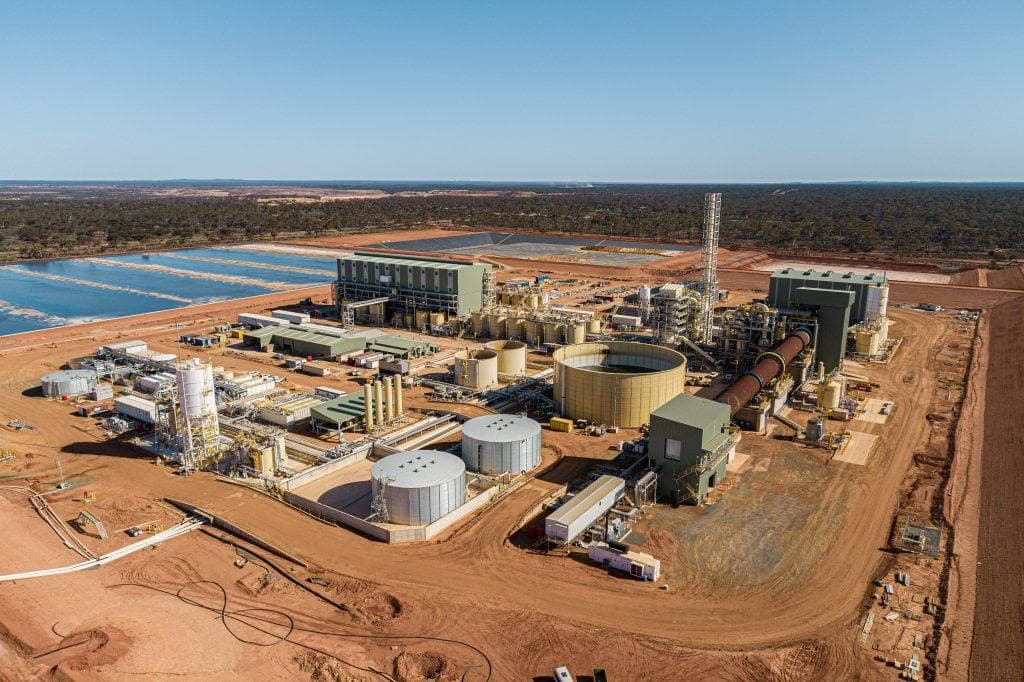
There are reasons for caution. Mining the ore is the easy part. Refining it is where the value and the leverage sit, and Australia still ships much of its raw output abroad for processing. A treaty cannot conjure smelters and separation plants into existence, and the capital required to build them runs to tens of billions. The hydrogen provisions, much trumpeted in the signing statements, depend on an export industry that barely exists at commercial scale. Brussels has bought optionality, not independence, and the difference matters.

Still, the deal should be read as part of a wider European pattern rather than a one-off. Within months the bloc has moved on arrangements across the Indo-Pacific, each stitched around the same anxiety about concentrated supply and coercive economics. The Australian agreement is the most resource-focused of the set, and arguably the most candid about its motives. It does not pretend to be about consumer goods or services. It is about ensuring that the metals underpinning Europe’s electric vehicles, wind turbines and defence systems can be sourced from a partner unlikely to weaponise them.

Whether that ambition survives contact with economics is the open question. Diversification is expensive, and European industry has a long habit of choosing the cheapest input regardless of where it originates. Treaties can lower barriers, but they cannot compel firms to pay a premium for security they may not yet feel they need. The signatures in Canberra are a statement of intent. The harder work, of building the supply chains the document imagines, has barely begun.