August 9, 2026
LATEST
New EU Gas Market Rules Take Effect With Consumer SafeguardsDeforestation Regulation Holds Its December Deadline Despite CutsDigital Omnibus Delays Europe’s High-Risk AI Deadline to 2027Europe’s Schools Confront a Widening Basic Skills GapRule of Law Report Finds Progress but Trust Still LagsIRIS2 Gains 66 Satellites as Brussels Signs the Rollout DealNature Restoration Plans Come Due as Member States Race a DeadlineECB Rates Hold at 2.25 Percent as Frankfurt Waits on the DataEU Budget Talks Turn to Cohesion as Ireland Takes OverWildfire Response Stretches Europe’s Emergency Fleet ThinCan Europe’s Quantum Plan Match Its Big Ambitions?Armenia Edges West as Moscow’s Grip Slips AwayEurope Inherits the World’s Aid Bill It Cannot Fully PayAir Passenger Rights Get Their First Overhaul in Two DecadesErasmus Opens a 5 Billion Euro Round for Skills and MobilityCeuta Crisis Pushes the EU Toward Faster Migrant ReturnsBulky Parcels Face a Packaging Crackdown From August 12Can Europe Build Its Drone Wall Before 2030 Arrives?Indonesia’s Trade Deal With Europe Nears Its Final SignatureEurope Leans on Beijing to Keep Climate Talks Alive Before AntalyaNew EU Gas Market Rules Take Effect With Consumer SafeguardsDeforestation Regulation Holds Its December Deadline Despite CutsDigital Omnibus Delays Europe’s High-Risk AI Deadline to 2027Europe’s Schools Confront a Widening Basic Skills GapRule of Law Report Finds Progress but Trust Still LagsIRIS2 Gains 66 Satellites as Brussels Signs the Rollout DealNature Restoration Plans Come Due as Member States Race a DeadlineECB Rates Hold at 2.25 Percent as Frankfurt Waits on the DataEU Budget Talks Turn to Cohesion as Ireland Takes OverWildfire Response Stretches Europe’s Emergency Fleet ThinCan Europe’s Quantum Plan Match Its Big Ambitions?Armenia Edges West as Moscow’s Grip Slips AwayEurope Inherits the World’s Aid Bill It Cannot Fully PayAir Passenger Rights Get Their First Overhaul in Two DecadesErasmus Opens a 5 Billion Euro Round for Skills and MobilityCeuta Crisis Pushes the EU Toward Faster Migrant ReturnsBulky Parcels Face a Packaging Crackdown From August 12Can Europe Build Its Drone Wall Before 2030 Arrives?Indonesia’s Trade Deal With Europe Nears Its Final SignatureEurope Leans on Beijing to Keep Climate Talks Alive Before Antalya
August 9, 2026
LATEST
New EU Gas Market Rules Take Effect With Consumer SafeguardsDeforestation Regulation Holds Its December Deadline Despite CutsDigital Omnibus Delays Europe’s High-Risk AI Deadline to 2027Europe’s Schools Confront a Widening Basic Skills GapRule of Law Report Finds Progress but Trust Still LagsIRIS2 Gains 66 Satellites as Brussels Signs the Rollout DealNature Restoration Plans Come Due as Member States Race a DeadlineECB Rates Hold at 2.25 Percent as Frankfurt Waits on the DataEU Budget Talks Turn to Cohesion as Ireland Takes OverWildfire Response Stretches Europe’s Emergency Fleet ThinCan Europe’s Quantum Plan Match Its Big Ambitions?Armenia Edges West as Moscow’s Grip Slips AwayEurope Inherits the World’s Aid Bill It Cannot Fully PayAir Passenger Rights Get Their First Overhaul in Two DecadesErasmus Opens a 5 Billion Euro Round for Skills and MobilityCeuta Crisis Pushes the EU Toward Faster Migrant ReturnsBulky Parcels Face a Packaging Crackdown From August 12Can Europe Build Its Drone Wall Before 2030 Arrives?Indonesia’s Trade Deal With Europe Nears Its Final SignatureEurope Leans on Beijing to Keep Climate Talks Alive Before AntalyaNew EU Gas Market Rules Take Effect With Consumer SafeguardsDeforestation Regulation Holds Its December Deadline Despite CutsDigital Omnibus Delays Europe’s High-Risk AI Deadline to 2027Europe’s Schools Confront a Widening Basic Skills GapRule of Law Report Finds Progress but Trust Still LagsIRIS2 Gains 66 Satellites as Brussels Signs the Rollout DealNature Restoration Plans Come Due as Member States Race a DeadlineECB Rates Hold at 2.25 Percent as Frankfurt Waits on the DataEU Budget Talks Turn to Cohesion as Ireland Takes OverWildfire Response Stretches Europe’s Emergency Fleet ThinCan Europe’s Quantum Plan Match Its Big Ambitions?Armenia Edges West as Moscow’s Grip Slips AwayEurope Inherits the World’s Aid Bill It Cannot Fully PayAir Passenger Rights Get Their First Overhaul in Two DecadesErasmus Opens a 5 Billion Euro Round for Skills and MobilityCeuta Crisis Pushes the EU Toward Faster Migrant ReturnsBulky Parcels Face a Packaging Crackdown From August 12Can Europe Build Its Drone Wall Before 2030 Arrives?Indonesia’s Trade Deal With Europe Nears Its Final SignatureEurope Leans on Beijing to Keep Climate Talks Alive Before Antalya

Abu Dhabi’s Green Hydrogen Bid Could Win Over Brussels

Abu Dhabi: Negotiators from the European Union and the United Arab Emirates wrapped up a fifth round of free trade talks in Dubai in early February 2026, and for the first time officials on both sides began talking openly about a deal landing before the end of the year. If it does, it would be the first comprehensive trade agreement the EU has concluded with any Gulf state, ending a stalemate with the six-member Gulf Cooperation Council that has lasted, in various forms, for more than three decades.

What has changed is the subject matter. Earlier attempts at an EU-GCC agreement, which collapsed in 2008 after twenty years of intermittent negotiation, foundered largely on tariffs and market access for goods. The bilateral talks that European Commission President Ursula von der Leyen and UAE President Sheikh Mohamed bin Zayed Al Nahyan agreed to launch in April 2025 are built around a different axis: energy. Green hydrogen, renewable electricity and critical raw materials sit at the centre of the negotiating mandate, reflecting how thoroughly the EU’s trade agenda has been reshaped by its post-2022 scramble to replace Russian gas and diversify away from Chinese processing of critical minerals.

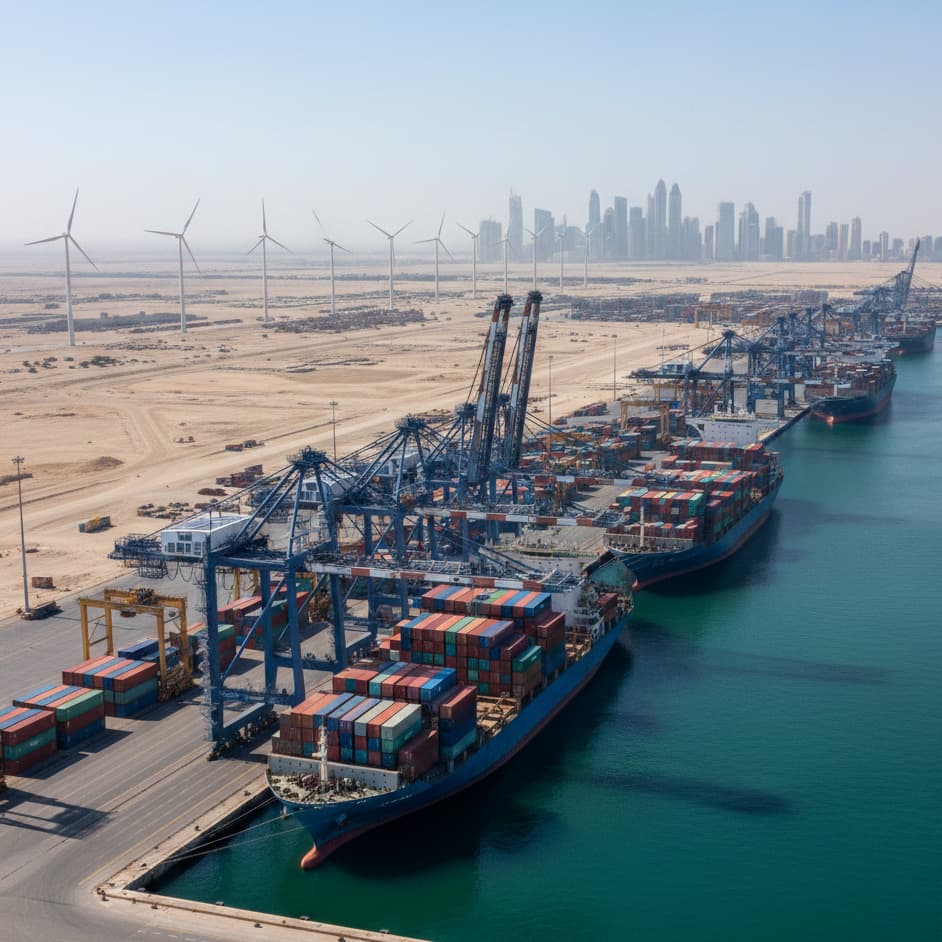
The UAE has reasons of its own to want this framed as an energy partnership. Abu Dhabi’s state renewable energy company has set a target of producing a million tonnes of green hydrogen annually by the end of the decade, and the broader Gulf region, including a joint UAE-Saudi green hydrogen export consortium aimed explicitly at European buyers, has been positioning itself as a supplier to a continent that under its own climate law will need to import a large share of the hydrogen it consumes. A trade agreement that locks in mutual recognition of certification standards for green hydrogen would matter more to that ambition than a few percentage points of tariff reduction.

The fifth round of talks, held in Dubai, covered trade in goods, customs procedures, digital trade and government procurement, with a sixth round pencilled in for Brussels in the spring. Officials on both sides have been careful to describe the UAE deal as a potential template rather than a one-off: a successful agreement, the thinking goes, could become the basis for wider engagement with Gulf Cooperation Council members such as Saudi Arabia and Qatar, even if a single bloc-to-bloc agreement remains politically out of reach.

There are real obstacles still. The EU’s insistence on sustainability provisions, covering labour standards, carbon pricing alignment and environmental safeguards, sits awkwardly with Gulf economies whose growth models rely on energy-intensive industry and migrant labour systems that European parliamentarians have criticised in the past. Negotiators have so far kept these issues largely separate from the energy and goods chapters, a sequencing choice that has allowed talks to move quickly but that will eventually have to be reconciled if the European Parliament is asked to ratify a final text.

For the EU, the strategic logic is straightforward even if the politics are not: a continent that imported the bulk of its energy from a single increasingly hostile supplier a few years ago has little appetite to recreate that dependency with hydrogen, however green. A diversified slate of suppliers, with the Gulf as one node among several including North Africa and Latin America, is the explicit goal of the European Commission’s hydrogen strategy. Whether Abu Dhabi becomes the first chapter of that strategy to be written into a binding trade text, rather than just a memorandum of understanding, should become clear well before the end of 2026.