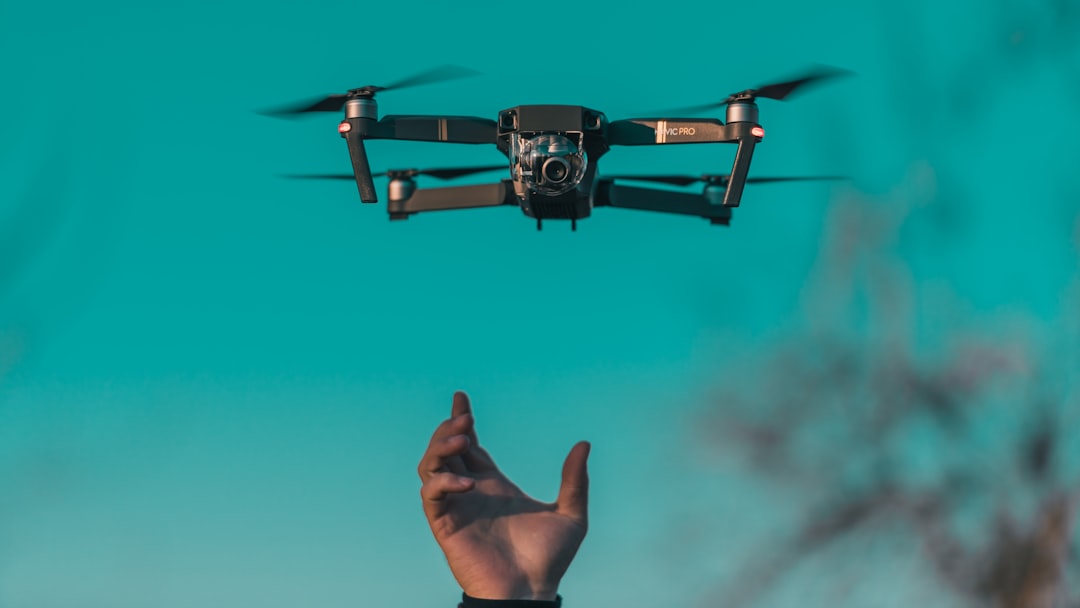
When EU leaders gather in Brussels on 18 and 19 June, defence readiness sits near the top of an agenda that also carries Ukraine, the budget and migration. The urgency is not abstract. In the months before the summit, Russian drones repeatedly penetrated the airspace of frontline member states, and one carrying explosives crashed into a residential building in Romania. Incidents like that turn a planning document into a political imperative.
The document in question is the Defence Readiness 2030 roadmap, and its most eye-catching components are four flagship projects: the Eastern Flank Watch, the European Drone Defence Initiative, the European Air Shield and the European Space Shield. The first two are being treated with special urgency, and the reason is the changing economics of aerial threat. A surveillance or attack drone can cost a few thousand euros; the missiles traditionally fired to shoot them down cost hundreds of thousands. An adversary that can impose that exchange ratio at scale does not need to win battles to inflict strategic cost. It only needs to keep launching.
The Eastern Flank Watch is the EU’s attempt to rewrite that arithmetic. Rather than a single wall, it is meant to be an integrated layer of air defence, electronic warfare, surveillance and maritime sensors stretching along the borders with Russia and Belarus, knitting national systems into something that can detect, track and intercept low-cost incursions without bankrupting the defender. Implementation is supposed to begin this year, with initial capability by late 2026 and full functionality by the end of 2028. In April, the Commission allocated just over one billion euros across 57 projects feeding the roadmap.
The ambition is sound. The constraints are familiar. The first is money. A genuinely continental sensor-and-interceptor grid is a multi-year, multi-tens-of-billions undertaking, and the roadmap’s seed funding is a fraction of that. The bulk will have to come from national budgets at a moment when the same governments are arguing over the EU’s long-term financial framework and resisting new common borrowing. Defence ambition and fiscal caution rarely share a room comfortably.
The second constraint is fragmentation. Europe still fields a bewildering variety of incompatible national systems, multiple air-defence platforms, competing communications standards, procurement rules that favour domestic champions. A drone wall is only as strong as its weakest interface, and interoperability is exactly where European defence has historically underperformed. Building a shield that works across the Baltic, Poland, Slovakia, Hungary and Romania means harmonising the very systems member states have spent decades developing separately.
The third is the line between the EU and NATO. The Eastern flank is NATO’s flank too, and most of the relevant territory is defended under Article 5. The EU’s added value lies in industrial capacity, funding coordination and the regulatory plumbing that lets defence firms scale across borders, not in duplicating an alliance command structure. Done well, the EU effort underwrites NATO’s deterrence; done badly, it produces parallel bureaucracies and a turf fight neither institution can afford.
There is also a quieter question the summit is unlikely to resolve: what counts as success. Intercepting every drone is impossible and probably not the goal. Deterrence by denial, making incursions costly, unreliable and militarily pointless, is the realistic objective. That is harder to measure and harder to sell to publics who will judge the project by whether the next drone gets through.
The honest verdict is that a drone wall can meaningfully raise the cost of hybrid aggression, but it cannot be conjured by a summit communique. It needs sustained funding, ruthless standardisation and a clear division of labour with NATO. The leaders meeting this week can supply the political signal. Whether the member states then supply the budgets and surrender the national prerogatives is the test that actually matters.