September 22, 2026
LATEST
One Ticket Promise Meets Its First Real Test Inside the CouncilCyprus Judge Takes Over a General Court Still Absorbing CasesSkills Portability Act Sets Five Weeks as the New Recognition LimitIreland Reopens the Digital Omnibus With Cookies Back in PlayMinisters Weigh the Long-Term Budget Before a Negotiating BoxSocial Partners Have One Week Left to Shape the Quality Jobs ActPhuket Round Decides Whether Thailand Closes Its Deal This YearSyria’s Banks Reconnect While Europe’s Risk Premium Stays PutMercosur’s First Health Ban Tests a Deal Still Being RatifiedBudget Performance Regulation Slips Toward a 2027 VotePontes Digital Euro Platform Goes Live for 13 BanksEU Arctic Drilling Ban Survives Norway’s Lobbying PushPrivacy Watchdog Wants Tighter Limits on Eurojust’s New DatabasesScrutiny Board Sends Europe’s Circular Economy Act Back for ReworkLow-LEO Studies Open the Next Chapter for Europe’s IRIS2 PlanFour Indo-Pacific Partners Join Europe’s Ministers in New YorkWildfire Season Closes Above Average as the rescEU Fleet GrowsQuality Education Roadmap Lands in November With Three FrontsPartnership Plans Recast Cohesion Policy Before Anyone VotesHandling Fee on Small Parcels Must Be Ready by 1 November 2026One Ticket Promise Meets Its First Real Test Inside the CouncilCyprus Judge Takes Over a General Court Still Absorbing CasesSkills Portability Act Sets Five Weeks as the New Recognition LimitIreland Reopens the Digital Omnibus With Cookies Back in PlayMinisters Weigh the Long-Term Budget Before a Negotiating BoxSocial Partners Have One Week Left to Shape the Quality Jobs ActPhuket Round Decides Whether Thailand Closes Its Deal This YearSyria’s Banks Reconnect While Europe’s Risk Premium Stays PutMercosur’s First Health Ban Tests a Deal Still Being RatifiedBudget Performance Regulation Slips Toward a 2027 VotePontes Digital Euro Platform Goes Live for 13 BanksEU Arctic Drilling Ban Survives Norway’s Lobbying PushPrivacy Watchdog Wants Tighter Limits on Eurojust’s New DatabasesScrutiny Board Sends Europe’s Circular Economy Act Back for ReworkLow-LEO Studies Open the Next Chapter for Europe’s IRIS2 PlanFour Indo-Pacific Partners Join Europe’s Ministers in New YorkWildfire Season Closes Above Average as the rescEU Fleet GrowsQuality Education Roadmap Lands in November With Three FrontsPartnership Plans Recast Cohesion Policy Before Anyone VotesHandling Fee on Small Parcels Must Be Ready by 1 November 2026
September 22, 2026
LATEST
One Ticket Promise Meets Its First Real Test Inside the CouncilCyprus Judge Takes Over a General Court Still Absorbing CasesSkills Portability Act Sets Five Weeks as the New Recognition LimitIreland Reopens the Digital Omnibus With Cookies Back in PlayMinisters Weigh the Long-Term Budget Before a Negotiating BoxSocial Partners Have One Week Left to Shape the Quality Jobs ActPhuket Round Decides Whether Thailand Closes Its Deal This YearSyria’s Banks Reconnect While Europe’s Risk Premium Stays PutMercosur’s First Health Ban Tests a Deal Still Being RatifiedBudget Performance Regulation Slips Toward a 2027 VotePontes Digital Euro Platform Goes Live for 13 BanksEU Arctic Drilling Ban Survives Norway’s Lobbying PushPrivacy Watchdog Wants Tighter Limits on Eurojust’s New DatabasesScrutiny Board Sends Europe’s Circular Economy Act Back for ReworkLow-LEO Studies Open the Next Chapter for Europe’s IRIS2 PlanFour Indo-Pacific Partners Join Europe’s Ministers in New YorkWildfire Season Closes Above Average as the rescEU Fleet GrowsQuality Education Roadmap Lands in November With Three FrontsPartnership Plans Recast Cohesion Policy Before Anyone VotesHandling Fee on Small Parcels Must Be Ready by 1 November 2026One Ticket Promise Meets Its First Real Test Inside the CouncilCyprus Judge Takes Over a General Court Still Absorbing CasesSkills Portability Act Sets Five Weeks as the New Recognition LimitIreland Reopens the Digital Omnibus With Cookies Back in PlayMinisters Weigh the Long-Term Budget Before a Negotiating BoxSocial Partners Have One Week Left to Shape the Quality Jobs ActPhuket Round Decides Whether Thailand Closes Its Deal This YearSyria’s Banks Reconnect While Europe’s Risk Premium Stays PutMercosur’s First Health Ban Tests a Deal Still Being RatifiedBudget Performance Regulation Slips Toward a 2027 VotePontes Digital Euro Platform Goes Live for 13 BanksEU Arctic Drilling Ban Survives Norway’s Lobbying PushPrivacy Watchdog Wants Tighter Limits on Eurojust’s New DatabasesScrutiny Board Sends Europe’s Circular Economy Act Back for ReworkLow-LEO Studies Open the Next Chapter for Europe’s IRIS2 PlanFour Indo-Pacific Partners Join Europe’s Ministers in New YorkWildfire Season Closes Above Average as the rescEU Fleet GrowsQuality Education Roadmap Lands in November With Three FrontsPartnership Plans Recast Cohesion Policy Before Anyone VotesHandling Fee on Small Parcels Must Be Ready by 1 November 2026

Budget Performance Regulation Slips Toward a 2027 Vote

The EU budget performance regulation, the horizontal rulebook that will govern how every euro of the 2028-2034 framework is tracked and judged, has slipped again. A draft report due before the Budgets Committee on 28 September is now expected in mid-October, and Parliament’s plenary position may not arrive until early 2027. The delay is not procedural housekeeping.

## Why the EU budget performance regulation decides so much

The Multiannual Financial Framework sets ceilings. The performance regulation sets the conditions attached to spending beneath them: expenditure tracking, reporting obligations, environmental safeguards and the link between disbursement and respect for the rule of law.

In a budget architecture that folds dozens of programmes into a smaller number of national and competitiveness plans, those horizontal rules do the work that individual programme regulations used to do. Get them loose and the plans become general-purpose transfers. Get them tight and member states will say Brussels has recentralised control of national spending.

That is why the file has attracted attention far out of proportion to its unglamorous title.

## Where the rapporteurs are stuck

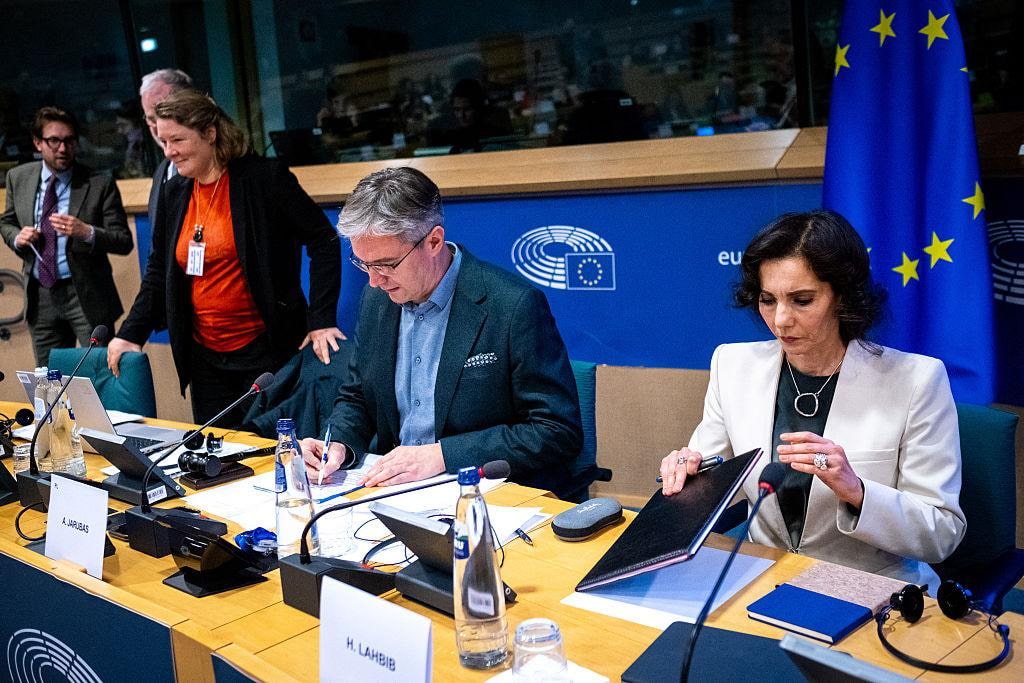
Jean-Marc Germain of the Socialists and Democrats and Niclas Herbst of the European People’s Party share the pen as joint rapporteurs for the Budgets and Budgetary Control committees. They have not converged on the environmental dimension.

The sharpest disagreement is over the do no significant harm principle, which would bar budget spending from causing serious damage to environmental objectives. The centre-left treats it as the minimum condition for calling the next budget climate-consistent. Parts of the centre-right see an open-ended compliance test that will slow disbursement and hand auditors a veto.

An earlier committee vote in which the EPP carried a point with support from the far right hardened positions considerably. Coalition arithmetic in this Parliament is now part of the substance of the file, not just its politics.

## The timetable problem behind the delay

The Council agreed a partial position on the monitoring and evaluation framework on 26 June, so member states are ahead of Parliament on this particular text. The broader ambition has been an overall MFF agreement by the end of 2026, leaving 2027 for the sectoral legislation.

A Parliament position landing in January 2027 compresses that sequence badly:

– trilogues on horizontal rules would run alongside negotiations on programme regulations
– national plan preparation starts without settled performance criteria
– the 1 January 2028 start date leaves no slack for a late institutional dispute

None of this is fatal. The 2021-2027 framework was late and the Union coped. But lateness has a cost, and it is usually paid by regions and researchers waiting on first calls.

## What happens next

Mid-October is the working assumption for the draft report, followed by amendments, committee votes in the two lead committees, and then plenary. Each stage is a chance for the environmental conditionality question to reopen.

Watch whether the rule of law linkage is handled in this regulation or pushed into a separate instrument. Splitting it would ease the EU budget performance regulation through committee and create a second, more exposed fight later.

The quiet files are often where the next budget is really decided. This is one of them.