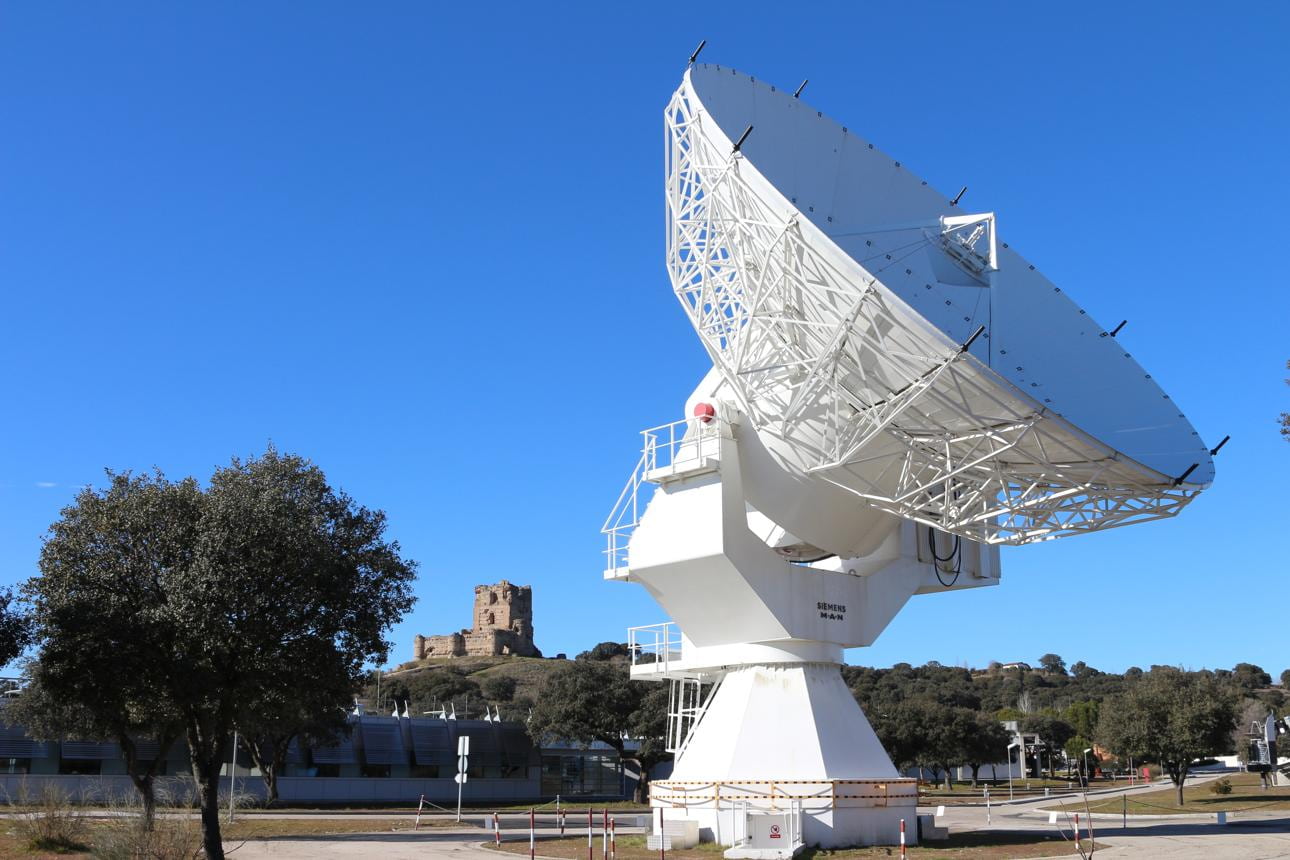
Madrid: The European Space Agency signed 18 contracts worth 20 million euro at its European Space Astronomy Centre outside Madrid on 17 September 2026, opening a round of Low-LEO studies that will shape how the European Union’s IRIS2 secure connectivity system develops once its first satellites reach orbit.
Nearly 80 companies share the work. ESA calls the awards consolidation contracts under its programme related to EU secure connectivity, and it has asked the consortia to build use cases, weigh competing mission concepts and test what a lower orbital layer would add to a constellation the Union has already fixed in outline. The agency set out the scope in its statement on the Low-LEO activities.
The timing explains the significance more than the money does. On 7 August 2026 the European Commission and the SpaceRISE consortium closed seven months of talks and signed the implementation agreement that carries IRIS2 from planning into full deployment.
That agreement enlarged the main constellation to 348 satellites, 330 of them in higher low Earth orbit and 18 in medium Earth orbit. It also pulled the first launches forward to 2029 and added an advanced set of 66 higher-LEO satellites reserved for defence, security and emergency users. The Commission published the revised architecture in its note on accelerating and reinforcing IRIS2, promising 60% more secure governmental capacity inside the Union and 54% more worldwide.
The Low-LEO studies now sit one layer beneath that settled design. ESA points the consortia at secure government broadband, maritime operations, aviation, data relay and satellite tasking, which reads less like a research wish list and more like a catalogue of the services European governments keep buying from operators outside Europe.
Two institutions run two tracks here, and the division deserves plainer explanation than it usually gets. The Commission owns the programme, holds the budget and contracts SpaceRISE to deliver it. ESA runs the technical studies that test whether the next generation should look different, and it answers to its own member states, not all of whom sit in the Council.
Study contracts are cheap. Orbital capacity is not, and nothing in the 20 million euro commits anyone to build a low-LEO layer. Europe has funded feasibility work before and then watched the conclusions expire while ministers argued over the next budget cycle.
The harder question arrives with the post-2027 financial framework, when the Union must decide whether IRIS2 remains a single deployment programme or becomes a standing capability with a refresh cycle attached. Satellites launched from 2029 will age through the 2030s, and a constellation that cannot be renewed is a depreciating asset rather than an instrument of sovereignty.
Industry will read the 18 contracts as a signal that Brussels expects the answer to be yes. Nearly 80 firms have just been given a reason to keep engineering teams assigned to European secure connectivity for another year, which is itself a form of industrial policy.
The studies run alongside deployment rather than ahead of it, so the Union is designing the sequel while still building the original. That is an uncomfortable position, and it is still better than the alternative of waiting until 2029 to ask what comes next.