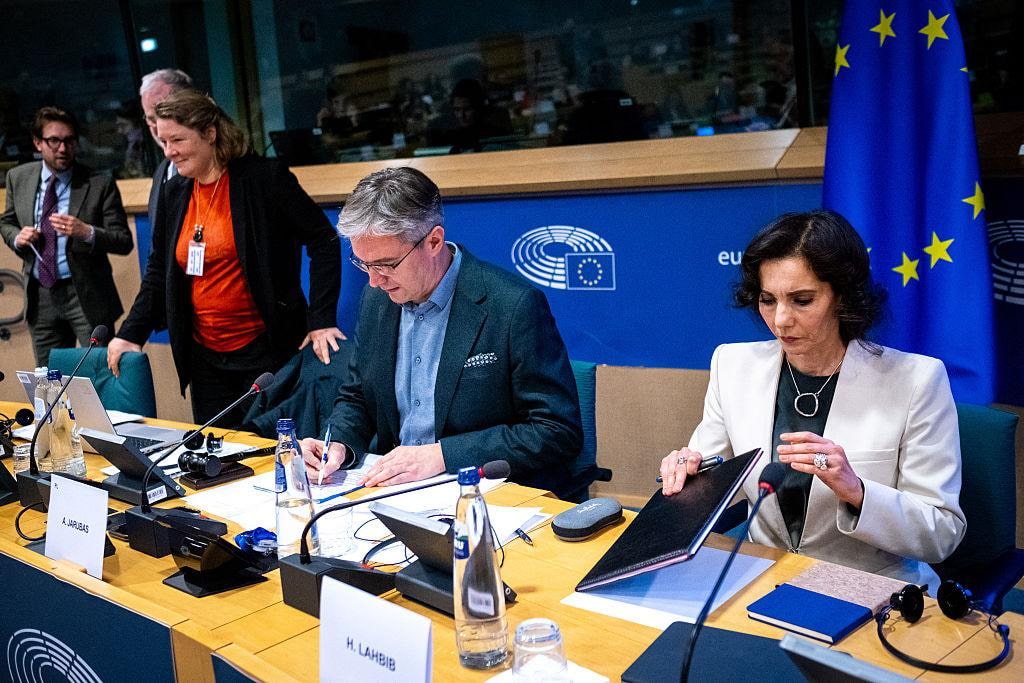
Ministers responsible for cohesion policy met informally in Dublin Castle on 14 and 15 September, chaired by Ireland’s Jack Chambers, and spent two days on a question that the next multiannual budget has already half-answered: whether the policy that redistributes money to Europe’s poorer regions should keep its own delivery machinery, or be folded into a single plan negotiated between each national capital and the Commission.
The instrument at the centre of that argument is the national and regional partnership plan. Under the Commission’s design for 2028 to 2034, cohesion money, rural development money and several smaller funds would arrive through one plan per member state, with disbursement tied to milestones rather than to receipted expenditure. It is the Recovery and Resilience Facility model applied to the Union’s oldest investment policy, and it is defended in Brussels on the grounds that the RRF moved money faster than cohesion programmes ever have.
Speed is not the objection. The objection, raised repeatedly by the European Parliament and by the Committee of the Regions well before ministers reached Dublin, is that a plan negotiated between a Commission directorate and a finance ministry has no structural place for the regional authority that currently co-designs and co-manages the programme. Cohesion policy’s partnership principle is not decorative. It is the mechanism by which a region with a distinct labour market, a distinct demographic profile and a distinct set of firms gets to argue for a different allocation than its national average would suggest. Remove the managing authority and the argument has nowhere to be made.
Two themes dominated the formal sessions. The first was competitiveness, which is now the organising word for almost every European funding conversation and which sits awkwardly alongside cohesion’s treaty mandate to reduce disparities. Money spent on the frontier firms that raise aggregate productivity is rarely money spent in the regions furthest behind. Ministers did not resolve that tension; they restated both halves of it.
The second was the performance-based approach itself. Slovenia’s minister, Kirbis Rojs, framed her intervention around what she called the right to stay, a formulation worth noting because it identifies the outcome cohesion policy is actually measured against in the places that receive it. Depopulation in a peripheral region is not a failure of aggregate growth statistics; it is a failure of the specific proposition that a person can build a working life where they were born. Milestone-based disbursement measures whether a government did what it promised. It does not measure whether anyone stayed.
The practical difficulty with the performance model is one the RRF has already demonstrated. Milestones are negotiated in advance, which means they are written by the parties with the strongest position at the table, and they are difficult to revise when circumstances change. A region that discovers in 2031 that its industrial base has shifted cannot easily rewrite a target agreed in 2028 without reopening a national plan. Shared management, for all its audit burden and its slow absorption rates, at least allowed reallocation at a level close to the problem.
Nothing was decided in Dublin, because informal councils decide nothing. What they do is establish which objections have durable support across capitals and which will fade once the budget arithmetic tightens. On the evidence of two days, the recentralisation objection has support, but it is support of a particular kind: expressed by ministers who also want their national envelope protected, and who would find a single national plan considerably easier to control than twenty regional programmes. That ambiguity is the reason the Parliament and the Committee of the Regions are unlikely to find the allies they need among governments.
The legislative texts move next to the General Affairs Council and then into trilogue, where the partnership question will be settled not by principle but by how much the Commission is prepared to concede on governance in exchange for the overall figure it wants. Regions will learn their position from the outcome rather than from the debate.