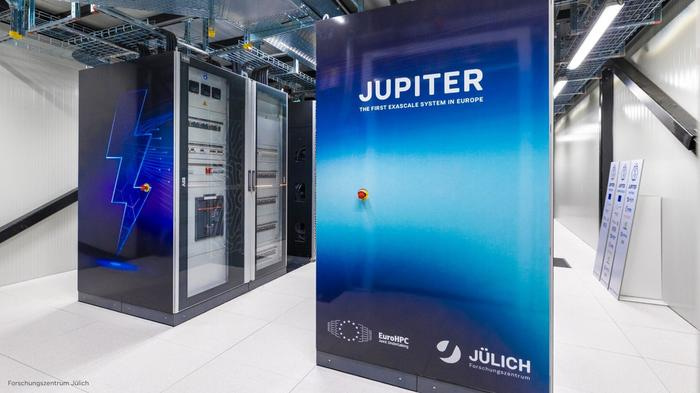
EuroHPC supercomputers will soon count a non-European partner among their users and decision-makers after Canada formally joined the EuroHPC Joint Undertaking as a Participating State on Friday 30 October 2026. The announcement came from the Commission at the EU-Canada Summit in Montreal.
The Joint Undertaking is the public network through which the Union and its partner countries buy and operate high-performance computers and, increasingly, quantum machines. Participating States contribute to the programme and gain a voice in how it develops. For Canada, membership means closer access to European computing capacity and a seat in the governance of a programme that has become central to European research policy.
The decision matters because EuroHPC supercomputers and the science they enable now shape competitiveness. Climate modelling, drug discovery, materials science and artificial intelligence all depend on machines that few single countries can afford alone. By pooling investment in EuroHPC supercomputers, the Union has tried to avoid dependence on commercial cloud providers based elsewhere, and the arrival of a research-intensive partner like Canada widens that pool.
A parallel announcement on the same day linked the two sides on climate risk through Destination Earth, the Union’s digital twin of the planet. Together, the two items show that the Commission treats computing and Earth observation as one strategic package rather than as separate funding lines.
There are open questions. The Commission excerpt does not give financial figures for Canada’s contribution, so it is not yet clear how much the new partner will pay or what share of machine time it will receive. Those details usually follow in the Joint Undertaking’s governing documents and in bilateral arrangements, and researchers will be watching for them.
Access rules will be a further test. EuroHPC supercomputers allocate machine time through competitive calls judged on scientific merit. If Canadian teams can bid on the same terms as European ones, the programme gains excellence but also faces more competition for scarce hours. If Canada receives a separate quota, the system becomes more complicated to administer.
Quantum computing adds another layer. Governments on both sides of the Atlantic want to build national and regional quantum capacity, yet the technology is still immature and expensive. Sharing testbeds and software expertise could reduce duplication, provided the partners align on standards and on security rules for sensitive research.
Security is the quieter issue. Opening EuroHPC supercomputers to a foreign state is easier with a close ally, but the same governance framework could eventually be used by other candidates. Member states will want clear rules on data protection, export controls and intellectual property before any further enlargement of the network.
For European scientists, the immediate benefit is probably indirect, through joint projects and shared training. The longer-term test is whether EuroHPC supercomputers deliver visible scientific results for the broader partnership, rather than serving mainly as a diplomatic symbol.